
Designed by Renzo Piano Building Workshop in 1997 and located in the
Riehen region of Switzerland, Fondation Beyeler stands out as the biggest
museum of the country and features the entire collection of Hildy
and Ernst Beyeler, the modern art connoisseurs. Following two decades
of growth, the museum has run out of space. For the existing site, Peter
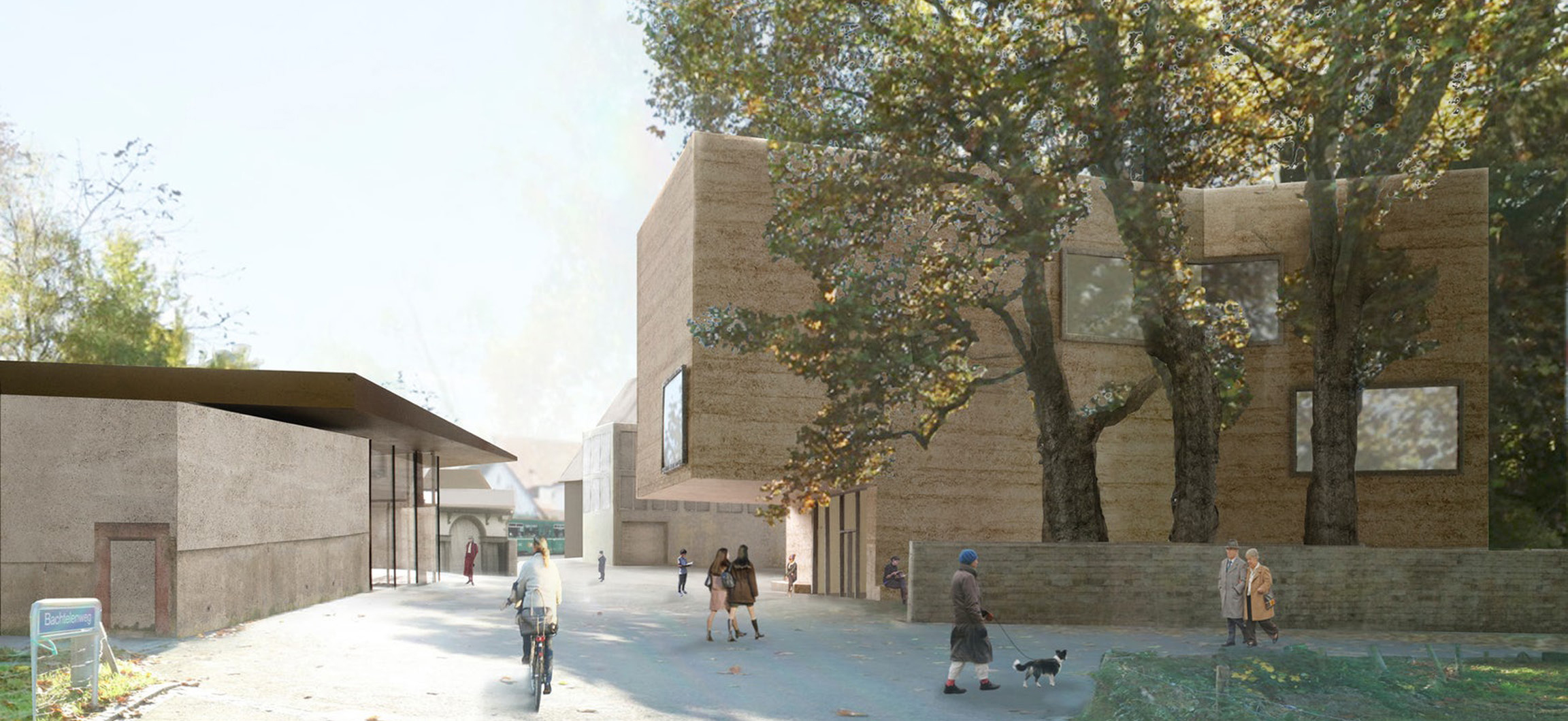
Zumthor was commissioned to design three new buildings (a service
center, pavilion and House of Art) that distinctively links two adjacent
parks designed by Jean-François Caillat in the early-19th century. Atelier
Peter Zumthor was unanimously selected for its expertise and sensitivity
regarding the design of cultural structures, among a short list of 11
renowned architecture offices including Sou Fujimoto Architects, Tod
Williams Billie Tsien Architects, Christian Kerez Zürich AG and SANAA.
Renzo Piano’s design still stands the test of time for it has successfully
established the interacion between human beings, nature, art and architecture.
Fondation Beyeler is located in the Berower Park, a world
renowned historical area from the 18th century. The new project was
designed with a linear construction of solid stone adopting a glass roof
and glazed end facades, in a way that complements and contrasts the
original structure of Piano through encompassing the land that was previously
closed off to the public.
Zumthor’s design conforms with the context of the park while taking up
space between the rectangular building and the Bachtelenweg, an old
route that leads west from the Riehen village just north of Basel. While
the Piano building extends the length of the area towards the north direction, the southern structures designed by Zumthor get positioned
harmoniously with the other historical buildings on the land including the
Neoclassical Berower Villa, adopting a more free arrangement.
Solely featuring artworks, the 1,500 sqm House of Art is located at the
entrance of the estate’s exclusive Iselin-Weber Park. The architect defines
this monolithic building as “a sculpture-like form, as if it was hewn from
a massive block”. The walls of the space are made of rammed limestone
concrete and hold wide windows that overlook the surrounding mature
trees. Furthermore, these windows provide voluminous side light for the
white cube-style galleries, in a way that contrasts with the skylit rooms
in Piano’s structure.
The floor plan of the three-story Brutalist structure includes three wings
that are arranged around a central core. “While moving from one room
to another and climbing the stairs; the arrangement of radiant chalkcolored
spaces evolve from the entrance of the Bachtelenweg to a twostory-
high hall with an impressively large window, opening to a view that
directly overlooks the trees in front of the northwest facade,” says the
architect.
The extension of this massive structure, lightens the load off the existing
galleries inside the original Fondation Beyeler and enables both spaces to
operate side by side and embody a sufficient amount of artwork in each
one of them. Zumthor’s design nearly doubles the gallery space of the
museum.
An events pavilion in front of the park extends from the back of the existing
Berower Park garden wall to a light timber roof and glazed sliding
wall facing the park. The floor of the pavilion slopes towards the wall and
therefore provides visitors a better view for the performances, conferences
and other events.
It was planned for large-scale sculptures and art pieces to be showcased
throughout the park. These new outdoor spaces are expected to establish
a vital connection between the Fondation Beyeler and the center of
the Riehen village…