
The common features of the extensions that are implemented to two popular museums featured in this issue of Natura Magazine are: being current products of renowned design offices, the respect and harmony they show to the historical environment, being unravelled as monolithic (one-piece) masses, their striking facade designs and the dominant use of natural stone materials. The extension designers of Fondation Beyeler in Riehen, created by the Renzo Piano Building Workshop in 1997 and Musée des Beaux-Arts (Fine Arts Museum) in Nantes, are respectively Atelier Peter Zumthor and Stanton Williams. While Peter Zumthor describes the Fondation Beyeler as a monolithic building “having a sculpture-like form as if it was hewn from a massive block”; Stanton Williams states that the building’s consistent palette of materials will give the impression that the entire building, which he sees as a monolithic volume, is carved out of a single block of stone…
In Autumn 2009, Stanton Williams won an international competition regarding the transformation and extension of Musée des Beaux-Arts in Nantes, one of the biggest fine arts museums of Paris. The architecture office was commissioned to design the interiors of buildings that make up the new museum and the landscaping arrangement for the streets and squares adjacent to the museum complex. Additionally, in collaboration with the graphic design studio Cartlidge Levine, the team also designed the corporate identity of the museum. According to the architects, this single design process brought an architectural consistency from typography to museum layout and from architecture to landscaping. It was aimed with the newly named Musée d’art de Nantes to be a contemporary museum open to the city and its people, along with its democratic and welcoming approach.
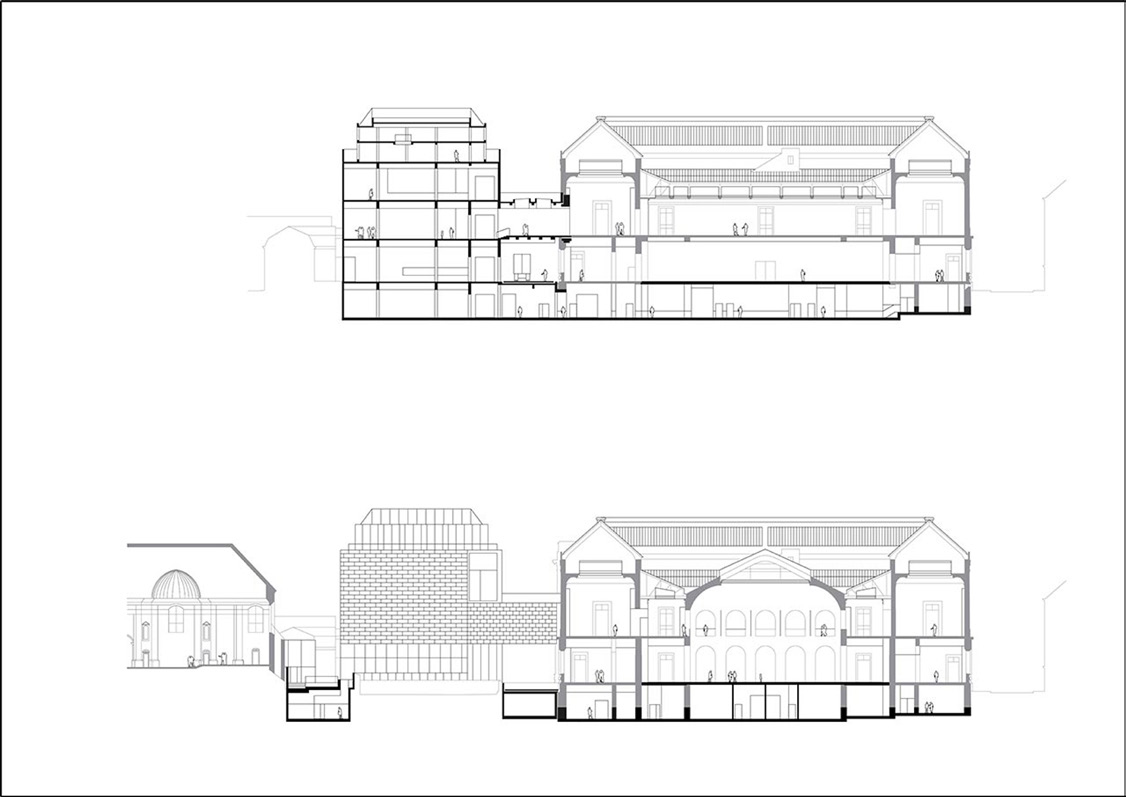
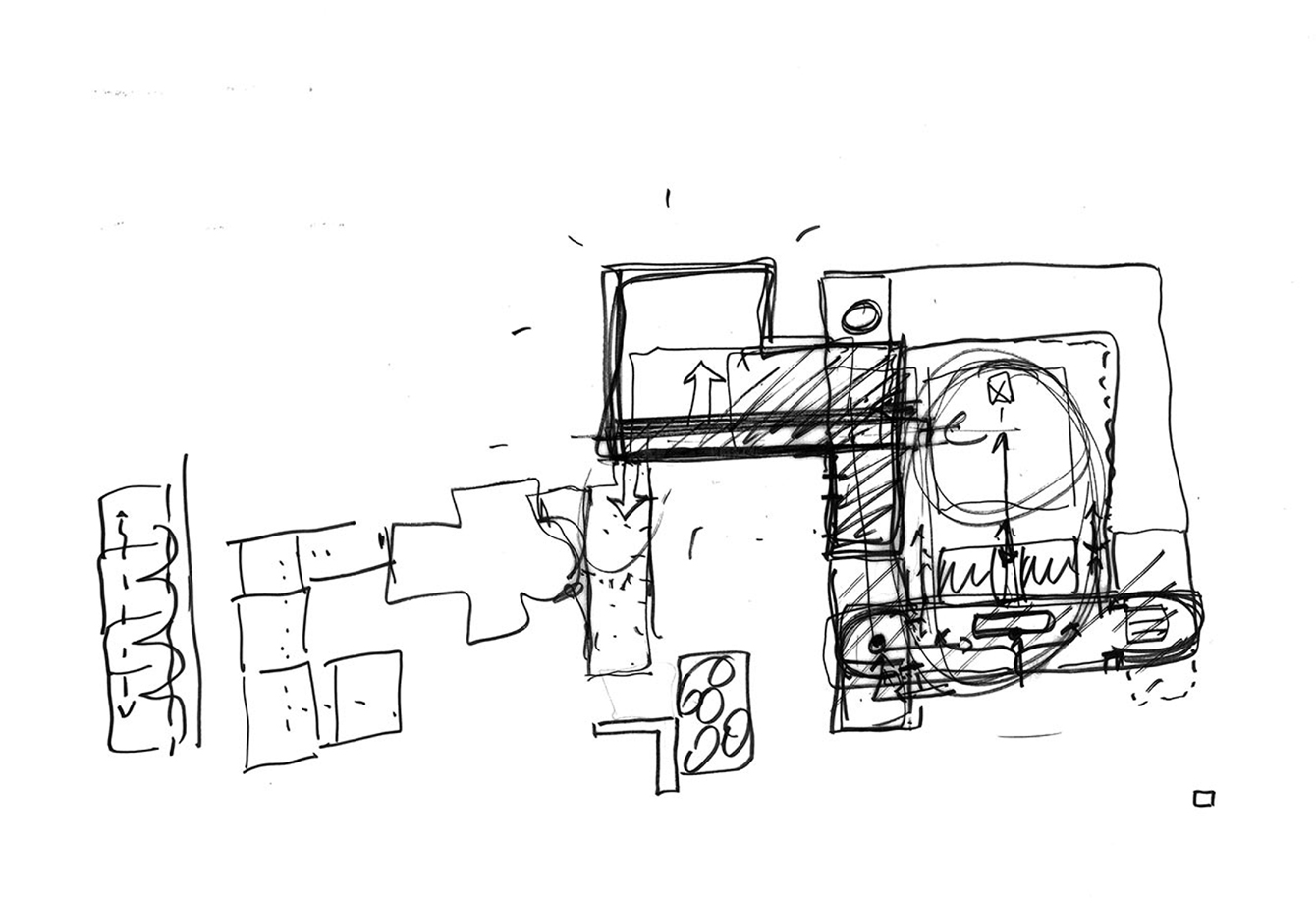
The project has created an urban quarter embodying several key extension
buildings that link the existing 19th century quadrangle Palais with the 17th
century Oratory Chapel, which will serve as a temporary art installation
space. These sections can now be accessed directly through the main part of
the museum for the first time.
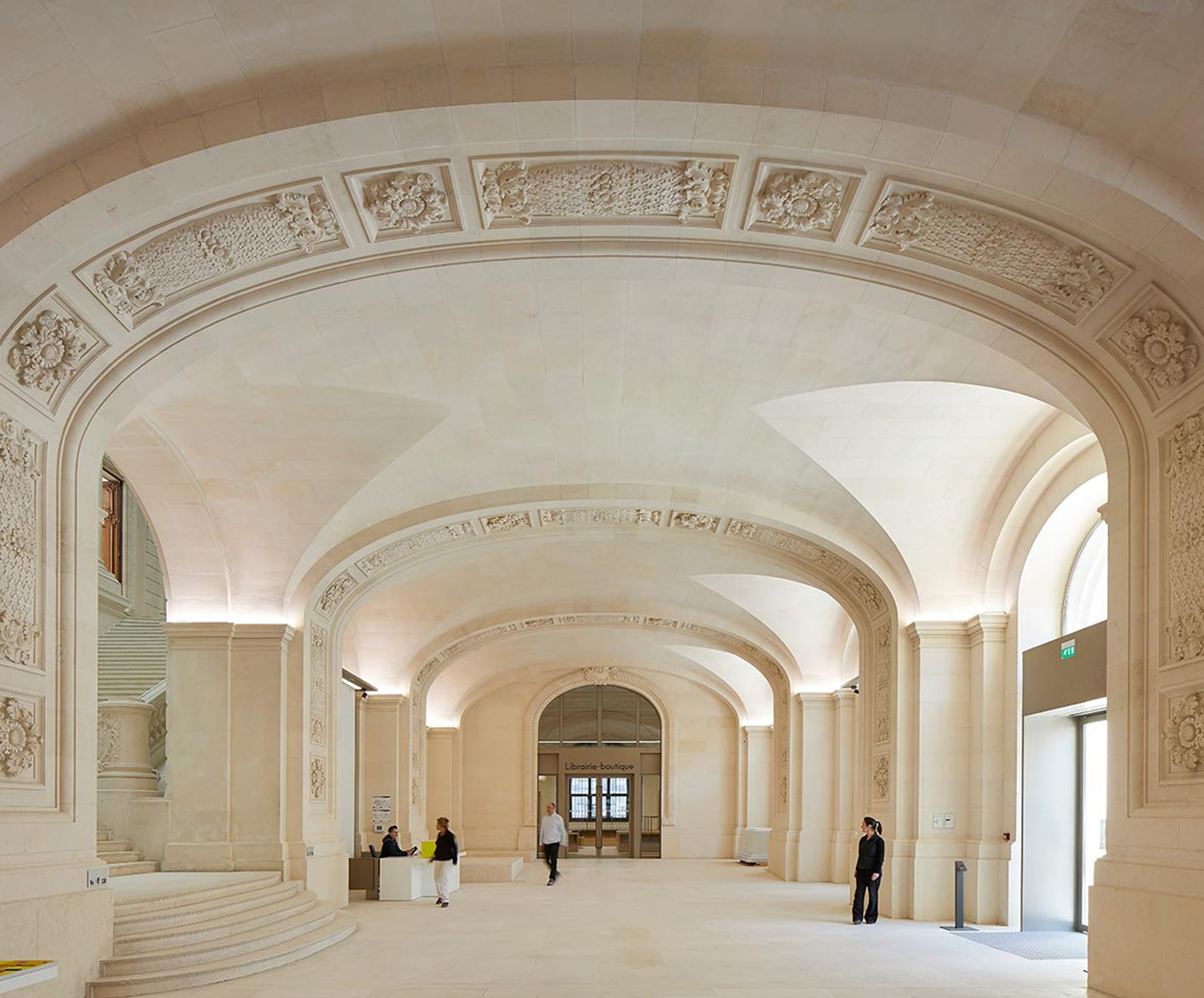
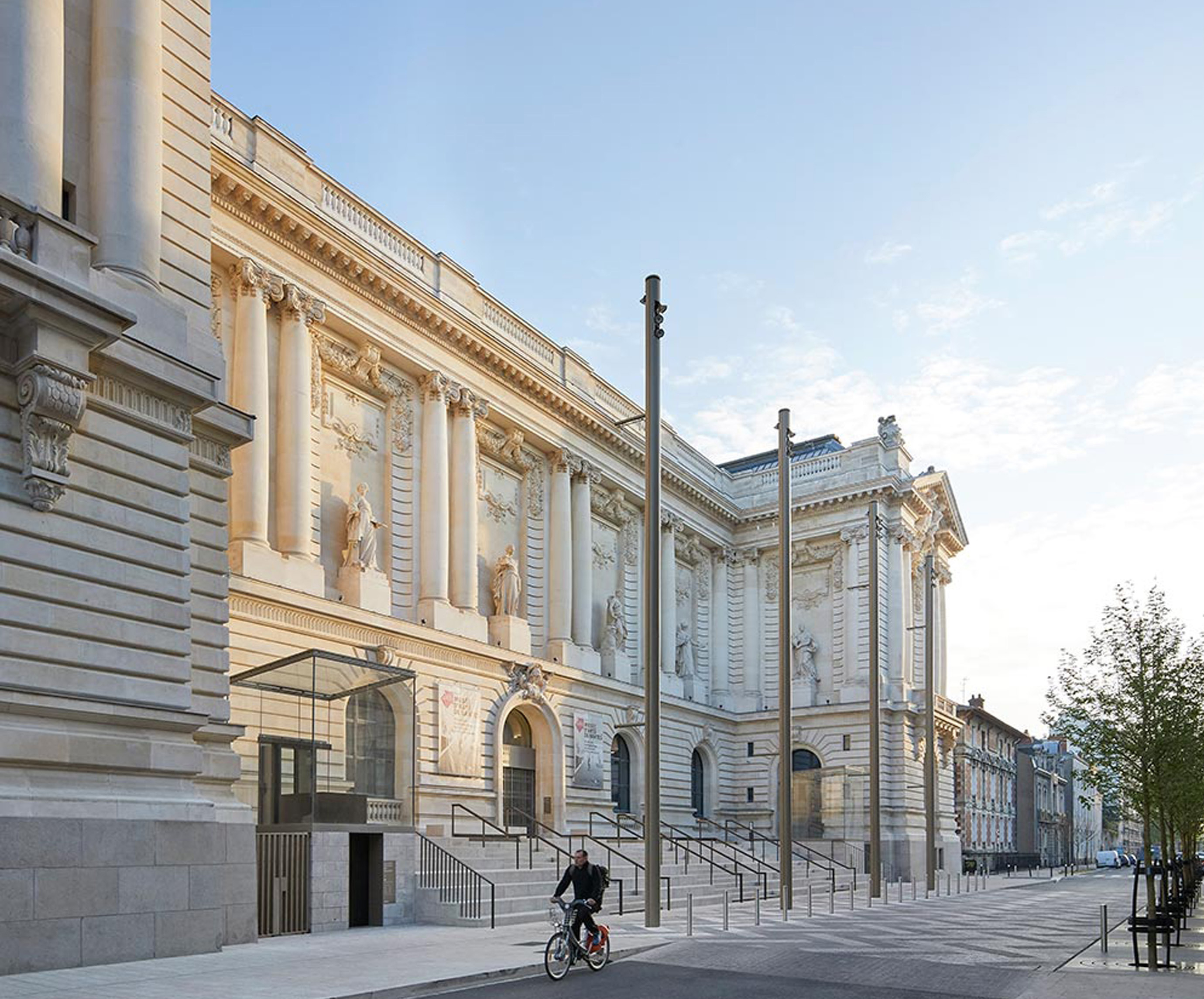
The existing historical ‘Palais’ building has been inclusively renovated and a
new ‘Cube’ has been added in order to accommodate additional exhibition
spaces for contemporary art in four gallery levels. The project also embodies
a new archive building which will serve as a documentation and graphics
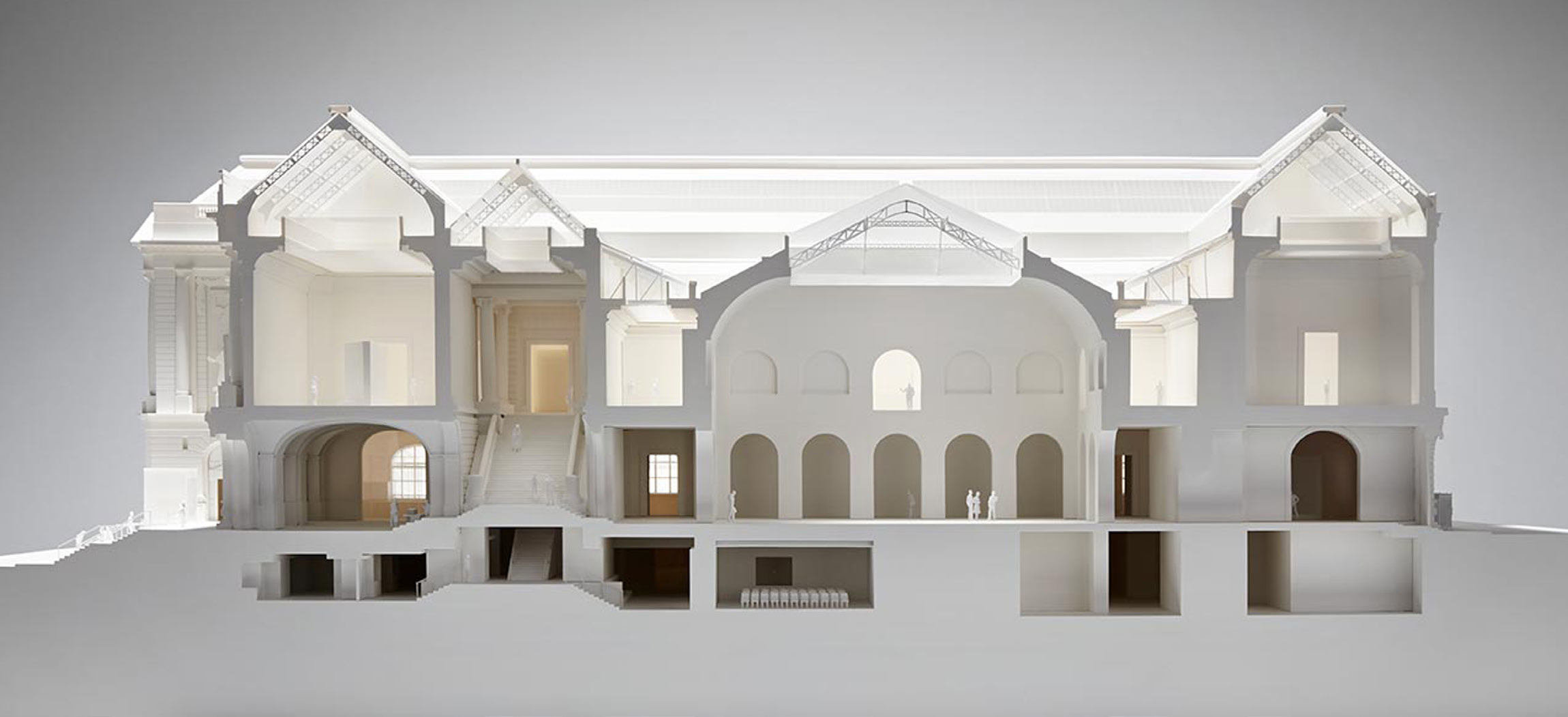
center. Additionally, a new basement has been included under the museum
by creating new education spaces, an auditorium, areas for restoration and
conservation workshops and an exhibition hall known as the Salle Blanche.
All of the old and new buildings have been placed around a new sculpture
garden and “Cours Jules Dupré” walkway.
The design strategy of Stanton Williams easily merges the past with the present
in order to present an architectural and cultural promenade that will
benefit the most from its elaborate environment. At the same time, it aims
to improve public access throughout the museum and turn its image from
an enclosed and introverted institution to an open and transparent layout in
order to render the urban context attractive. To illustrate, the new extension
holds large openings towards the street and thus enables views into the
gallery space from outside. Moreover, the new extension blends into its surroundings
while reflecting the local architecture. Envisioned as a monolithic
volume, the building’s consistent palette of materials will give the impression
that the entire building is carved out of a single block of stone.
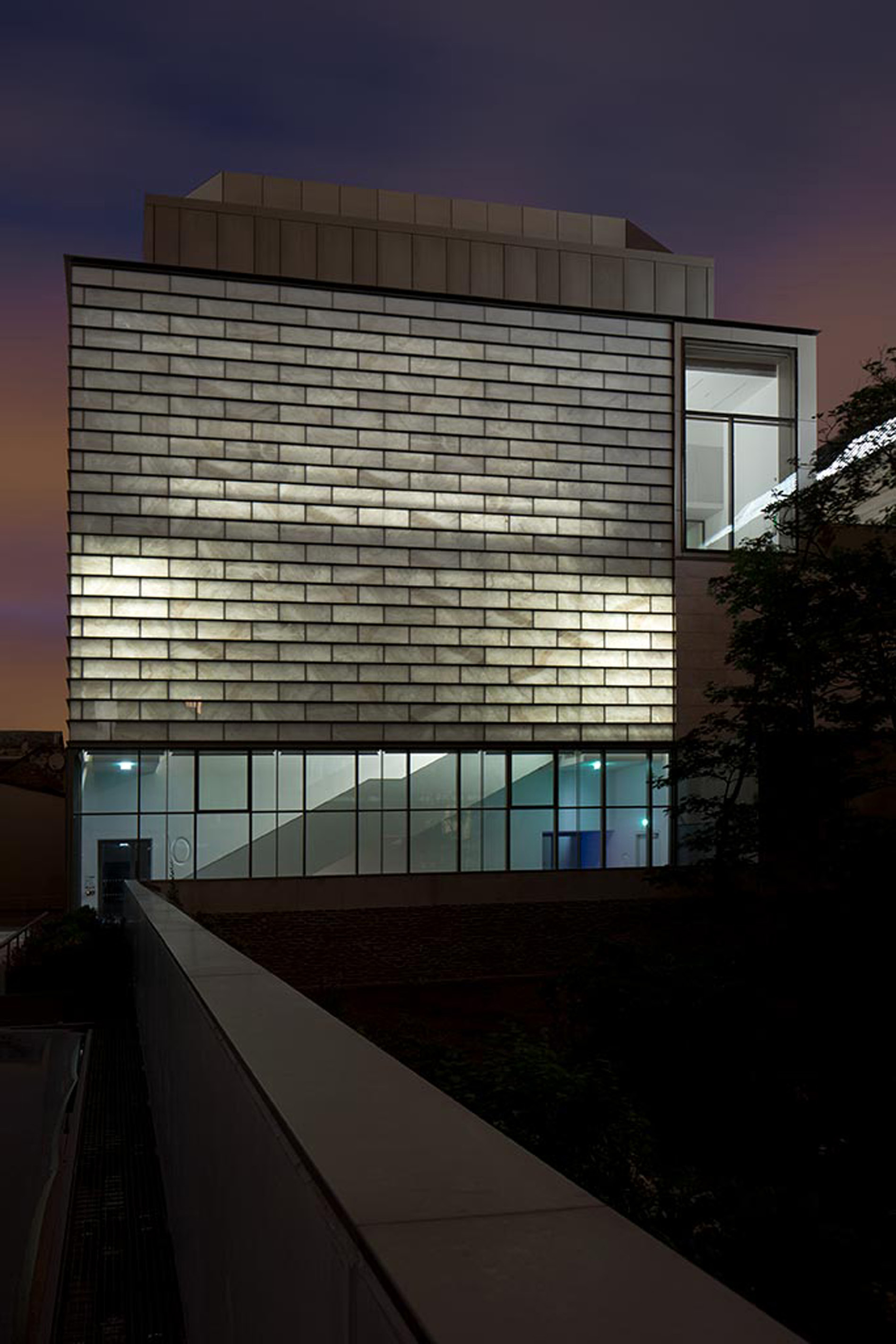
In accordance with the concept of unravelling a closed museum, the entire
southern facade of the new extension was covered with translucent laminated
marble. It refers to the period when alabaster and marble were used
prior to glass, in order to preserve valuable artworks from natural factors and
draw in natural light into Medieval churches.
CREDITS
Architecture Office: Stanton Williams
Project Location: Nantes, France
Client: Ville de Nantes and Nantes Métropole
Project Year: 2017
Value: 48,8 M€
Mechanical and Electrical Projects: Max Fordham & GEFI
Acoustic and Lighting Projects: Max Fordham
Structural and Envelope Projects: RFR ARTELIA & SEPIA
Quantity Surveyor: ARTELIA
Fire Safety and Access Consultant: Casso & Associés
CDM Coordinator: Ouest Coordination (design phase), VERITAS (construction phase)
Approved Inspector: VERITAS
Prime Contractor: Bouygues Bâtiment Grand Ouest
Photography: Hufton + Crow, Stefano Graziani, Jack Hobhouse