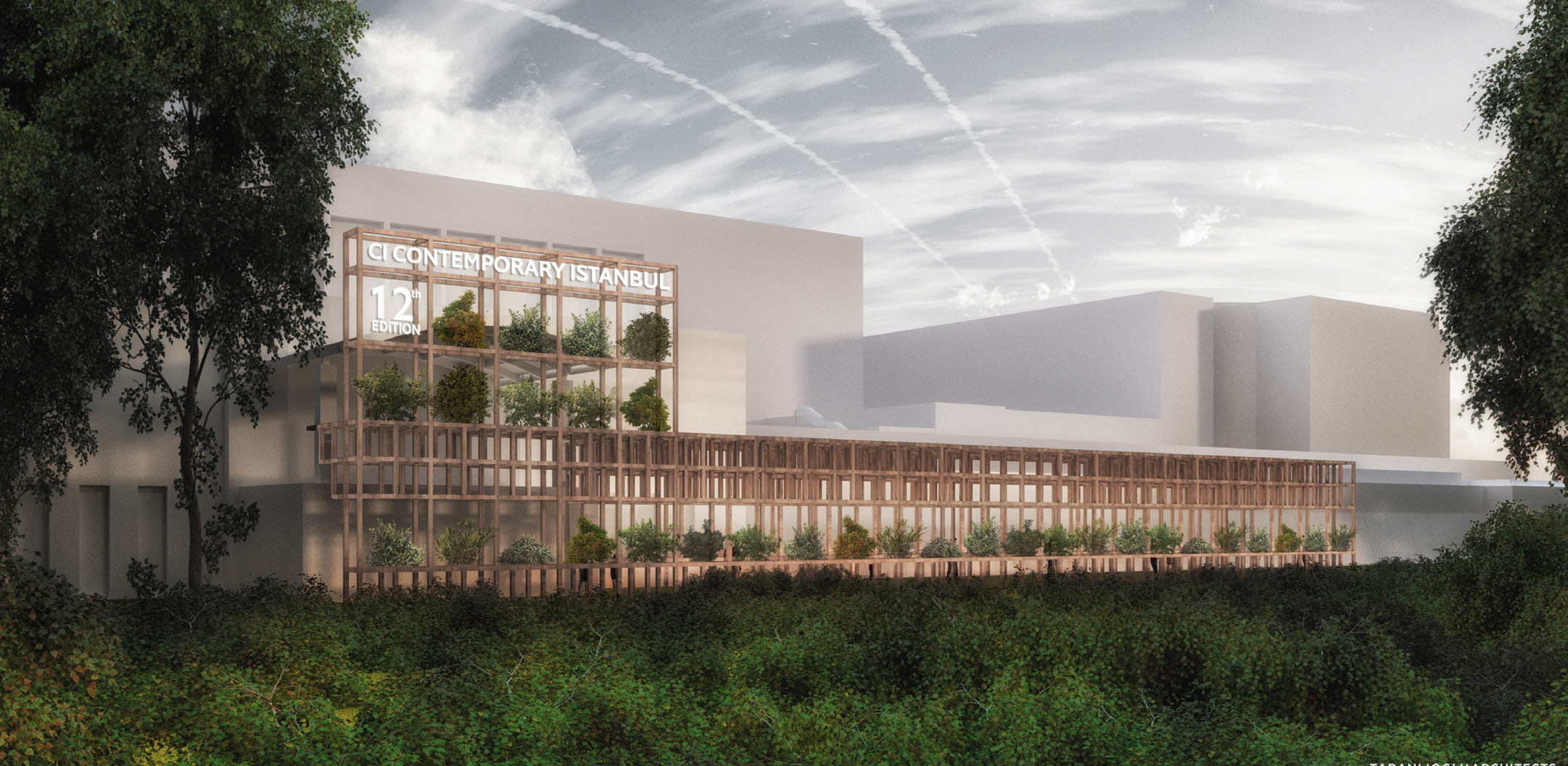
Turning Istanbul into one of the international art centers every year, the Contemporary Istanbul International Art Fair (CI) begins. CI has brought together leading galleries, artists, institutions and organizations, as well as the collectors and art enthusiasts from Turkey and the world in Istanbul for 11 years. Placing contemporary art to the focal point and bringing Turkish art together with the art of the world; Contemporary Istanbul, unlike the previous years, will be held between September 14-17 instead of November, concurrently with the 15th Istanbul Biennial and the exhibitions of many art institutions and galleries.
The architectural concept design of the exhibition is organized by Tabanlıoğlu Architects this year. The interior design of Contemporary Istanbul is carried out with a unique approach as a diversification of urban parks, along with an emphasis on public spaces, especially for those located outdoors. Tabanlıoğlu Architects also aims to emphasize local resources and requirements by turning the exhibition space embodying the galleries into a “projected topography”. The artificially arranged interior of the fair is also considered as an extension of the Artists’ Park which is adjacent to the fair area where sculptures will be exhibited outdoors during the event, and it further connects to Maçka Park, one of Istanbul’s unique and valuable green spaces.
According to the project team, the harmony between interior and exterior space is expressed physically by connecting the empty spaces between the galleries and the exhibition units; as an uninterrupted extension of the green floor covering all the area, the geometric forms created in various sizes and heights are designed for multipurpose use, especially to serve the purpose of sitting and resting. This area is provided with continuity as it is in nature although the design specifically carries the expression that a man-made sterile environment is established. Although absenting itself from being a representation of a real, living park; the materials are used with an environment-friendly approach, adopting the criterion of the highest possible recyclability. Again for this purpose, it is aimed to reevaluate the materials (artificial grass/greenery) after the end of the event, by donating them to nearby schools for future usage regarding sports and recreational activities.