
Wunderkammer, which is recognized as the ascendant
of the present day museums, means
“Cabinet of curiosities”. During and after
Renaissance, the rooms created for archiving
in institutions would be stuffed with various
parts on geography, zoology, botanics or ethnography that
were accummulated. These rooms became so popular especially
among aristocrats, as new countries were discovered
and science advanced, that it became fashionable
at the time to form personal “cabinets of curiosities”
which were stuffed with exotic animals, mythological
statues or par ts of machinery. These rooms, categorized
by the formal or functional similarities of object s and
individual preferences, became obsolote as modern
categorization and museums developed.
From surrealists to the “Wunderkammer: A Century
of Curiosities” show of fered at MoMA in 2008, Wunderkammers
were items of interes t in modern times
a s wel l.
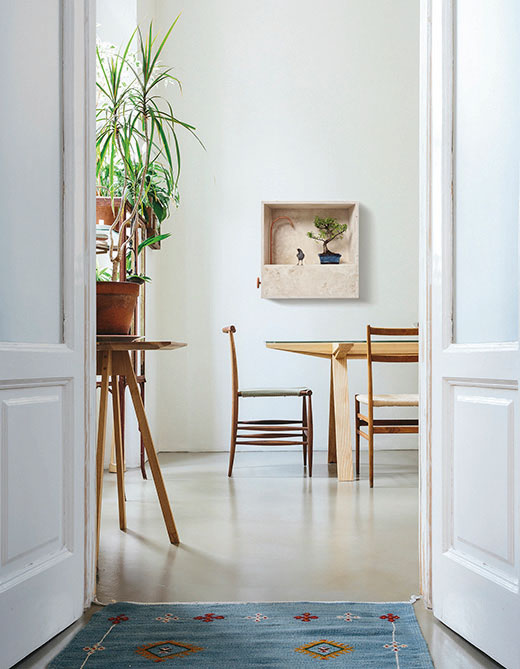
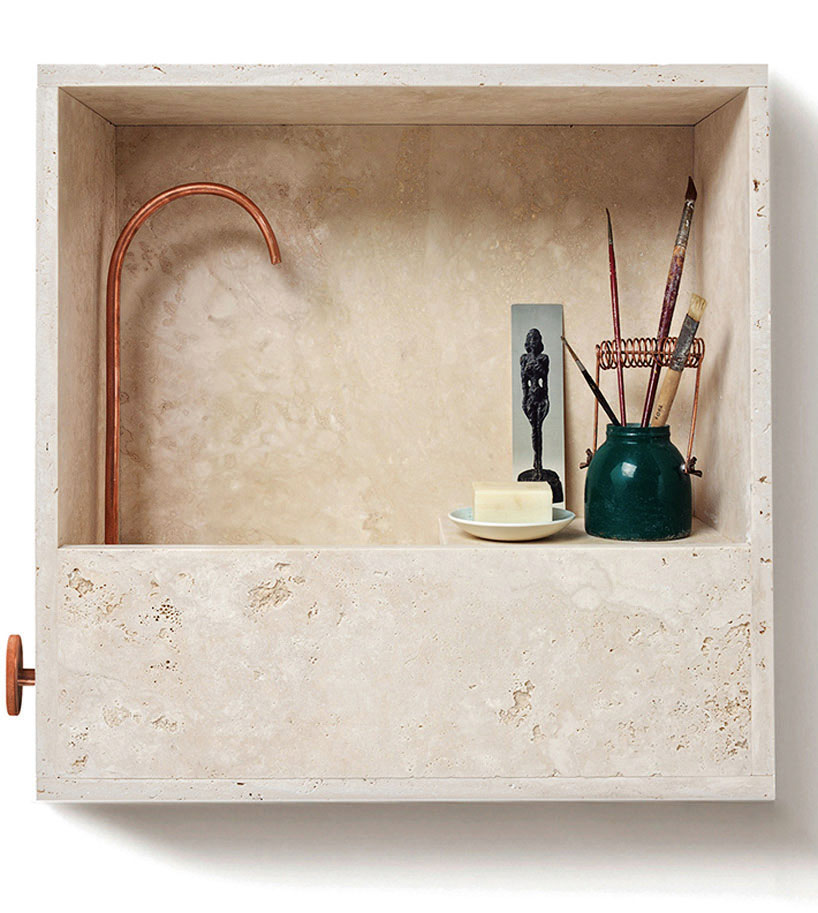
Ital ian ar t is t and designer Francesco Faccin, in recent
months, designing a ser ies of Wunderkammer ;
reinterpreted the “cabinets of cur iosit ies”. Mini
modules made of t raver t ine are mounted on ver t i –
cal sur faces, al lowing the creat ion of a cabinet of
cur iosit ies f rom personal belongings, also serving as
a water source with the tank below and it s bat tery.
Faccin’s contemporary Wunderkammers br ing a humorous
and func t ional interpretat ion for the homes
of today.