Documenta, one of the world’s most important art events, has taken place every five years in Kassel, Germany since 1955. Founded by Arnold Bode, it began as an exhibition of contemporary and modern art that showcased works labeled “degenerate” by the Nazis during World War II. Dubbed a “museum of one hundred days,” Documenta attracted 130,000 visitors for its inaugural show.
This year marks the first time the exhibition is being hosted by two cities, with the theme “Learning from Athens”. Following the opening of the fourteenth edition of Documenta in Athens in April, the second half of the exhibition, taking place in Kassel, continues until September 17th. Over 160 international artists present works conceived for Documenta 14 at more than thirty different sites, public institutions, squares, cinemas, and university locations.
Artistic director Adam Szymczyk told that he first proposed holding part of the exhibition in Athens in 2013, at the height of Greece’s economic crisis. He said, “one of the reasons to work in Athens in parallel to Kassel is precisely to make the exhibition in a place where you can see how problematic things are at the moment, and how much worse they may soon become—though not, naturally, to simply induce passive spectatorship.” Szymczyk added that he wanted to focus on the act of exchange between the two countries.
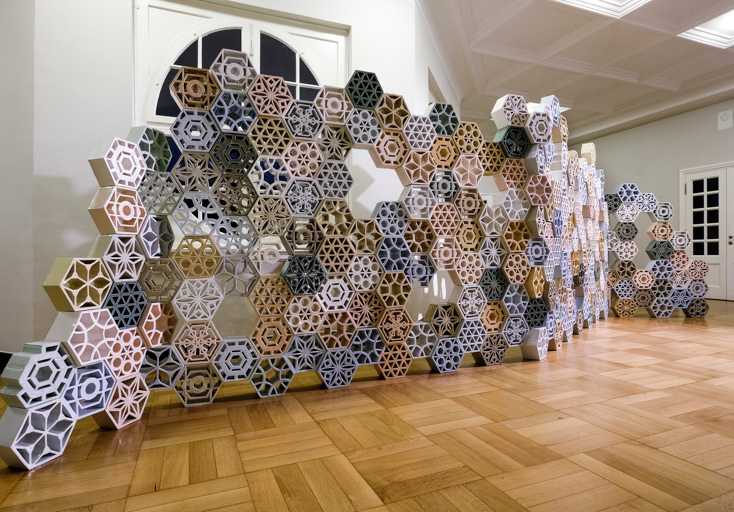
Documenta 14, which opened on April 8, in Athens and on June 10, in Kassel, is showing works by more than 160 artists in both cities over the duration of 163 days, including works by Turkish artists Nevin Aladağ and Banu Cennetoğlu. After documenta 14 ended in Athens on July 16, 2017, 339,000 visits had been counted at the forty-seven exhibition venues in Athens.