
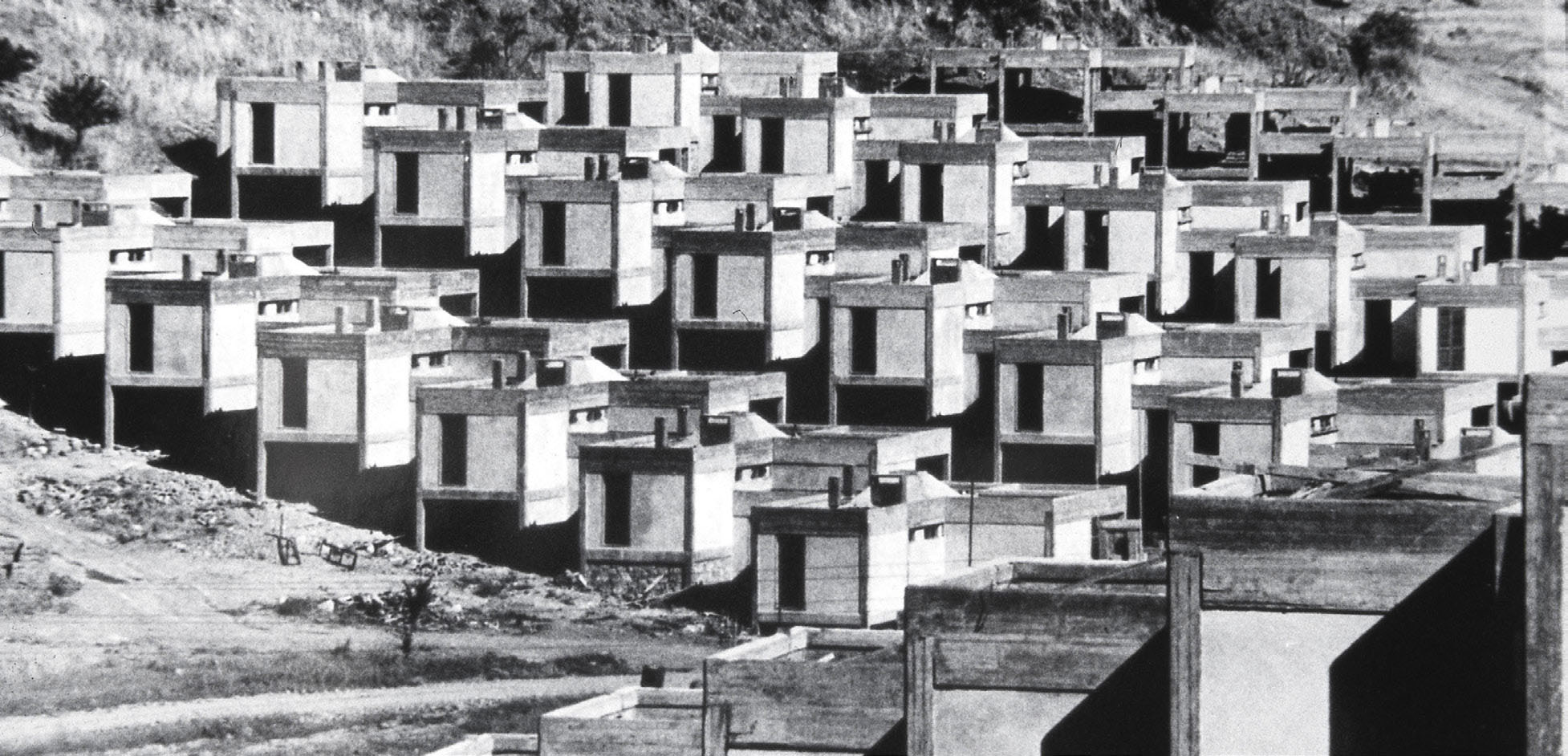
Altuğ-Behruz Çinici Archive transferred to SALT Research in 2014 continues to be interpreted by programs open to the participation of everyone. Altuğ-Behruz Çinici Archive, beyond presenting the history of a long-term architectural office in detail, allows evaluation of the setting in Turkey from 1960s to 2000s in terms of architects, clients and users. In recent months, at SALT Research, a series of conferences seeking to open the content of the archive which is under the digitalization and cataloguing work, and to create an environment of debate took place with the collaboration of SALT and METU.
The first program comprising film screenings and speeches took place in Açık Sinema at SALT Beyoğlu May 29th. The film compiled from voice records of Behruz Çinici focuses on the architect’s words on his works and his concept of architecture and urban planning. At the panel, the contents of the archive, the architectural position represented by Çinici in society and the spatial qualities of the METU campus, one of the first period works of Altuğ and Behruz Çinici were discussed.
The second program which took place on September 29 was in Ankara with the collaboration of SALT and Middle East Technical University (METU). At the conference, Altuğ-Behruz Çinici’s METU project was discussed in various contexts by METU architects and academicians over Çinici Archive, university archive and other independent works.
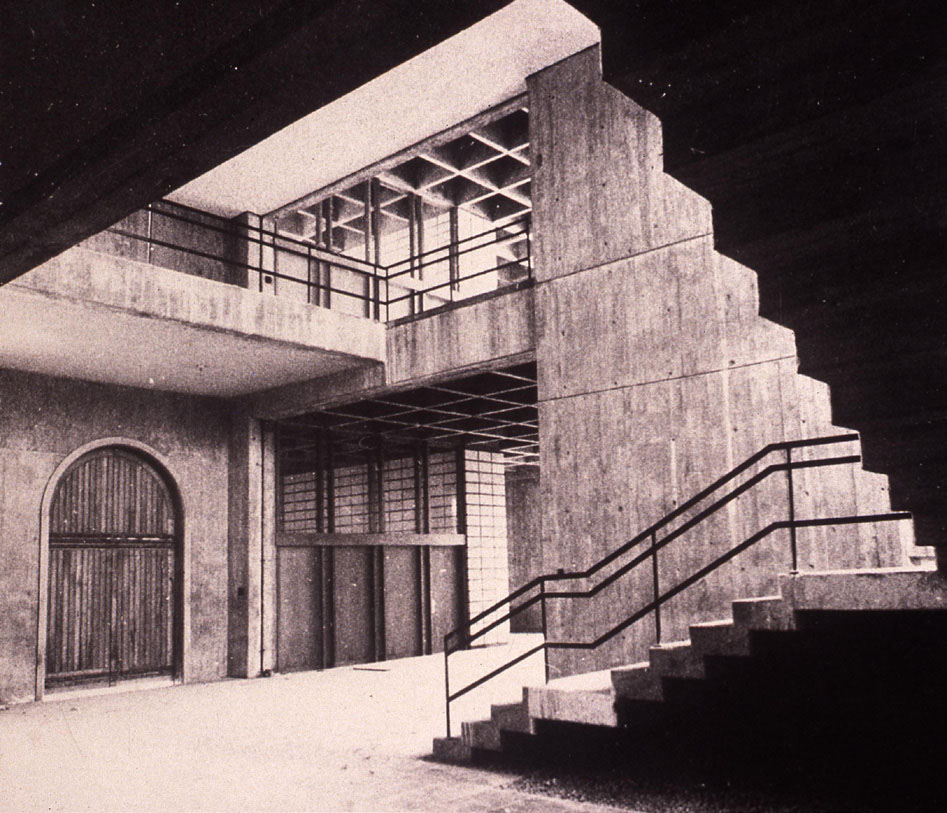
METU conference took place with the participation of speakers METU Architecture Department member of academic staff Aydan Balamir; from SALT Research and Programs, Aslı Can; METU School of Architecture former dean and Architecture Department lecturer Ali Cengizkan; Istanbul Bilgi University Architecture Department lecturer Şebnem Yalınay Çinici; METU School of Architecture Dean and Architecture Department lecturear Güven Arif Sargın; METU Architecture Department lecturer Ayşen Savaş; and METU Architecture Department lecturer Agnes van der Meij.
At the third conference held at SALT Galata on September 24, the speakers examining the archive upon SALT’s invitation focused on various projects in the archive which is under the process of becoming public. Sibel Bozdoğan, architecture theoretician, part-time instructor at Harvard Graduate School of Design and Kadir Has University head of Architecture Department, looked at Altuğ-Behruz Çinici’s projects close to urban scale, discussed the efforts to develop designs giving priority to the human scale instead of re-iterating the functionality based, typical urban setup. Esra Akcan, architecture theoretician and Cornell University Architecture Department instructor, envisioned a potential architectural stance, interpreting the continuity and dilemmas in the post-METU campus, post-Middle East Technical University (METU) campus careers of the architects through the drawings in the archive. Architect and North Carolina State University Member of academic staff Burak Erdim, on the other hand, addressing the design of METU campus in the cold war’s setting of international collaboration and competition, evaluated the archive’s contribution to the definition of the architectural culture of 1950s and 1960s.
Behruz Çinici defines the METU project as “a model which was a leader on many topics at the country since 1956, the year of its inception, and a creative and productive model”. The METU project documents, the cataloging process of which is still ongoing, comprises the largest part of Altuğ-Behruz Çinici Archive. These documents range from drawings detailed at different scales to construction logbooks, photographs and correspondence. The voice and video recordings of chats with Behruz Çinici and in his own words, former president Kemal Kurdaş, “the head architect of METU”, bring depth to the archive which document the METU project in full detail in the fields of architecture, urban planning and construction.
SALT, which opens the topic of “architects and their archives” with Altuğ-Behruz Çinici archive programs continues to produce projects over the archive.