
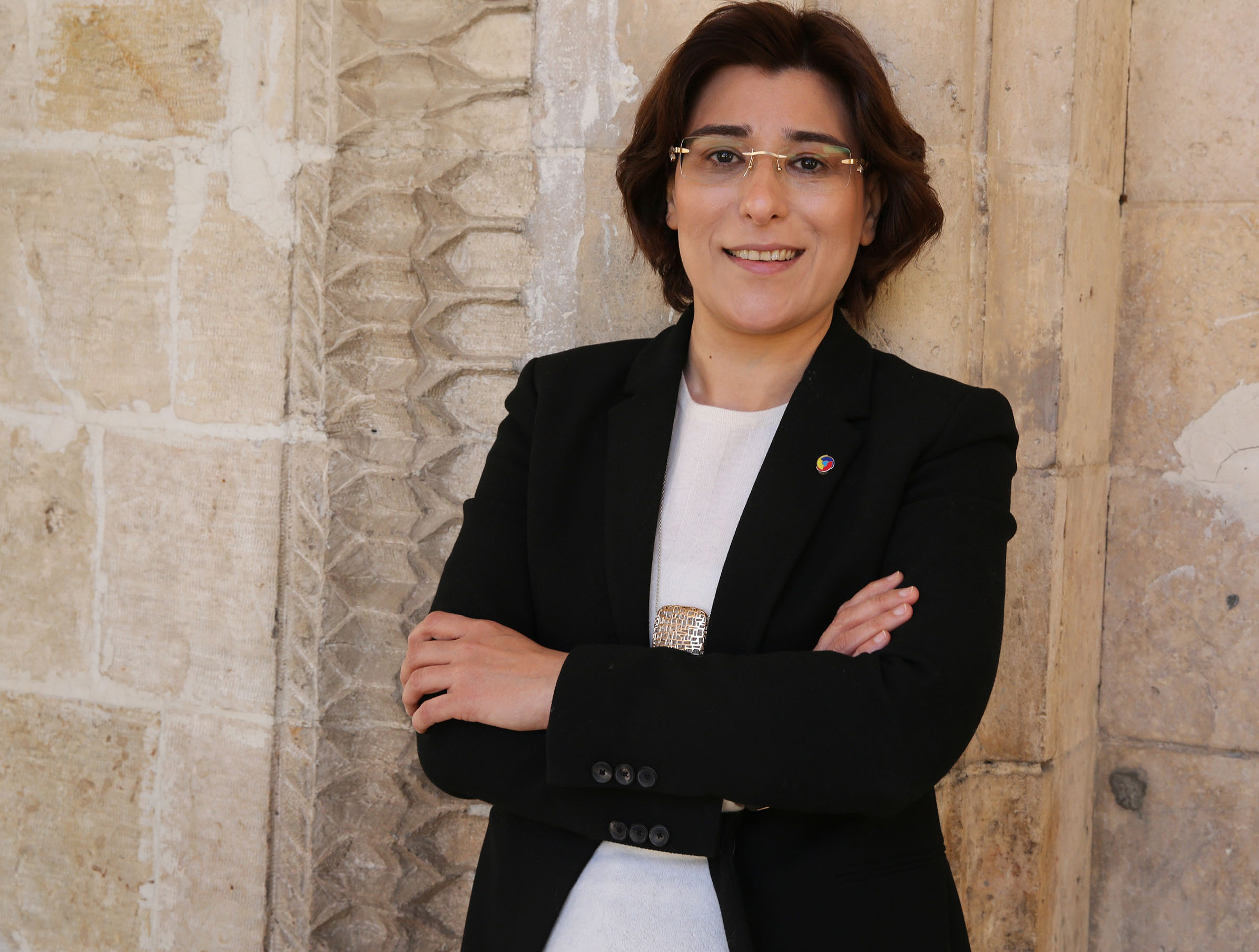
THE ACTIONABLE AND QUITE SOFT NATURE OF THE INFAMOUS ŞANLIURFA STONE WHICH IS HIGHLY PREFERRED IN ARCHITECTURE, ENSURED THE RISING OF A RICH ORNAMENT TRADITION IN PLASTIC ARTS. THE MERGENCE OF THIS QUALITY OF THE STONE AND THE HISTORICAL RICHNESS OF CULTURE, PAVED THE WAY FOR THE BIRTH OF A RICH REPERTOIRE OF PATTERNS IN THE ARCHITECTURAL ORNAMENT. THIS RICHNESS SURVIVED UNTIL TODAY THROUGH DEVELOPING IN TIME…
It’s aimed for the cultural values to contribute to the sustainability of tourism through conveying the 12 thousand years old stonemasonry to the future generations and creating new lines of businesses in Göbeklitepe, the oldest temple of the world. Starting from this point, a stonemasonry workshop is implemented. 21 person including 6 women received stonemasonry training; these women have also become the first women stonemasons in Turkey. Through the patterns these laborers created; new lines of businesses have been created in fields like giftwares and structure decoration…
By means of the workshop which revived the stonemasonry in Göbeklitepe, it’s intended for recreating the former identity of the city along with using the stone patterns made by the stonemasons in the new buildings to be constructed.
Along with including the “Stonemasonry Workshop” in the alternative tourism routes which will draw interest to the region by providing the tourists the experience of stonemasonry, it’s aimed to contribute to the local economy of the region.
We made an interview with the Board Member of Şanlıurfa Chamber of Commerce and Industry, Cevahir Asuman Yazmacı, about the Stonemasonry Project at Göbeklitepe the Oldest Temple of the World which recently became a very popular initiative.
How was the idea of Stonemasonry Project at Göbeklitepe the Oldest Temple of the World generated and implemented?
Every discovery made in the Göbeklitepe site leads to the renewal of existing information in the world of archaeology. The history of architecture originates the creation of architectural constructions through adapting a sedentary lifestyle from a hunter-gatherer tribe with the neolitic period. Today, the 11,500 years old structures residing in Göbeklitepe are considered as the beginning of the history of architecture.
Based on the Göbeklitepe site dating back to 12 thousand years from now, we aimed for the cultural values of the region to contribute to the sustainability of tourism through transferring stonemasonry to the next generations and creating new lines of businesses for the youth in the “Stonemasonry Project at Göbeklitepe the Oldest Temple of the World”.
Within this context, we applied to the “Future Lies in Tourism – Sustainable Tourism Fund”, conducted under the partnership of Turkish Ministry of Culture and Tourism, United Nations Development Programme (UNDP) and Anadolu Efes in cooperation with Şanlıurfa Chamber of Commerce and Industry Governorship of Şanlıurfa. We became one of the first three projects chosen in between 417 projects applied to the Future Lies in Tourism fund between 2013-2014. Thus, the “Stonemasonry Project at Göbeklitepe the Oldest Temple of the World” is carried out three years ago as a second term project in the Future is in Tourism. Through the great deal of attention attracted by the project, the Eyyübiye Municipality also started to put support behind the project along with launching new workshops and paying fee to women taking stonemasonry classes. Therefore it’s contributed for the project to both reach out far more people and embody a sustainable development.

Within the scope of this project, the first women stonemasons are trained in Turkey. Was it an envisioned scenario in between the goals of the project or was it developed spontaneously?
In the research we conducted, we realized that there aren’t any women stonemasons in Turkey and we initiated the works to break a new ground. After that, we embarked on the quest to find trainees willing to eagerly do the job. Accordingly, we received the applications of the students aspiring to participate in the training through getting in contact with the Harran University Department of Fine Arts. As part of the project, 21 person including 6 women recieved stonemasonry training. Through the patterns these laborers created; new lines of businesses have been created in fields like giftwares and structure decoration.
Göbeklitepe stands for a discovery changing the history of mankind. Is there a direct correlation between the discovery of Göbeklitepe and the revival of the stonemasonry tradition in Urfa? Could you explain further?
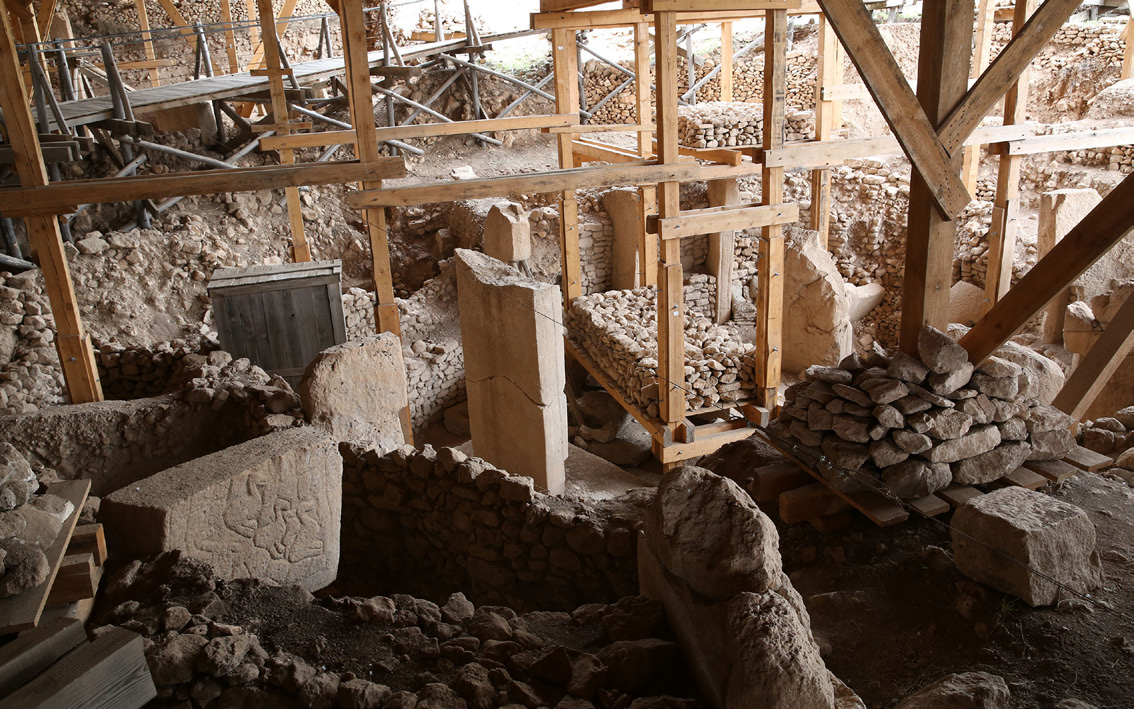
The engraved figures of wild animals and plants on the pillars (T-shaped stelas) of Göbeklitepe, are considered as the first examples of plastic arts in the world. The carvings or petroglyphs of lions, snakes, oxes, rams, foxes and cranes are appeared on 16 support and limestone plates located in the excavation site. Stone carved sculptures of wild boars, turtles and vultures glamorize the temple through their natural sizes. The remains unravel that during the transition process from the Paleolithic Period (hunter-gatherer) to Neolithic Era (agriculture and stockbreeding), the handcraft and artistry skills of people have been significantly improved. Among the interesting findings revealed in Göbeklitepe, there are giant lizards, engravings of lizards, open-mouthed wolf heads with scary teeth depictions, wild boars, cranes, bulls, mallards, storks, foxes, snakes, scorpions, wild sheeps, lions, spiders, a headless human graving, sculptures of men with exaggeratedly depicted male organs, etc. These figures are the beginning of stonemasonry. So, we started out to carry on this tradition which has been started twelve thousand years ago.
Could you tell us about the historical significance of stonemasonry in Şanlıurfa?
The origins of the stone decoration tradition in the Şanlıurfa architecture, go back to 10000 – 7000 BC. The reliefs and sculptures of humans and animals pertaining to 10000 – 7000 BC which have been discovered in archaelogical excavations in Nevali Çori and Göbeklitepe, are positioned as the oldest examples of plastic arts in Anatolia. It’s possible to see these reliefs and sculptures dated in the Aceramic Era of the Neolithic Period and decorated the structures of that period, in the Şanlıurfa Museum.
Besides, the surface explorations in Karahantepe at Tektek Mountains point out stone monuments that are contemporary with Göbeklitepe. Still, the reliefs such as “Storm God” and “The Countryside Hunting God” carved on orthostatic basalt stones decorating the walls of the architectural works of the Hittite Period on ground level, are exhibited in the Şanlıurfa Museum. These reliefs are one of the most significant examples of the architectural ornaments in the Hittite Period.
Situated at the Sene Mağara Village in Tektek Mountains located in the eastern part of Şanlıurfa, the rock structures from the Byzantine period embody rich ornaments on the surface. As for culture and art being a development process arisen from the interactions of various nations and cultures glided throughout the history, it’s possible to see the traces of the past in the Şanlıurfa stone decoration pertaining to the Islamic period. However, the Islamic plastic arts which created a unique identity depending upon the values of belief in the process of time, represented authentic examples in Şanlıurfa. When fallen under the hegemony of the Ottoman Empire, sculptures or engravings embodying human figues were not included and animal reliefs involving lions, dragons and snakes were rarely represented. The figurative plastic that was rarely seen in the Şanlıurfa plastic arts of the Islamic period substituted for the examples of herbal and geometric stone decoration implemented with great success and the caligraphy examples in the gravestones.
The actionable and quite soft nature of the infamous Şanlıurfa stone which is preferred in architecture, ensured the rising of a rich ornament tradition in plastic arts. The mergence of this quality of the stone and the historical richness of culture, paved the way for the birth of a rich repertoire of patterns in the architectural ornament. This richness survived until today through developing in time…
What are the distinguishing qualities of the Şanlıurfa stone?
Being an aesthetic, functional and natural building material, the Şanlıurfa stone shines out through its durability and its resistance to weather conditions. Convenient to use both in exterior and interior facades of the floors and walls, the Şanlıurfa stone whitens and increases the durability through hardening when exposed to weather conditions. Also providing heat insulation, the Şanlıurfa stone keeps the spaces chilly in the summer and warm in the winter through exhaling.
Standing at a high level of incombustibility, the stone is resistant up to 1200 °C and does not release poisonous gas in case of a fire. Along with the processable nature of the Şanlıurfa stone, the mechanical system having modern construction techniques is also convenient for cementing implementations. It also accomodates to modern and classical projects along with its color and texture.

Could you inform us about the Şanlıurfa Pattern and its areas of usage?
Having an important place in the Islamic period plastic arts of Şanlıurfa, the tradition of stone decoration proceeding also in the Ottoman period, stands out peculiarly in house designs rather than monumental works such as mosques, inns and bathhouses. The rich geometrical and herbal rosettes in the facades of houses facing the atrium, curbs and plastic elements in corbels stand out as a product of designing an aesthetical space.
Within the scope of the project, we performed studies with Asst. Prof. Cihat Kürkçüoğlu from Harran University to form the “Şanlıurfa Pattern” in stonemasonry. We designated patterns that are applicable in new constructions and giftwares and published them into a book. We shared these patterns with architects to create an urban identity, spread these patterns to local regions and make them usable in the construction sites. We aimed to retrieve the former identity of the city along with embodying the stone patterns created by the stonemasons who received trainings in our workshop, to be used in the new constructions. The gateway of the Public Education Center of Şanlıurfa is a good example of the works created from the Stonemasonry Workshop at Göbeklitepe.
Along with including the “Stonemasonry Workshop” in the alternative tourism routes which will draw interest to the region by providing the tourists the experience of stonemasonry, it’s aimed to contribute to the local economy of the region.
Thank you so much for all the information…