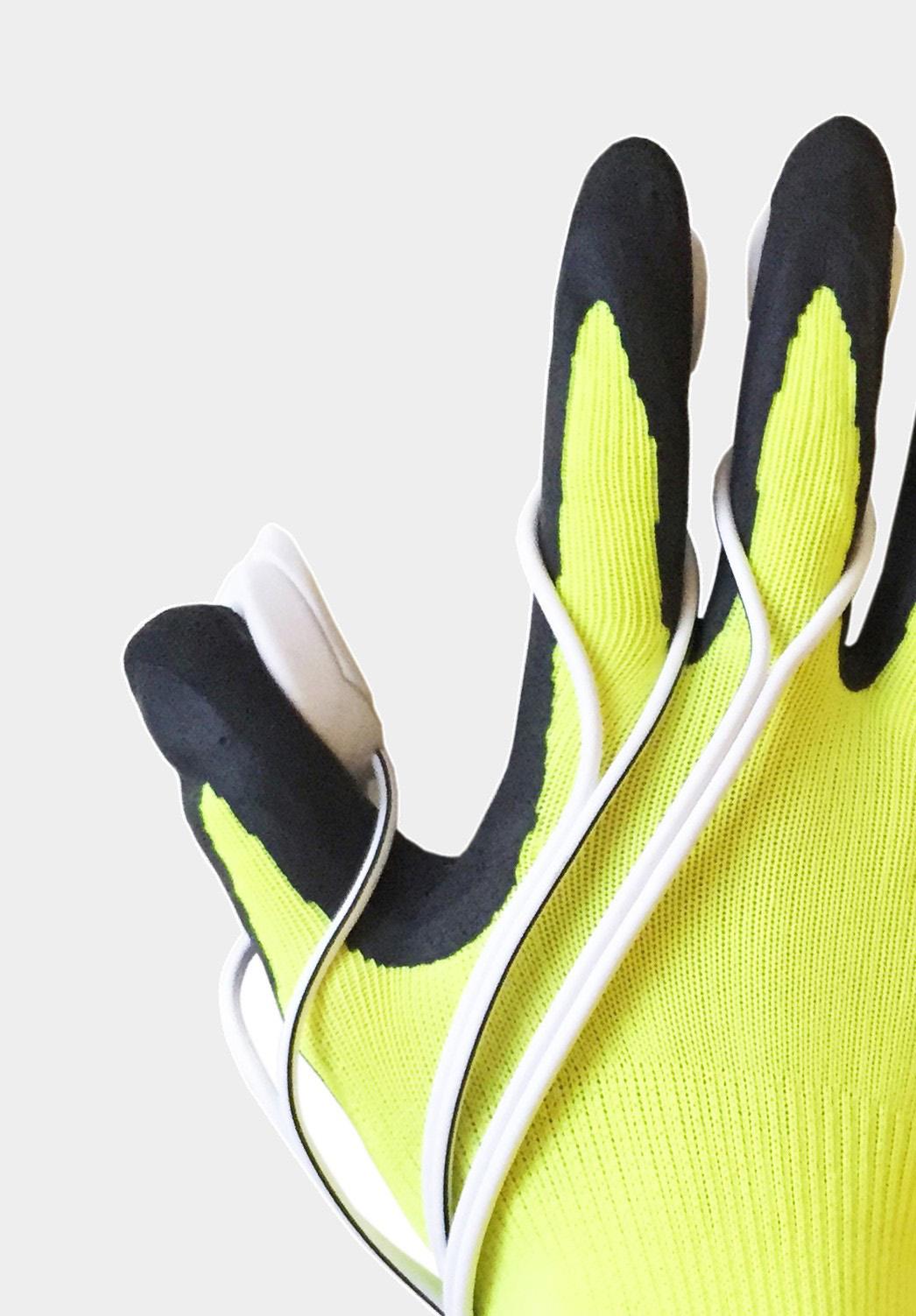
Royal College of Art graduate Morten Grønning adapted an electric kitchen knife to make a prototype glove for carving hard materials like sandstone, balsa wood and plaster.
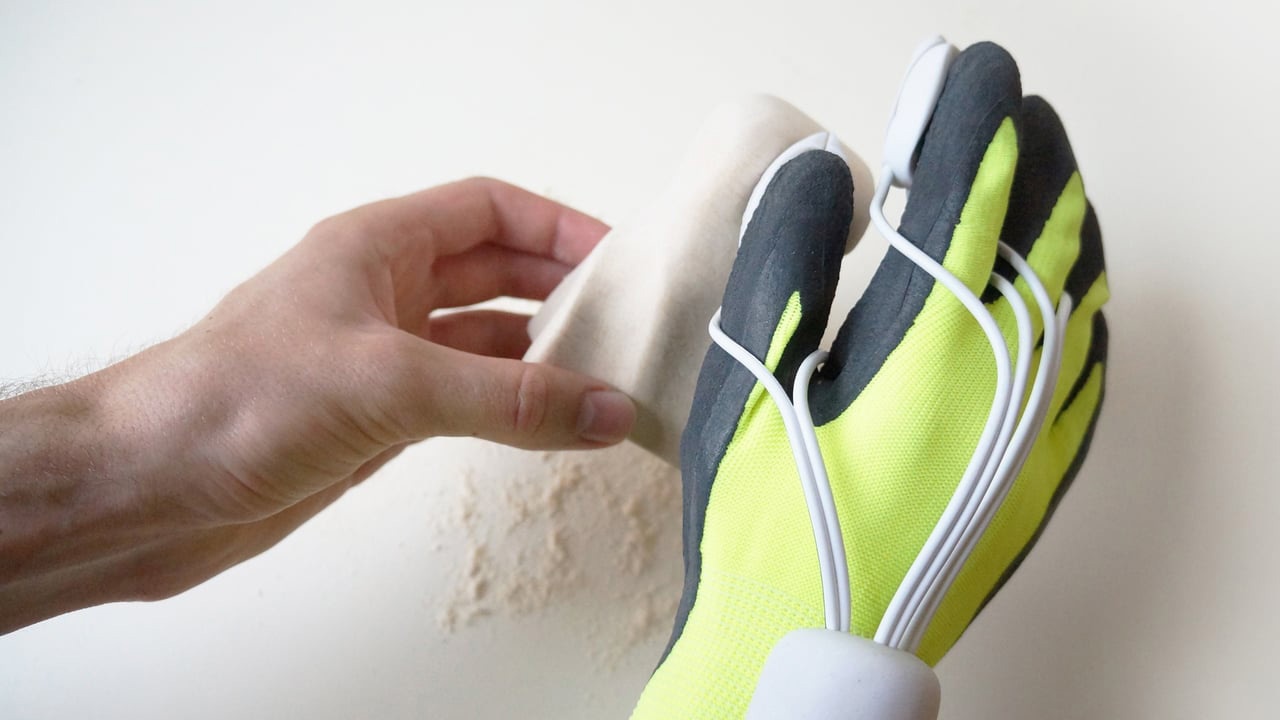
Grønning’s Happaratus glove features a pair of abrasive pads on its fingertips, which move back and forth in a reciprocating motion, enabling the wearer to sculpt materials like wood or stone with their hands.
“It’s a project that explores a new way of creating,” says Grønning, who graduated from the RCA’s Innovation Design Engineering course. “I wanted to explore how we can use our hands to create directly in hard materials.” To make his first prototype, Grønning took the mechanism from an electric carving knife.
“I needed a specific motion to power this tool and an electric kitchen knife was very well suited to do this,” he explains. “So I ended up strapping one of those to my wrists and using that to power the tool for the first prototypes”.
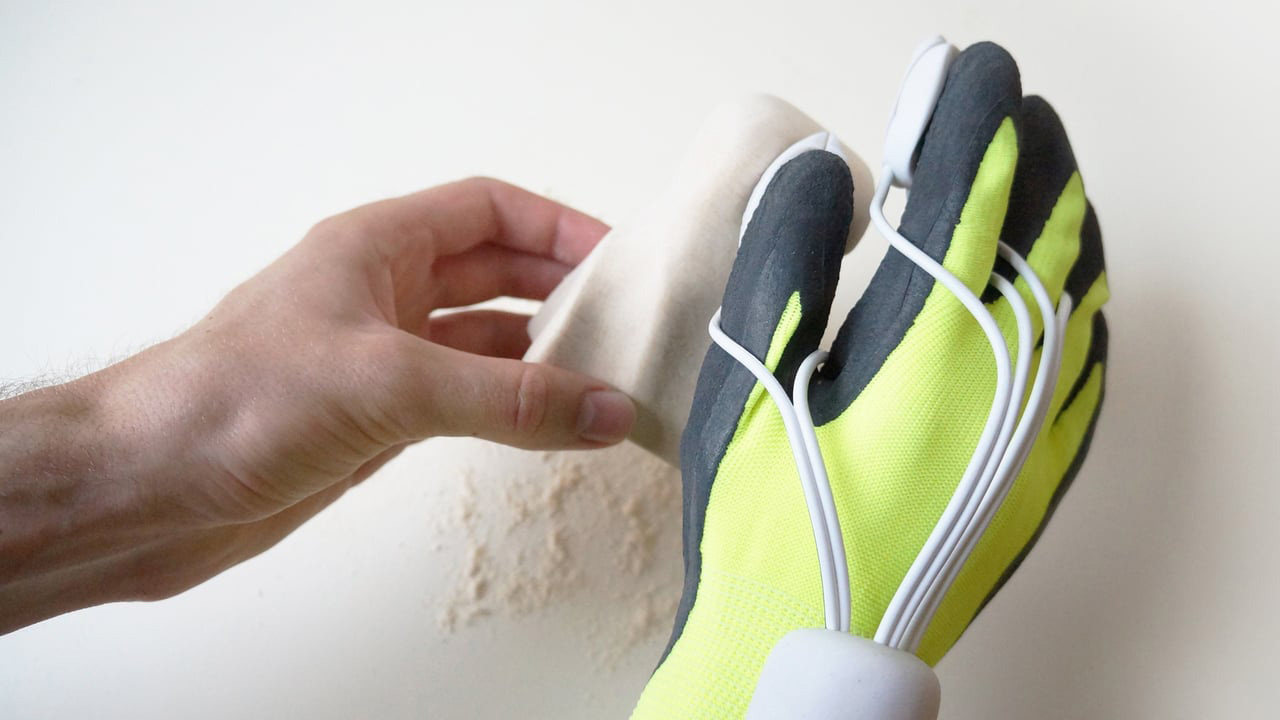
To demonstrate how the tool could be used, Grønning gave the prototype to a number of wood and stone sculptors to test it out. He claims the feedback was very positive.
“The whole prototyping phase was about finding a way to build a tool so I could give them out and have people test it,” he explains. “The main feedback was that, as you are creating a curve, you know the shape through the haptic feedback. So you are understanding the shape as you make it”.