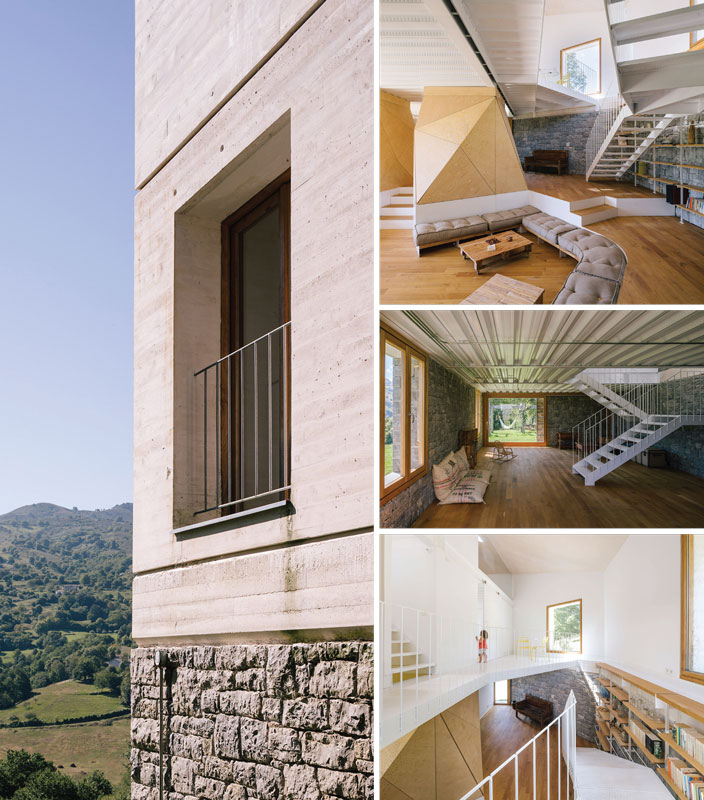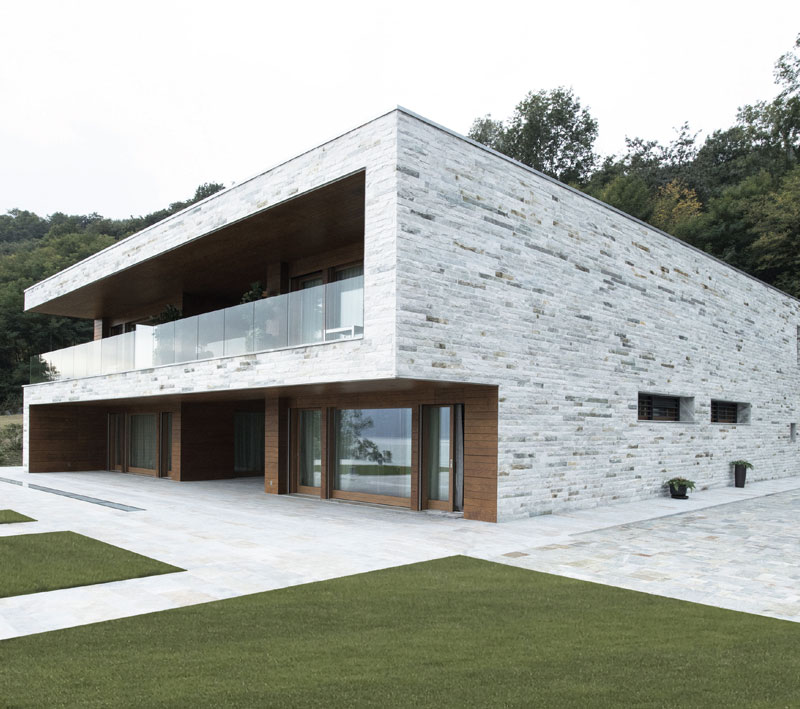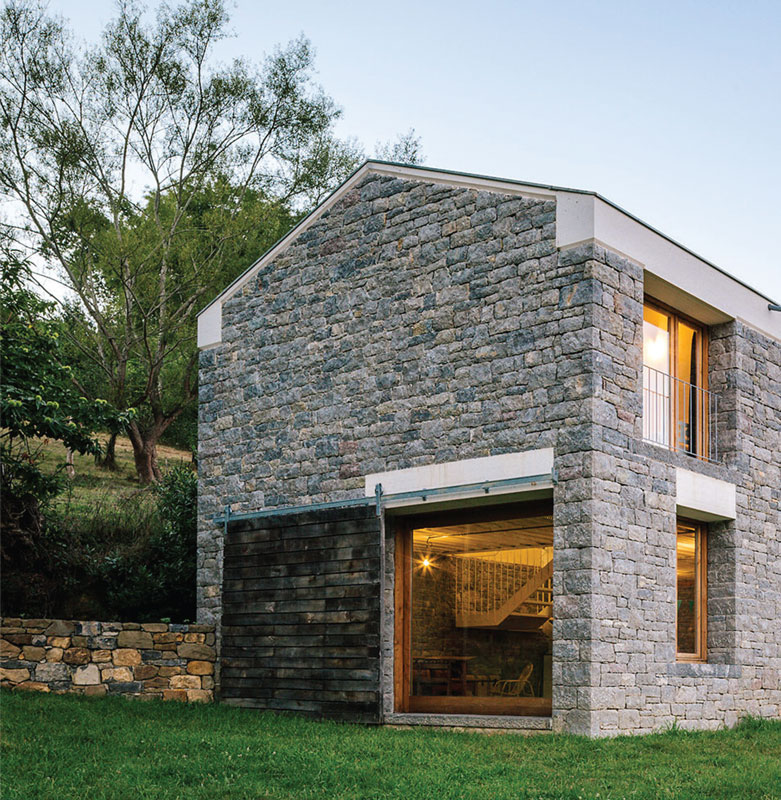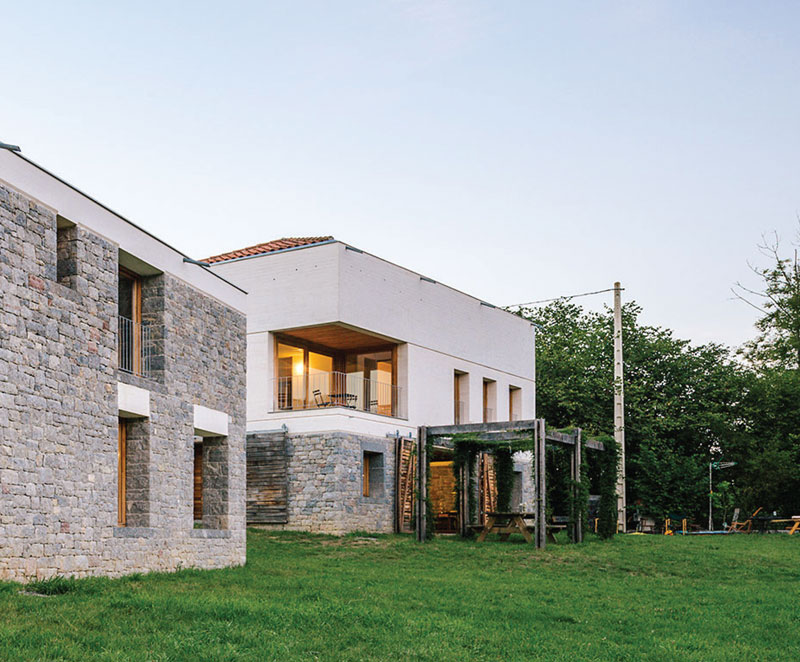

The house designed by Camillo Botticini with Mauro Sillani sits on the western shore of Lake Orta. Located in the vicinity of Pella, a small town in the province of Novara which is known for its scenic areas and natural environment, the project overlooks the island of San Giulio with high hills rising right at its back. Botticini makes the following remarks regarding the house with such strong qualities, which has been designed in detail and equipped with a bold and linear profile: “The house looks like a block of stone that has stopped after sliding down from the mountain top. During its fall, the mass has opened up with the cavities inside almost facing the crystal clear waters of Lake Orta, virtually touching the beautiful island of San Giulio.” These cavities or “wounds”, have become the sounds that soften the rough appearance of the construction; these wounds “heal” so as to create generous openings onto the lake view, catalyzing the natural light inside what was initially only a stone box. Therefore the house becomes the fruit of a transformation from stone to architecture; it holds its ground as an element of nature while being able to house people and residential activities… The farmhouse, which was untouched for over fifty years, was calling for a complete renovation to be adapted for contemporary needs. There were two construction sites including the main house and a stable. The main house was overgrown with vegetation and in a very bad condition. Numerous repairs had to be made to make it livable. The timber and stone structure of the stable was substantially deteriorated and most of the walls had to be replaced. Considering the farm’s bad condition, the positioning and significance of the architecture was maintained; the new facade of the main house was reconstructed with white concrete and local stone. The insulating lining implemented in the main house formed the new loadbearing structure, strengthening the old stone walls while also providing thermal insulation. Previously made of stone and brick weatherboarding, the facade parts were replaced by a monolithic wall of insulating concrete with formwork, which regenerates the old texture of the timber. Windows were placed in deep recesses and behind large wooden shutters, giving reference to the style of stable doors. Positioned on a steep and sheer mountain slope overlooking the valley, the main house articulates to a site having a 2 meter difference in level between the north and the south facade. The gradual layout of the ground floor levels in harmony with the slope of the land, provides a series of connected areas abstaining from traditional interior sections. In the interior, retaining walls were replaced by light metal columns, forming a large triple-height living room along the entire length of the structure, which allows daylight to penetrate in. A generous metal staircase provides access to the different rooms of the house. A worn-out stone made of a mix of white concrete and iron beams coexist with weather-beaten wood and local stone. The interior space is organized around four diamond-shaped elements that stretch vertically from inside the house. The elements that present this holiday home with its character are inspired by the client’s four daughters. The first floor contains two bedrooms connected through a double-height space overlooking the valley, along with the master bedroom opening out on the corner terrace. In the stable, the haylofts on the upper floor were transformed into bedrooms emancipating the space on the ground floor with an aim to create a large central hall that serves different purposes
CREDITS
Project Location: Granda de Abajo, Concejo de Parres, Asturias, Spain Project Year: 2015 Project Team: Ophélie Herranz Lespagnol and Paul Galindo Pastre Development Design Collaborator: Carlos Mínguez Carrasco Prime Contractor: Roberto Labra Rodríguez Structural Engineer: Juan Rey (mecanismo) Gross Construction Area: 414 sqm Quantity Surveyor: Fernando Suárez Otero Photographs: Miguel de Guzmán