

The Tapestry Museum in Arraiolos occupies an existent building that once was a twelfth-century hospital in Alentejo, Portugal. The building is used for the exhibit of the embroidered wool rugs and carpets that have been in production there since the Middle Ages and the town is famed for.It is located in the main square of Arraiolos. The Tapestry Museum contributes to consolidate the character of the square as qualified public space and aims to streamline the town’s social and cultural life.The architects believe that the renovation will help to enhance the social and cultural life of the town as well as the building.
The project office, CVDB arquitectos was founded in 1999 in Lisbon. Both founding architects, Cristina Verissimo and Diogo Burnay are teachers at the “Faculdade de Arquitectura UTL” in Lisbon. They have collaborations with international architects, such as João Luis Carrilho da Graça in Lisbon and Zaha Hadid in London. The studio’s works range from urban design projects to new buildings, from rehabilitation of old buildings to interior architecture or ephemeral structures. Up to now, the studio made several projects including school, house, museum, library and cultural centre. Concrete is often used in their works and with the material they create monolithic surfaces. Except a few projects, their design philosophy is based on pure ideas and the mass movements they create are naïve.
The building congregates a diversity of interventions and transformations registered along its history. Some of its features needed to be preserved and integrated in the rehabilitation process.The project is based on the adaptation of a contemporary architectural language to the existent building.
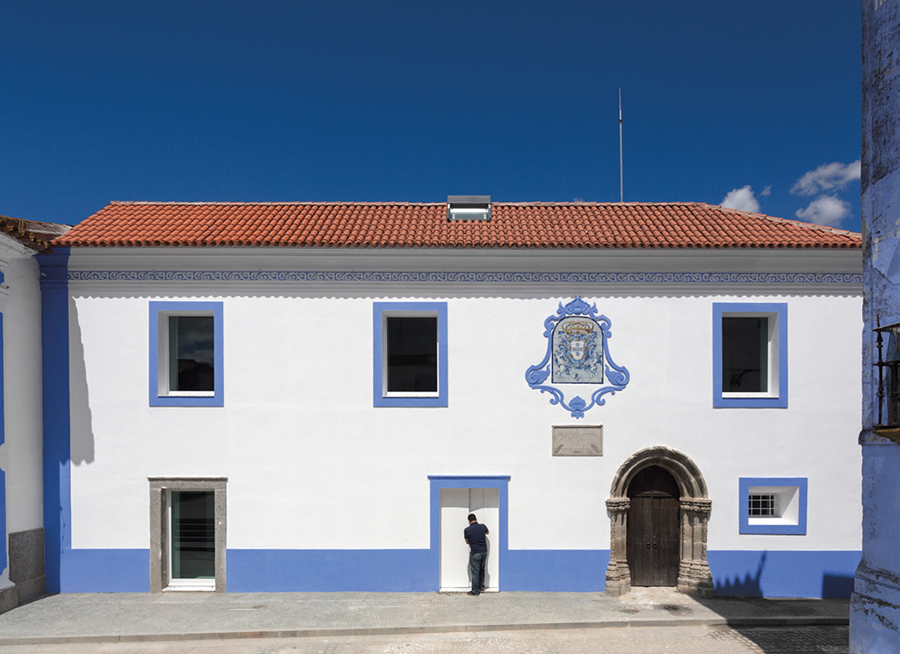
The building is located in an old and low-rise settlement. In the rehabilitation process, the historic exterior of the building wasrestored and repaintedin colours blue and white so it is oriented to the urban tissue.A new staircase was added at the rear to allow tapestries to be easily transported in and out of the building.In addition to giving a modern look to the building, staircase fits the existing continuity of the settlement because of its colour and transparentness. In this way, design idea about combination of historical and modernis continued here.
Galleries on both floors of two-storey building surround a double-height atrium with an arched ceiling. The atrium considered as “core” can also be reached from the entrance.This central distribution space establishes the connection between the main public areas. The existence of window-like openings and passages allows a diversity of visual connections through the core to the surrounding areas. The connection of two storeys is made through the staircase that is located at the end of the core. The stairs that are sticked into the stair well don’t have riserand this situation lightens the marble’ dominanteffect. In upper storey guests meet a balcony before the galleries. This single first-floor balcony at the far end offers a vantage point where visitors can survey the space.
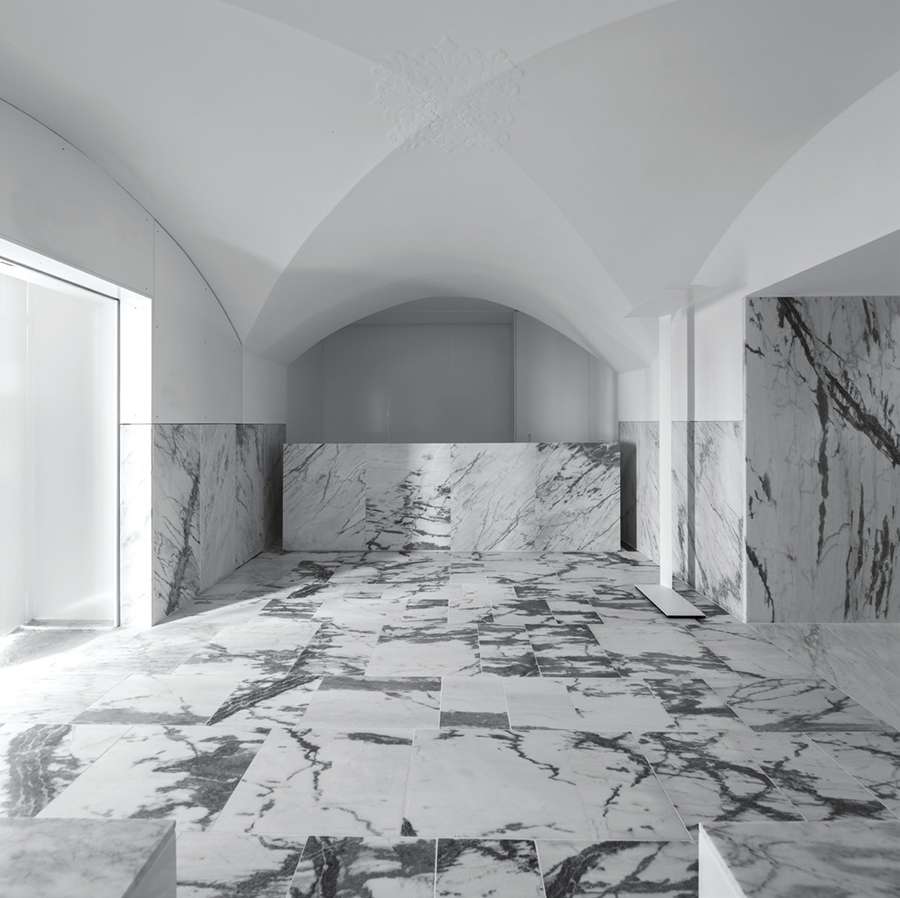
Vaulted ceilings added during the eighteenth century were retained and repaired in the galleries and multi-purpose spaces of ground floor. Each have been painted white and feature decorative mouldings. In the multipurpose room the structural system was remade with metallic beams, according to a contemporary architectonic language. The intervention in the first-floor ceilings was more comprehensive.
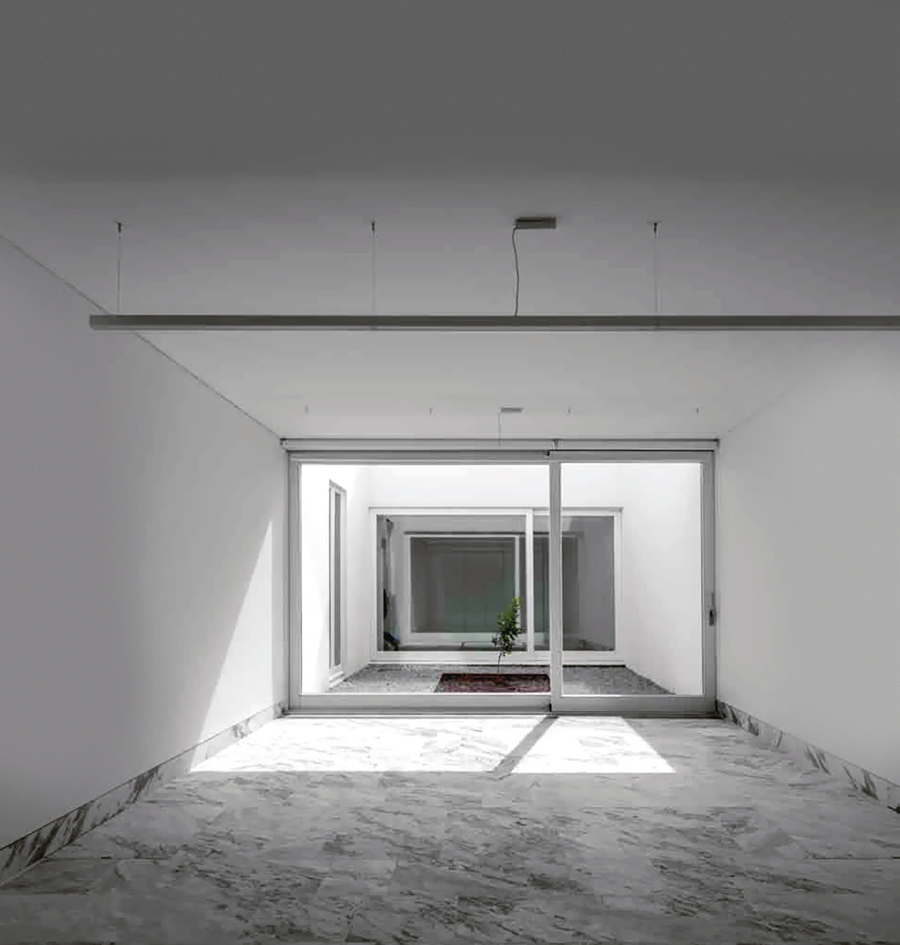
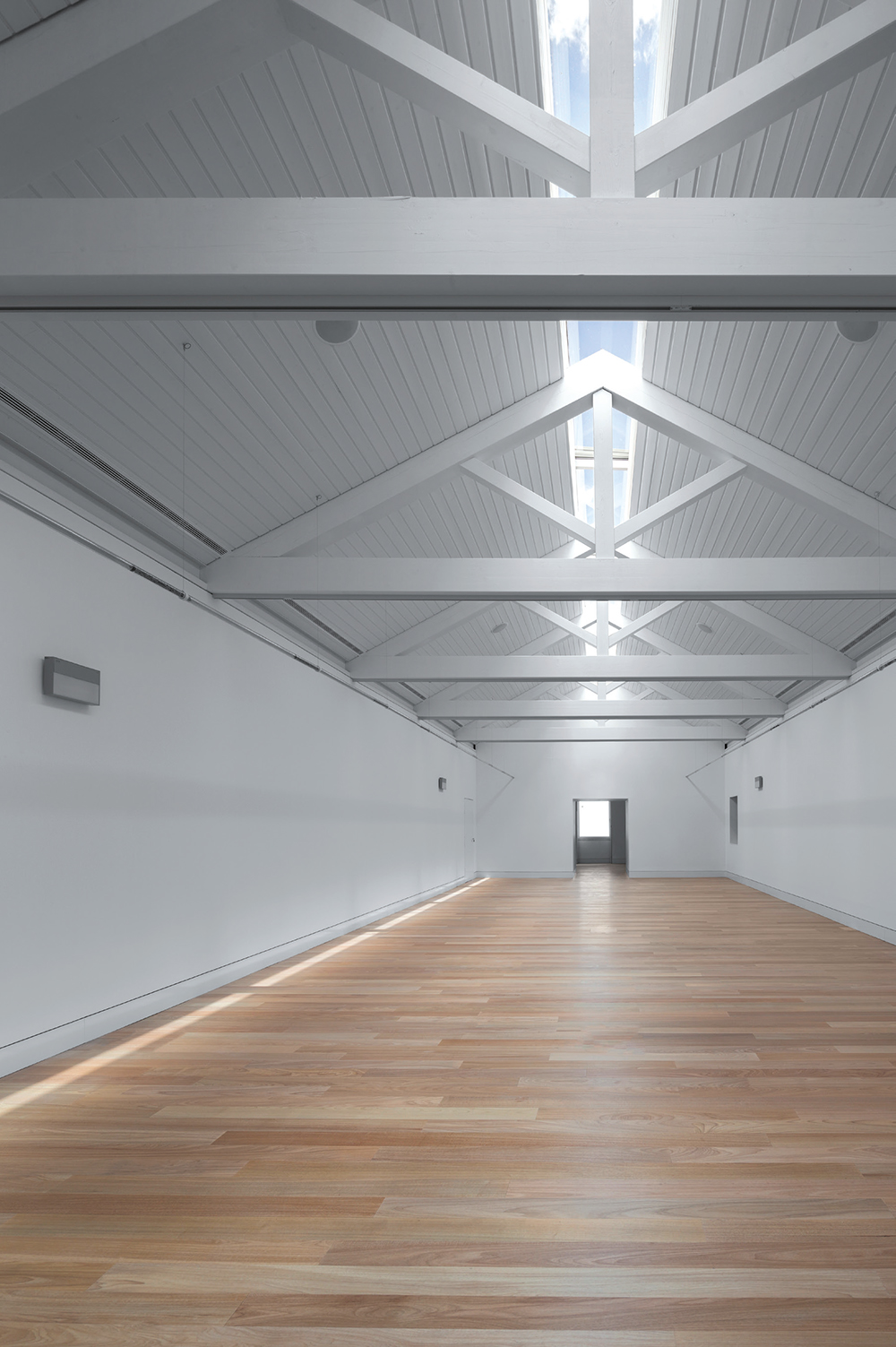
All the roof area was replaced by a set of ceilings shaped as “inverted funnels” with a skylight on the top. The structure of the roof was maintained only in one room, characterised by a sequence of wood trusses topped by a long skylight. In this floor, there is a terrace with a marble bench. From here, guests can look out over the town or down to a small courtyard just below.
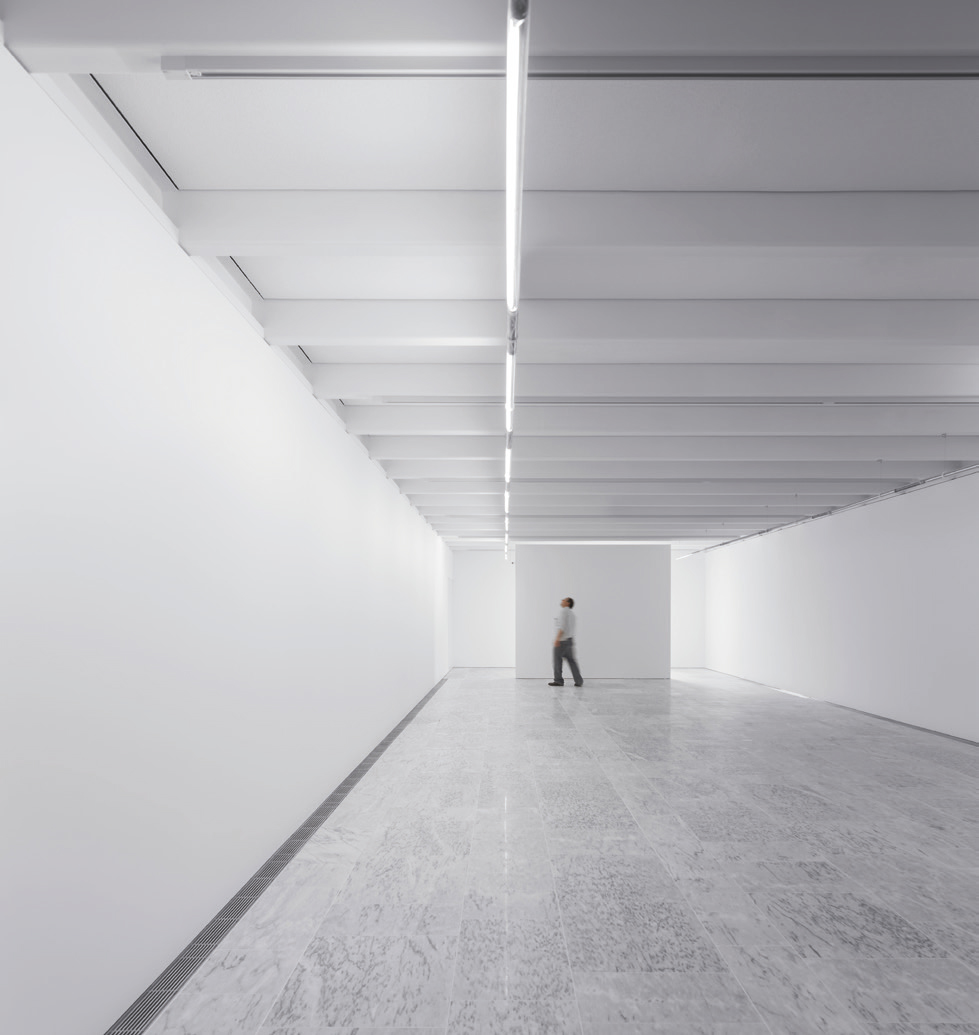
Local material use is an informed choice in the building. Local marble is the dominant material and wood is secondarily used in the floors. Architects have chosen the local marble material because of being noble just like the building. The veined marble including white and greycovers the atrium floor and continues through the rest of the ground-level spaces, occasionally wrapping up onto the walls.High baseboards made from the same material and use of same marble in some benchs and counters makes a visual continuity. Marble staircase treads lead up from the atrium to the larger exhibition rooms on the top floor, where the floor surface switches to tauari wood that has been left unpainted to display natural yellow and pinkish hues. The colour of walls are related to the white in marble. So, when the colour of walls, ceilings and marble gets together, bright spaces occur. On the other hand, the grey colour in marble is felt much more from white in the entrance. Also, there is a small slope from that point to the inner side of the building. These give the space an overcast feeling. However, the general interventions about sunlight are very suitable for buildings purpose. All lightening equipments are chosen simple just like the whole concept.
After the renovation, the building resembles a prayer place and it also resumes the cold feeling of hospital with its choice of colour and material. Especially, relation between atrium and balcony arouses a feeling of coexisting. The feeling of serenity and continuity in the building turns it into a mystical place.
Aslı Uzunkaya / Architect