

BLAIBACH IS A VILLAGE IN THE GERMAN STATE OF BAVARIA, NEAR THE BORDER WITH THE CZECH REPUBLIC. LIKE OTHER COMMUNITIES IN THE REGION, IT FACES A DECLINING POPULATION AND AN INCREASINGLY VACANT TOWN CENTER AS PEOPLE LEAVE THE AREA FOR THE LURE OF LARGER CITIES.
AS PART OF A GOVERNMENT REVITALIZATION PROGRAM, AND MUNICH-BASED ARCHITECT PETER HAIMERL, WHO HAS REMADE BLAIBACH INTO A CULTURAL MAGNET WITH A NEW CONCERT HALL.
The concert hall represents the heart of the urban project to revitalize the centre of Blaibach. It is located next to the new community centre and complements the space of a new village square that was realized with funds of the state urban development support.
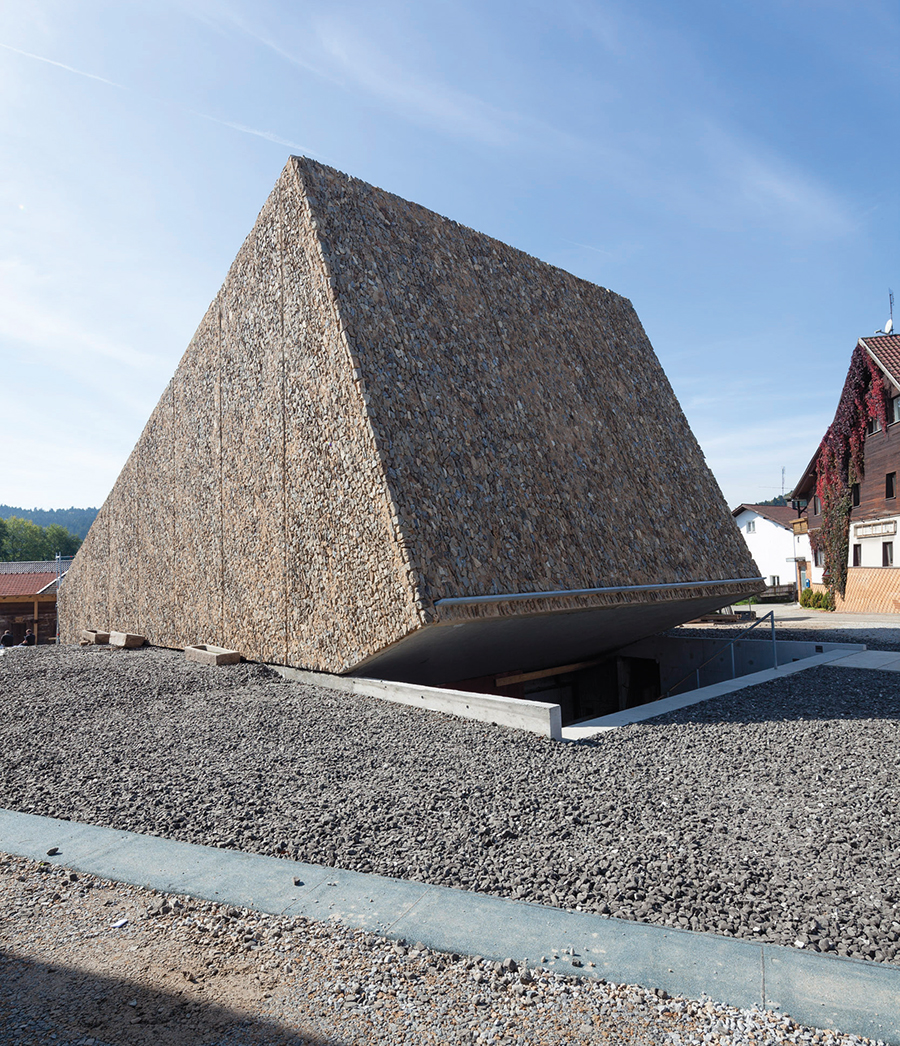
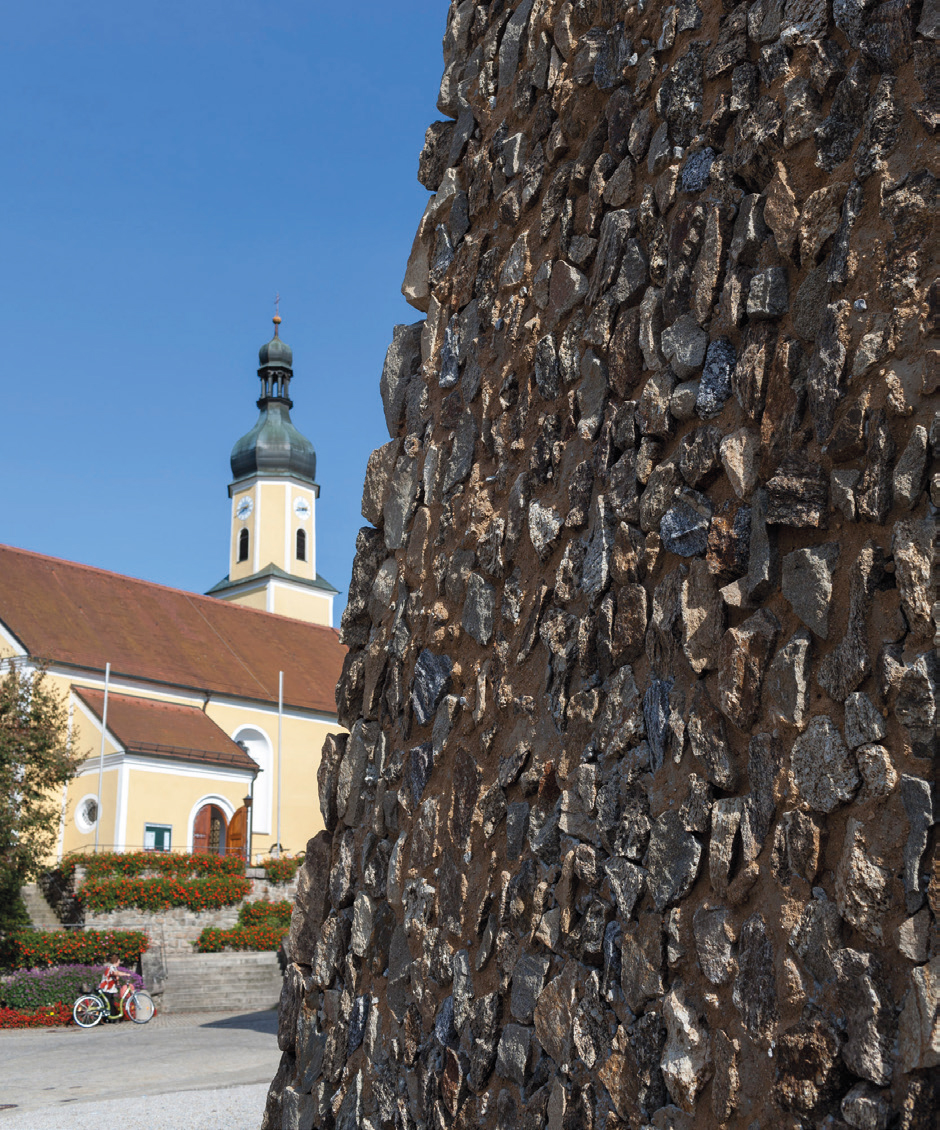
An inclination through the slope in the village centre following the topography forms a remarkable entrance of the concert hall. The striking granite façade resembles a salutation to the stone carving tradition of Blaibach. For his façade design, “the concert hall itself is a sculpture,” the architect Peter Haimerl says. The architect selected a specific cut of rough granite to clad the volume because “the old houses in Blaibach were all built from this material,” he says.
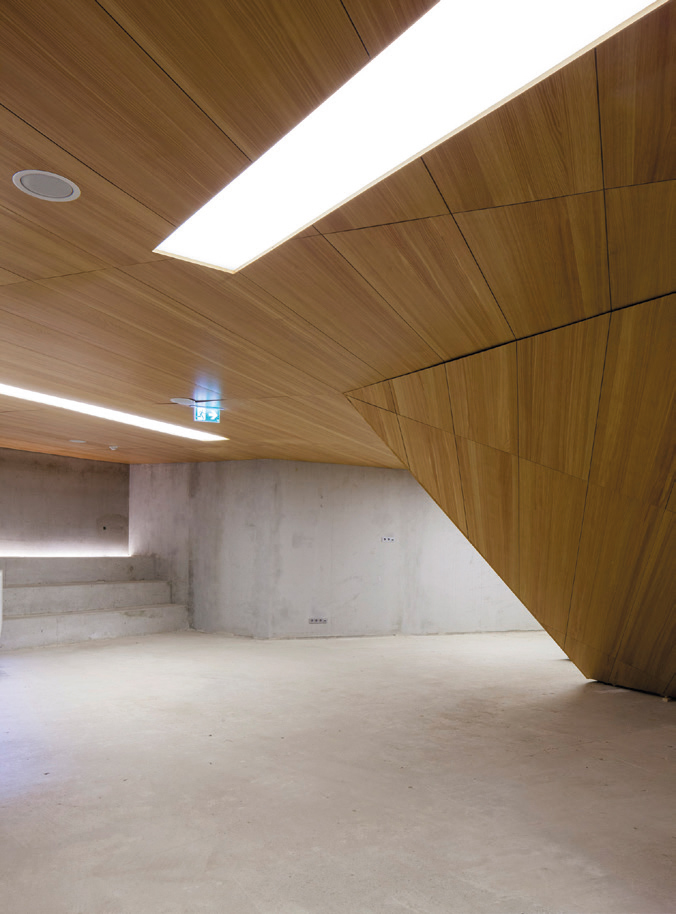
The monolithic tilted building opens itself to the visitors at the new village square and guides them by a staircase to the foyer below the surface. The foyer provides not only the functional areas like wardrobe, sanitary rooms and bar, but also leads the visitor excitingly around the auditorium into the inner concert hall.
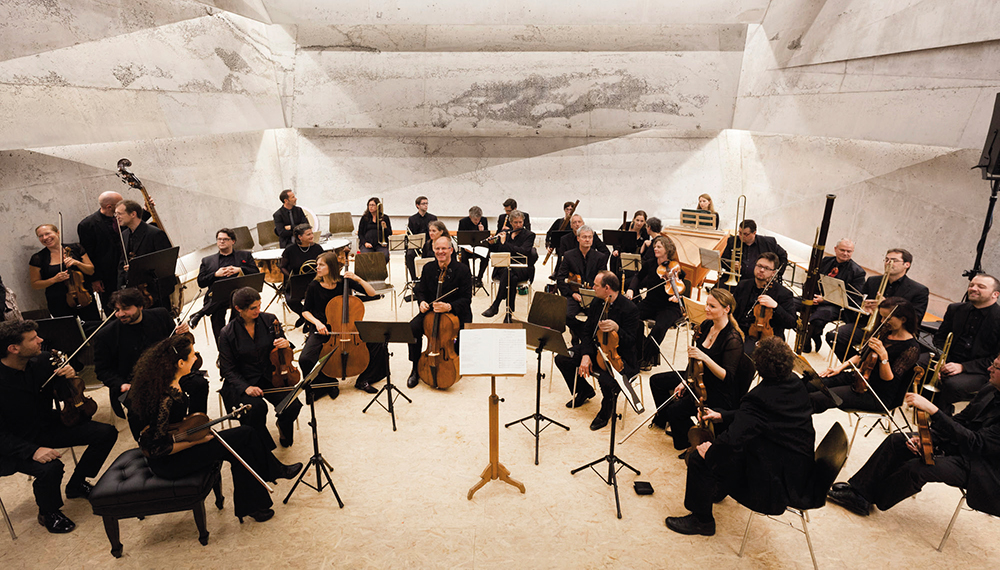
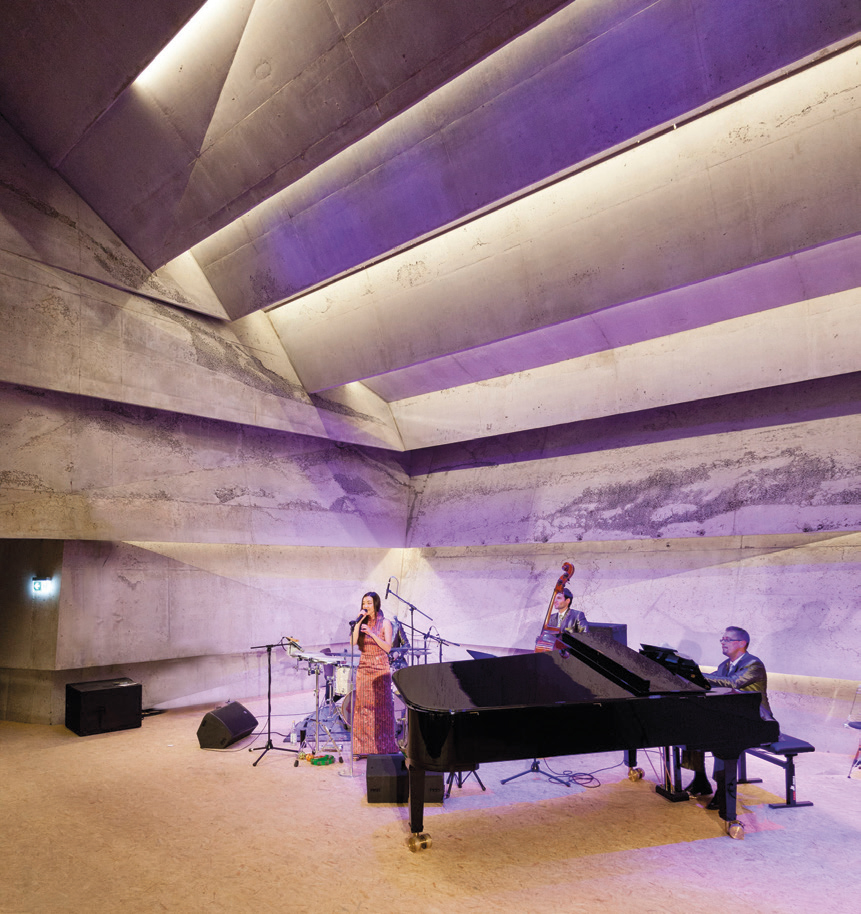

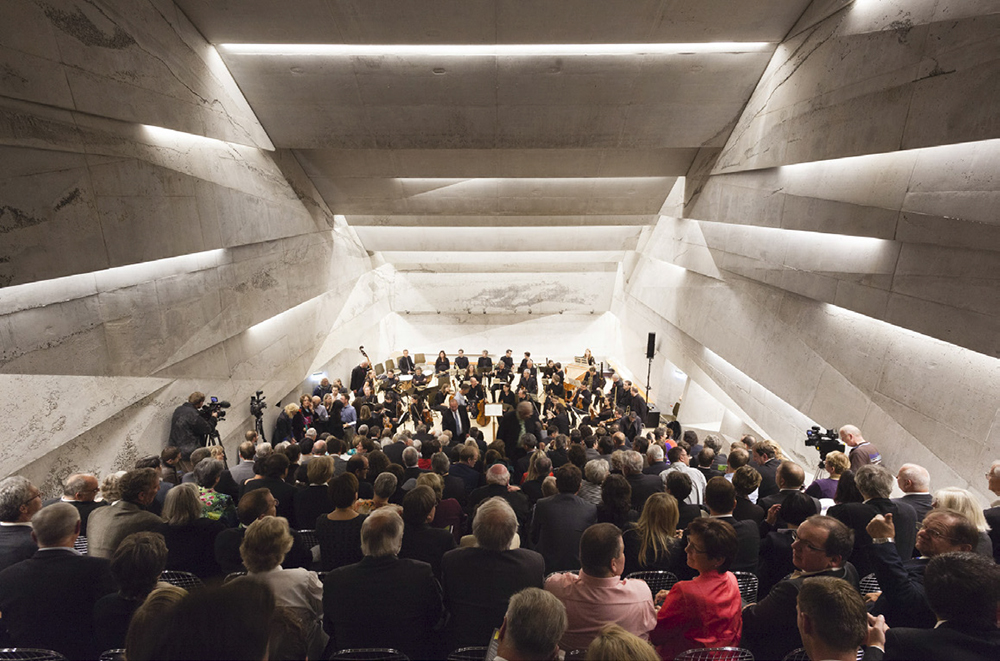
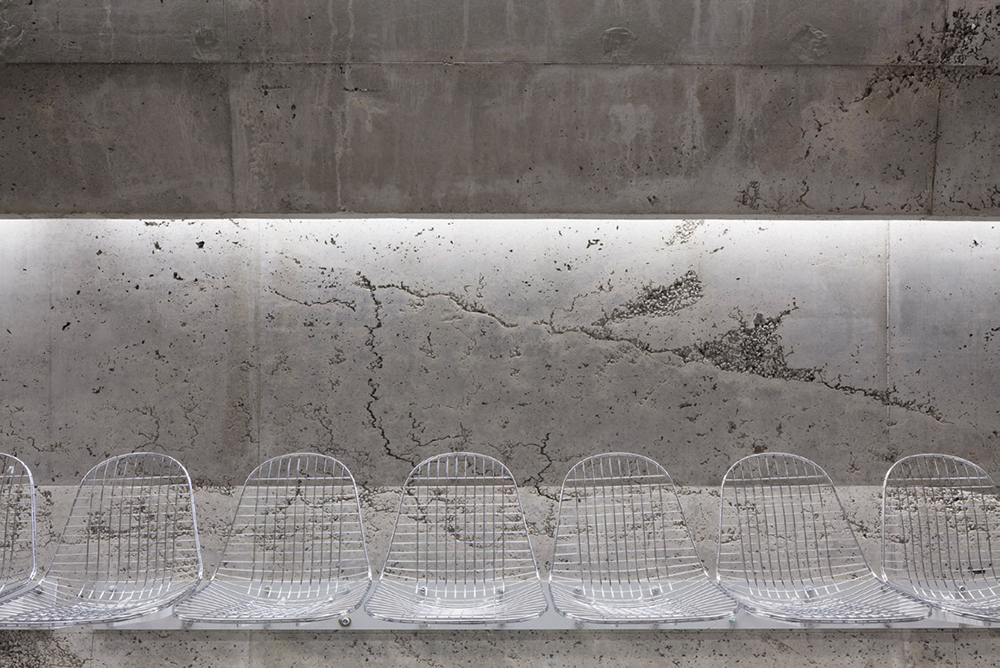
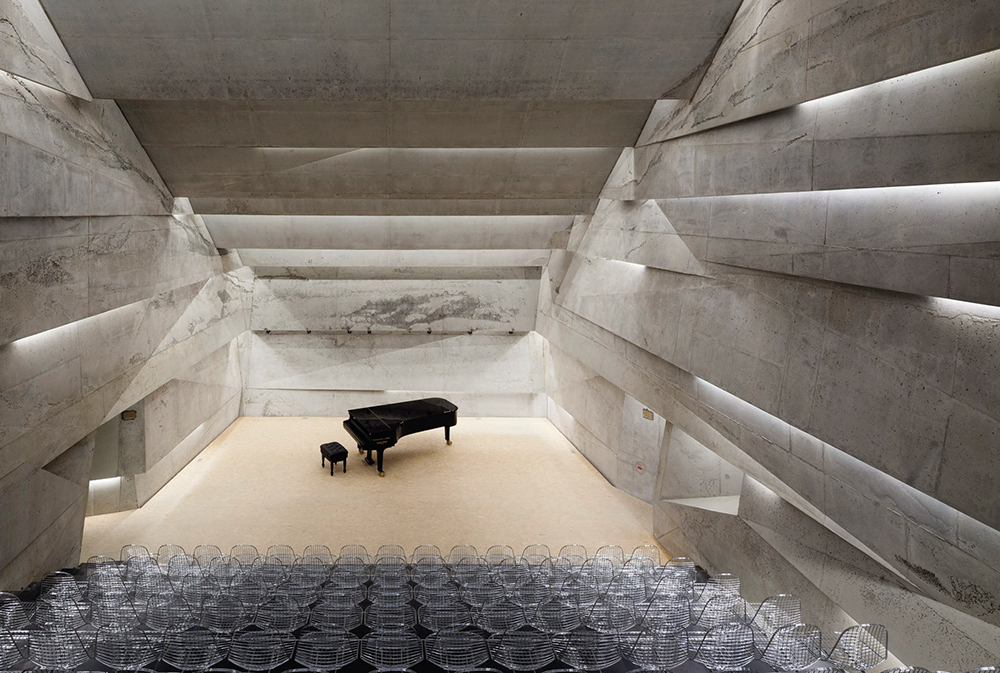
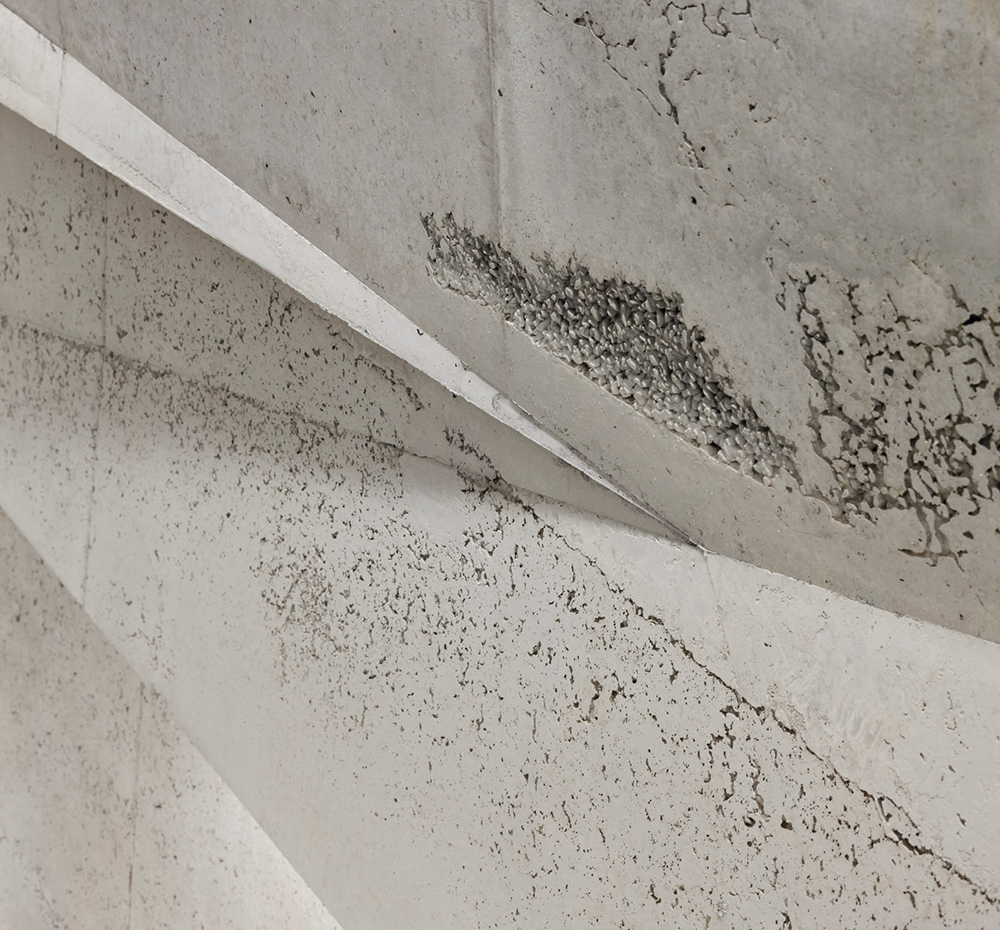
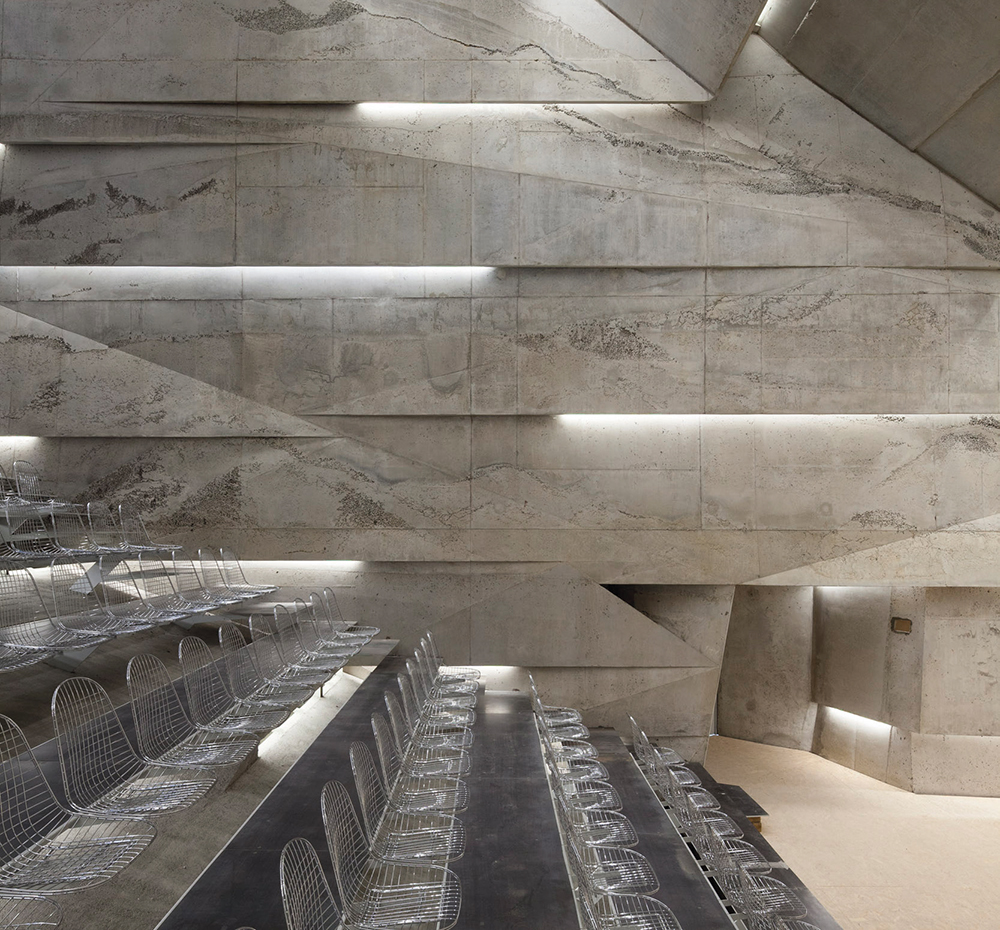
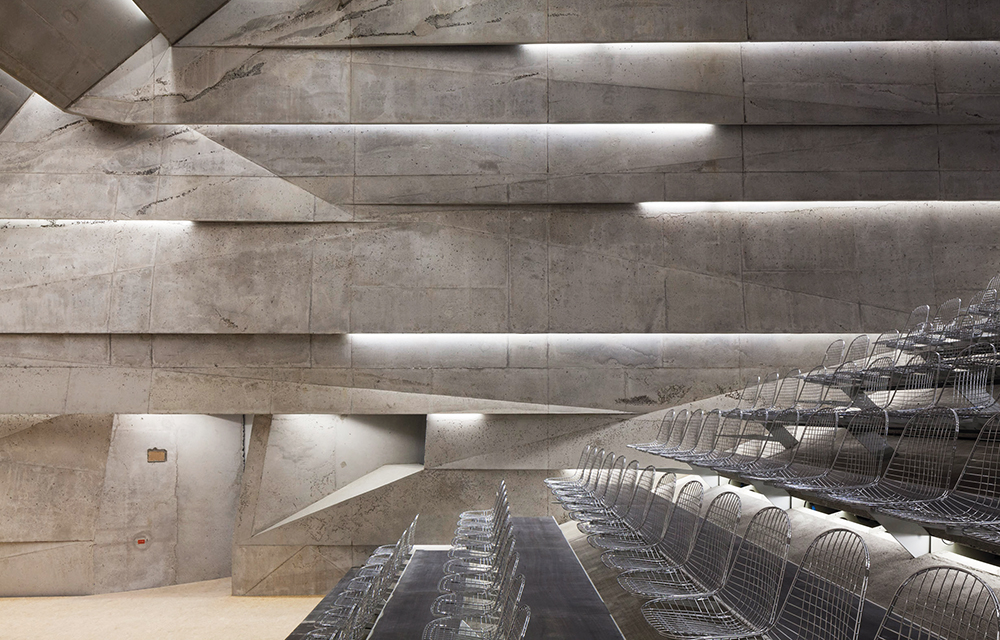
The entirely concrete concert hall space is acoustically fine-tuned for classical music. “Concrete is one of the best materials for good acoustics,” Haimerl says. “What you need is a very hard surface, and a few areas where you dampen the sound. People are using wood, but it is not the best material because it is not stiff.” The concrete here is a lightweight mix with recycled glass aggregate that results in a rough textured surface – “like paper,” the architect says.
The inclination of the building – based on the increase of the slope – carry the gallery. The seemingly transparent 200 seats, which are fixed on iron swords, appear to float above the light slits. Also the slits on the walls empower that dramatic effect.
“I wanted to show that classical music doesn’t have to be shown in a heavy, textile-filled environment,” Peter Haimerl says. And so far, the public seems to be responding enthusiastically to his alternative aesthetic that all the performances in the new concert hall have all sold out.
THE BUILDING’S STRIKING GRANITE FAÇADE RESEMBLES A SALUTATION TO THE STONE CARVING TRADITION OF BLAIBACH.

ABOUT PETER HAIMERL:
Peter Haimerl was born in 1961 in Eben near Viechtach. Since 1991 he is continuing his professional career in architecture. The renovation project “Birg mich, Chilli!” is about a converted farmhouse in Eben, was presented with the “Architekturpreis Beton” in 2008 and received the German Architecture Award in 2011. With his company Hauspaten Bayerwald, he works on the building tradition of the Bavarian forest Bayerischer Wald.

CREDITS
Location: Blaibach, Bavaria, Germany
Date: 2013
Total Area: 560 sqm
Total Cost: 1,6 million Euro
Architect: Peter Haimerl Architektur
Project Team: Karl Landgraf, Ulrich Pape, Tomo Ichikawa, Felicia Michael, Jutta Görlich, Martin Kloos
Client: Gemeinde Blaibach
Structural Engineer: Thomas Beck, A.K.A. Ingenieure
Heating and Ventilation: Cirtec Michael Hopf
Electrical Planner: Planungsbüro Stefan Schmid
Acoustical Engineering: Müller-BBM
Concrete Work: Fleischmann & Zankl, Gföllner,
Fahrzeugbau und Containertechnik
Metal Work: Metallbau Gruber
Main Sponsors: Euroboden Architekturkultur,
Förderverein Konzerthaus Blaibach
Yağmur Yıldırım / Architect