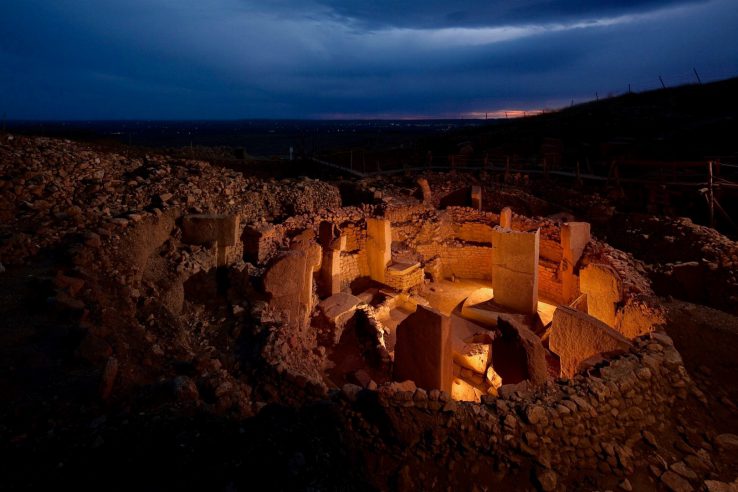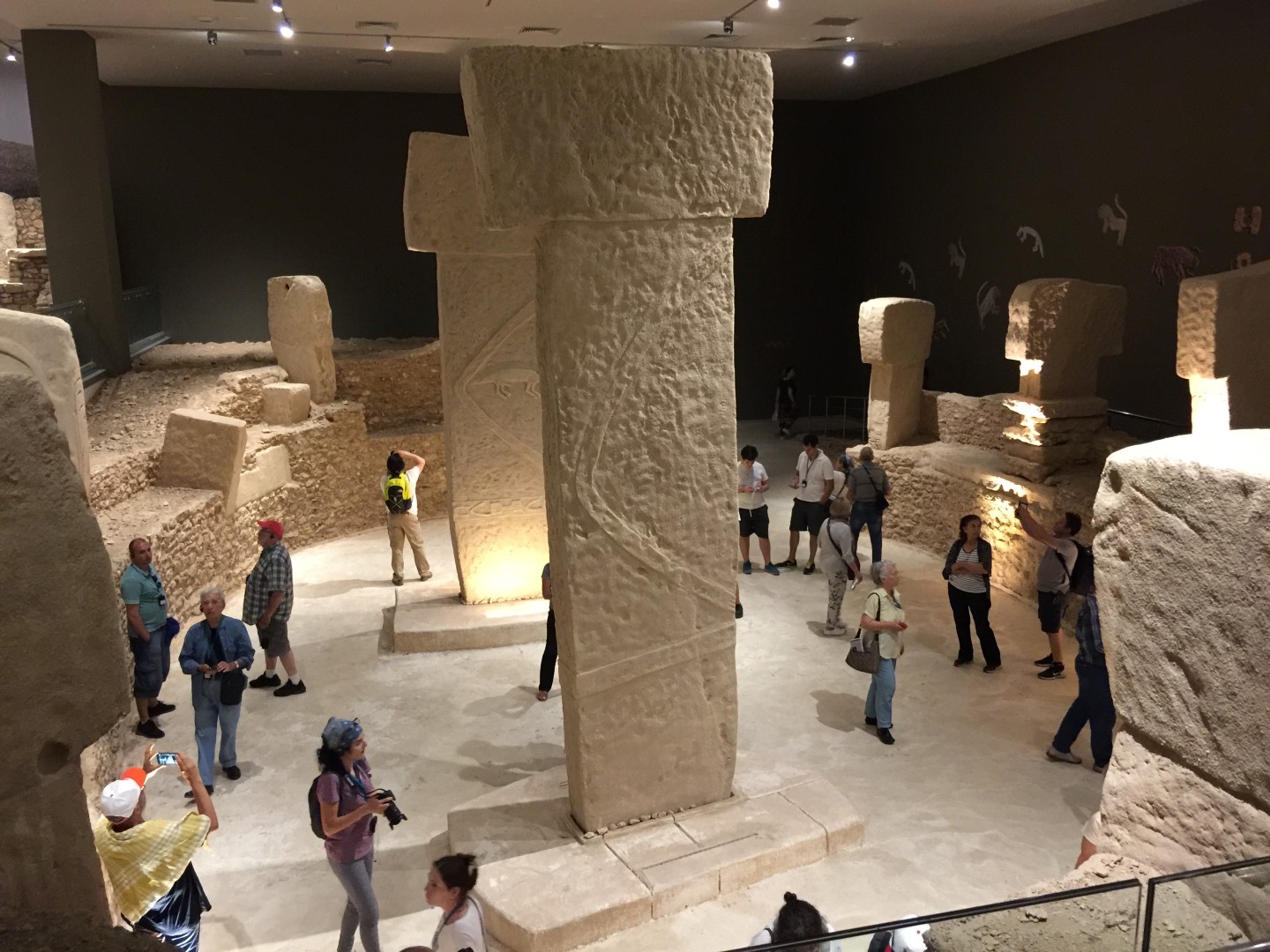

The birthplace of civilization, religion, and agriculture… Who would that an archaeological dig in a village in Şanlıurfa some 56 years ago would eventually unearth all that and more? Göbeklitepe is one of the most important discoveries in the history of archaeology. And what is more, it is still revealing to us its secrets… The territory spanning from Anatolia to Mesopotamia had hosted perhaps the single most important turning point in the story of man since the dawn of time itself. Moreover, it can be summed up in two, straightforward words: Writing and gold… Etched into the memory of Şanlıurfa is the crossroads of Anatolian civilization upon civilization, folded out in plain view for all to see, and to breathe. Since antiquity, it has served as one of the main arteries carrying the pulse of trade between continents. Yet, while this rich legacy re-writes all that we know about the history of civilization and its roots, to not make mention of the archaeological discoveries that have made at Göbeklitepe would only be to tell half of Şanlıurfa’s story.
Some 17 kilometers east of the Şanlıurfa’s centre lays the village of Örencik, or Karaharabe. A further three kilometers northeast of that sits Göbeklitepe, or “Potbelly Hill” in English, which gets its name from the grave stones dotting here. This area is believed to one of the first places where agriculture took place. This site was discovered in 1963 within the scope of the “Southeastern Anatolia Project” as part of collaborative efforts between the University of Chicago and Istanbul University. Alas, Göbeklitepe would have to wait another 30 plus years before it became the subject of serious research; for its initial discovery was less to do with revealing its secrets, and more to do with finding out whether or not the area was worth being studied. In 1995, the head of Şanlıurfa Museum decided to re-visit the site and, in 1996, collaborated with Klaus Schmidt of the German Archaeological Institute to initiate excavations. Before long, both Schmidt and his team became aware that what was awaiting them beneath the ground would have a rippling impact upon how we look at our world. Schmitt continued to work on Göbeklitepe right until his death in 2014. 2019 has been designated the Year of Göbeklitepe. So, what is it exactly about this region that has caught the eye of both scholars and ordinary people alike? There are many, many reasons that make Göbeklitepe the single most significant archaeological discovery of the 21st century. First and foremost, it was built nearly 12.000 years ago. By comparison, Göbeklitepe is 4.000 years older than the pyramids of Egypt, and 6.000 to 7.000 years older than Stonehenge. We’re talking about a period which is believed to pre-date any human settlement-a period when people roamed about in nomadic tribes.
The Birthplace of Civilization
Many scholars suspect that Göbeklitepe marks the birthplace of religion, of the transition from nomadic life to settlement, and of structures that appear to point to the first cities. Not only does this call of our previous assumptions into question, but it also re-writes the history books. This period falls within the “Iron Age”, long before human beings had begun to mine and process of rocks and minerals. Despite this, we see traces of the first patriarchal societal order, the first terazzos (made from a very simple plaster), and the first Neolithic sculptures and prints-all of which feed into Göbeklitepe’s significance. As a result, the site has made it onto UNESCO’s World Heritage List as being “the birthplace of civilization.” New evidence indicates that the pioneering people of this region some 12.000 years ago had breathed life into stone as a construction material, thus fuelling already heated debates among scholars regarding precisely how to define Göbeklitepe. While it may take many more decades before it confides all of its secrets to us, the data that we already have in our hands is nevertheless an invaluable advancement.
Astonishing Facts About Göbeklitepe
Inhabited for 3.000 years: That’s right. Göbeklitepe had been built over 12.000 years ago, but abandoned only 9.000 years ago. However, residents didn’t simply up and desert everything. Before they left, they buried everything. This is why everything, including various temples and spaces come down to us so well preserved. We ought to consider it a second gift of sorts from our pre-historic ancestors. The question of why, though, a place of worship that was used for 3.000 was suddenly abandoned, remains unanswered.
Predates everything we know: Göbeklitepe pre-dates Stonehenge in England by 6.000 years, the ancient Sumerians by 5.500 years, the pyramids of Egypt by 7.400 years, and writing by 6.800 years. If we were to round everything off, the time lapse between the establishment of Göbeklitepe and the aforementioned events/periods is roughly equal to that between these major events and today.
Architecturally way ahead of its time: Before Göbeklitepe’s many mysteries came to the to the surface, no one had ever thought in their wildest dreams that human beings should shape soil and rock both as powerfully and as functionally as this site’s former residents had. This large and complex set up is comprised of many places of worship that, from an architectural standpoint, are simply jaw dropping for their time. Figures of animals, carvings, pillars… Regardless of where one looks, the level of stone masonry, engineering, and planning that must have been involved in order to bring such a project to life remains thousands of years ahead of its time. This thus pushes scientists to rethink all that they know about early human civilization. For example, the weight of the pillars situated in the centre of many of the temples range between 20 and 60 tonnes-and that’s excluding the intricately engraved stone blocks sitting atop them. Moreover, shaping and transporting such blocks would not only have had to have required immense technical skill, but also immense man power.
Social order and collaboration: For years, the belief was held that Göbeklitepe’s builders and contemporaries were likely to be primitive nomadic hunter-gatherers who had no association with farming of any sort. This theory, however, came into doubt when archaeologists combed each temple, section by section, and discovered that hundreds of men would have had to have required in order to erect them. This would not have been possible without a highly advanced and organized sense of social order.
Forgotten treasure: As we had mentioned a bit earlier, no one had touched Göbeklitepe until 30 years after its discovery in the 1960s. Back then, no one had understood either its historical or structural value, or even its magnitude; it simply wasn’t clear. In addition, archaeologists had dismissed it as being a Medieval graveyard… that is, until Klaus Schmidt came along and decided to re-visit it. Only then did the story of humanity begin to change. Intricate carvings and creativity: Göbeklitepe is not just your typical massive construction site. Rather, as a whole, it is a collection of structures that showcase some of the finest examples of stone masonry, and even perhaps the dawn of human creativity. At the tops of nearly all of the main pillars, one finds intricate carvings of animals. Sitting atop others are finely chiselled animal sculptures that are works of art in their own right.
Göbeklitepe’s Natural Stones
How could humanity have managed to construct such a massive site exactly 12.000 years ago, well before the invention of mining? The simple answer is by using stone, for everything form the tiniest detailing to the gigantic pillars… Three basic rock types are found at Göbeklitepe, which give its opulence, colour, and emotion. At the head of these is the greyish volcanic stone basalt, known for its either microlite or glasslike surface, both of which are structurally uniform, alongside its being particularly durable against the forces of both nature and time. These properties render it a key base material not only for structural but also for decorative and emphatic elements. The second type of rock that brings, if not holds together Göbeklitepe’s various elements is limestone. Besides its distinct creamy white colour, its spongy texture lends itself to being easily carvable. Göbeklitepe itself sits atop a 2-kilometer long plateau where limestone naturally occurs. All of the T-stone stone pillars alongside the interior walls found within each structure were thus carved from the lime quarried from that plateau.
We would be correct in assuming that flint stone was the cutting tool of pre-history. These small tools still remain the main material of choice for making cutters and drills for the so-called stone dressing industry. Archaeologists have uncovered thousands of such flint stones at Göbeklitepe. Better still, the source of the stone used to make them lies within walking distance of the site. It appears that while some were made at the nearby lime quarry, others, it seems, were made on the construction site itself, after the stones were transported. Traces of the use of flint stone can be found on every finished as well as unfinished work of art and architectural element alike that one encounters at the site. Beyond these three major rock types, we also come across other types of stone as well – which, albeit less common, are nevertheless equally as stunning. The most prominent of these is obsidian. The fact we find only a limited number of examples of it makes it all the more precious. When we trace our steps back towards the source, we see that such samples at hand were obtained from different parts of Anatolia. As we dig a little bit deeper, it becomes apparent to us that Göbeklitepe would also have served as a centre of ritual for visitors travelling from afar. It is now believed that Göbeklitepe was the first Neolithic centre of worship and pilgrimage to ever grace history. Scientists have moreover come to accept that cloaked behind inheritance is a discovery that has forever altered world history – and that it was left both to us and to all of humanity 12.000 years ago. Göbeklitepe lies in the village of Örencik, 15 kilometers northeast of the center of Şanlıurfa, Turkey’s mystic “City of the Prophets”. There are regular flightls Şanlıurfa Airport from Ankara, Istanbul, and Izmir. Many of the treasures unearthed at archeological site can be found on display at Şanlıurfa Museum.