“A stone creates a landscape, and a landscape usually sits outside of a building. I wanted to create this landscape that exists outside, inside the building itself.” – Junya Ishigami
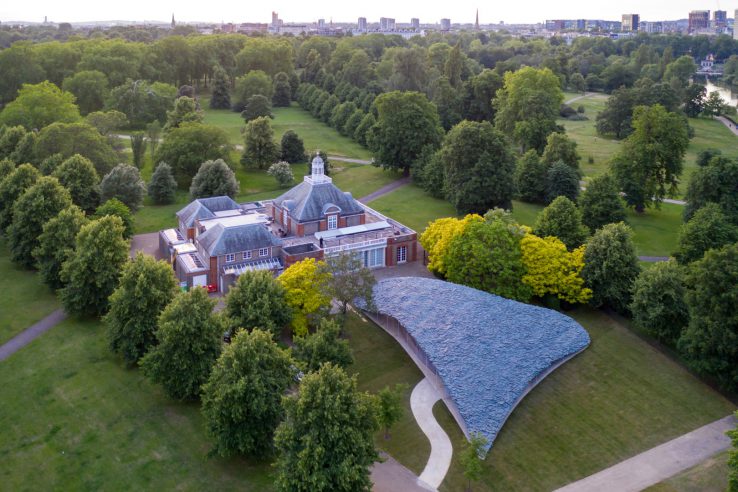
The Japanese architect Junya Ishigami, celebrated for his experimental structures that interpret traditional architectural conventions and reflect natural phenomena, has been selected to design the Serpentine Pavilion 2019. Ishigami’s design takes inspiration from roofs, the most common architectural feature used around the world. The design of the 2019 Serpentine Pavilion is made by arranging slates to create a single canopy roof that appears to emerge from the ground of the surrounding Park. Within, the interior of the pavilion is an enclosed cave-like space, a refuge for contemplation. For Ishigami, the pavilion articulates his “free space” philosophy in which he seeks harmony between man-made structures and those that already exist in nature. Describing his design, Ishigami said: “My design for the pavilion plays with our perspectives of the built environment, emphasising a natural and organic feel as though it had grown out of the lawn, resembling a hill made out of rocks. This is an attempt to supplement traditional architecture with modern methodologies and concepts, to create in this place an expanse of scenery like never seen before. Possessing the weighty presence of slate roofs seen around the world, and simultaneously appearing so light it could blow away in the breeze, the cluster of scattered rock levitates, like a billowing piece of fabric.” In the pavilion, which has a seating area of 350 sqm, the roof structure is supported by an orthogonal steel net stretched from one end to the other directly connected to the foundation. The top surface of the roof is covered with 61 tons of slate tiles from the Cumbria region to provide waterproofing and architectural interest. The roof is arranged as an arbitrary grid, the end of which is supported by pin-shaped columns, while the three corners of the pavilion are fixed to ensure the balance of the roof in all directions. The pavilion is built on a smooth concrete platform with 16 tons of steel and 106 steel columns. The maximum interior height of the pavilion, which has two exits, one in the west and the other in the south, is 4,5 meters. Junya Ishigami who was born in 1974, worked as an architect at SANAA before founding the prize-winning Junya Ishigami + Associates in 2004. Winner of the Golden Lion award at the Venice Biennial of Architecture in 2010, he was the subject of a major and critically acclaimed solo exhibition at the Foundation Cartier Pour l’art Contemporain in 2018 that is traveling to the Power Station of Art in Shanghai later this year. He is known for designs with dream-like qualities that incorporate the natural world, such as landscapes, forests and clouds, in an architectural practice that places humankind as part of nature. Serpentine Gallery Pavillion, which began in 2000 with Zaha Hadid, has grown into a highly-anticipated showcase for emerging talent, from Frida Escobedo of Mexico to Francis Kéré of Burkina Faso and Bjarke Ingels of Denmark. Serpentine Galleries Artistic Director Hans Ulrich Obrist and former CEO Yana Peel selected this year’s architect with advisors Sir David Adjaye OBE, Richard Rogers and David Glover alongside Julie Burnell and Amira Gad. The Serpentine Pavilion 2019 is supported by Goldman Sachs for the fifth year.