While HBO’s legendary TV show Game of Thrones greets the viewers
with its final season, we have scrutinized the spaces that form the set
of this fantasy world for the readers of Natura.
Being an adaptation of George R. R. Martin’s series of epic fantasy
novels titled A Song of Ice and Fire, the series narrates the geopolitical
intrigues of a world in which the leaders of the Seven Kingdoms battle
for the throne with dragons, armies and black magic, while the White
Walkers’ army pose a threat to human life on earth.
The first episode of the eight season garnered 17.4 million viewers
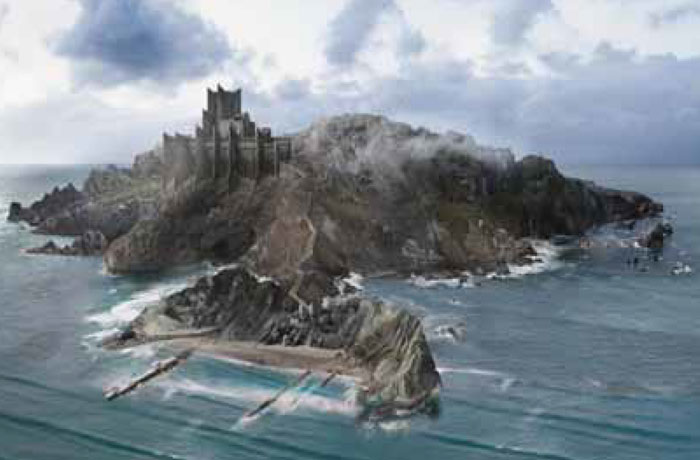
worldwide (legally). The colossal castles, bustling harbors and dazzling
cities that are home to this popular TV series are designed by drawing
inspiration from real-world historic sites. In terms of establishing
harmony with the context, the natural stone use in these spaces shines
out as one of the prominent features of the show.
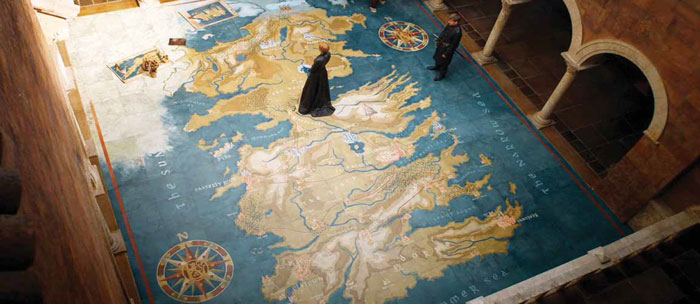
The opening credit sequence that underwent a change for the new season
has received critical acclaim: a map allows for introducing every city
included in the story to the viewer in an abstract and steampunk* style.
Production designer and art director Deborah Riley, who created the
renowned cinematic aesthetics of the series, is a designer and a former
architecture student. According to Riley, creating the desired set for each episode of the series, which is being shot in a very limited
filming time, is a challenge in and of itself given that sets creating a
beautiful backdrop is no longer enough for the TV world. They also
need to constitute a vital part of the narrative. In this context, it can
be difficult to find the visual key that would enhance the story for the
architects, who are the storytellers of the built environment. In order
to help make the series more convincing, the designer makes use of
architectural products that they see in the real world: by using different
architectural styles and examples, they make it easy for those who
adapt the screenplay to jump back and forth between different story
arcs that constitute the narrative, which broadens its scope with every
season.
In this context, let’s make a cursory examination of the fictional historic
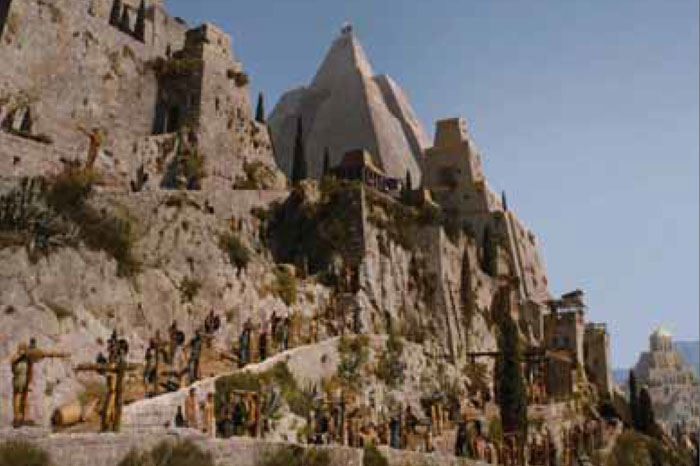
spaces from which the TV show’s sets take their inspiration. The Free City of Braavos draws its inspiration from islands
connected to each other by small stone bridges,
which are found in port cities such as Venice. The medieval
town Šibenik, one of the bustling waterfront areas
of Croatia, is home to these spaces that serve as a
set for the series.
Reichskanzlei, designed by the Nazi architect Albert
Speer, provided inspiration for the austere spaces of
the Iron Bank of Braavos. When writers requested from
Riley and her team to create a design that relays the
wealth and power of the bank, that feeling of intimidation
implanted in the memories by Speer’s architecture
worked just perfectly. The proportions and materials
(marble floorings, natural stone wall claddings and
furnishings in particular) that Speer used in his projects
directly affected the psychology of spaces: in the
scenes shot in this set, the space is able to clearly express
which characters are under the influence of others.
(Kaynak/Source: www.sibenik.in)
When this article was compiled, the first episodes of the
show’s 8th season had just been aired, however, the
grand finale will probably be over while you are reading
these lines. Lucky us if we made even the slightest contribution
to making the spaces in the series stick in minds as
much as its story arcs and characters… Enjoy the show!