Children
and adolescents need to be kept active in four main areas in order to develop
healthily: physical, mental, emotional, and social… What role does natural
stone play in this, you ask? When it comes to public spaces, the correlation
between children, adolescents, and materials might begin to evoke something for
us. If we were to define the characteristics of urban furniture in social and
public spaces such as parks, squares and gardens as being robust, durable,
environmentally friendly, creative, and functional, we then would see that
form, application, and design can merge from natural stone before our very eyes.
The French artist and architect Olivier Vadrot is one such a person who thinks
and designs in line with this purpose. Born in 1970 in France, Vadrot’s interdisciplinary
identity spans music and senography to city furniture and exhibitions. Not only
does his work share a common architectural scale, but he moreover questions the
spread of art as being merely visual, auditory, or textual. Known for his
research on the ergonomics of ancient theatres and for his work on moving
architecture, this prolific architect’s works have been exhibited in many
important places and at numerous international events from the Centre Pompidou to
the 2017 Lyon Architecture Biennial. Two of his social space projects in
particular have surfaced on our radar. In both, he has opted for natural stone
has the material of choice. Vadrot mostly looks at architecture and design from
the perspective of art and function. Inspired by the history of writing, in
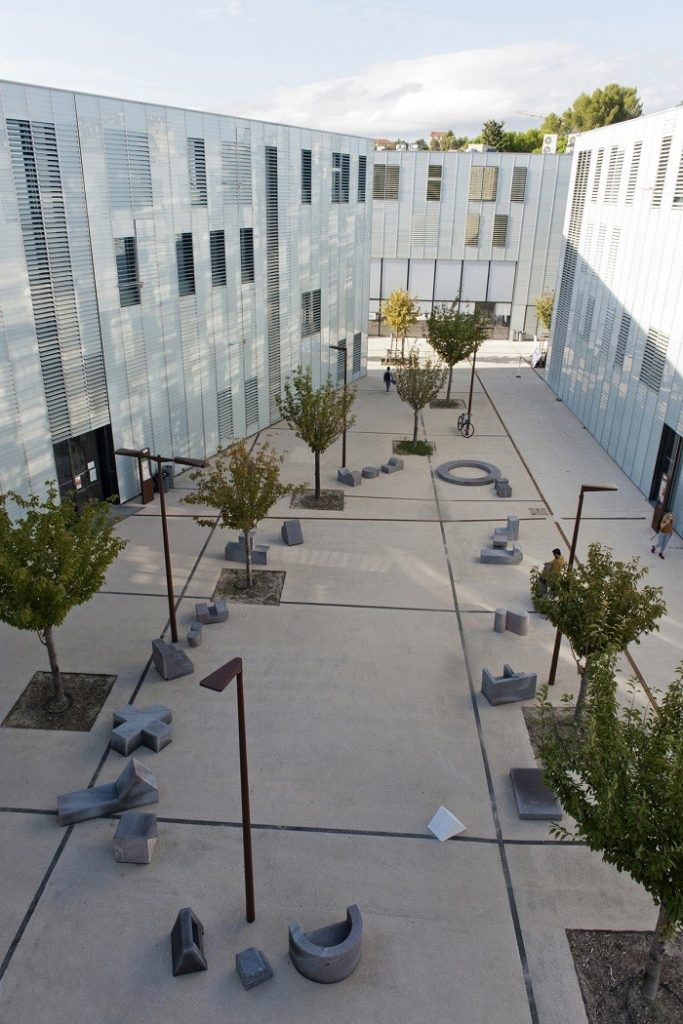
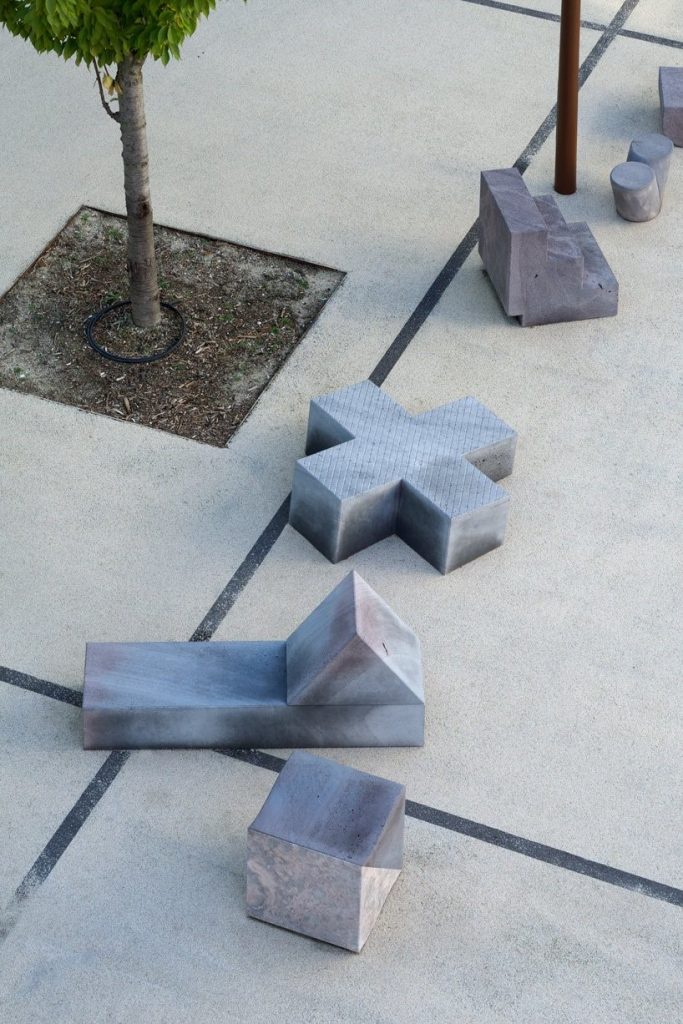
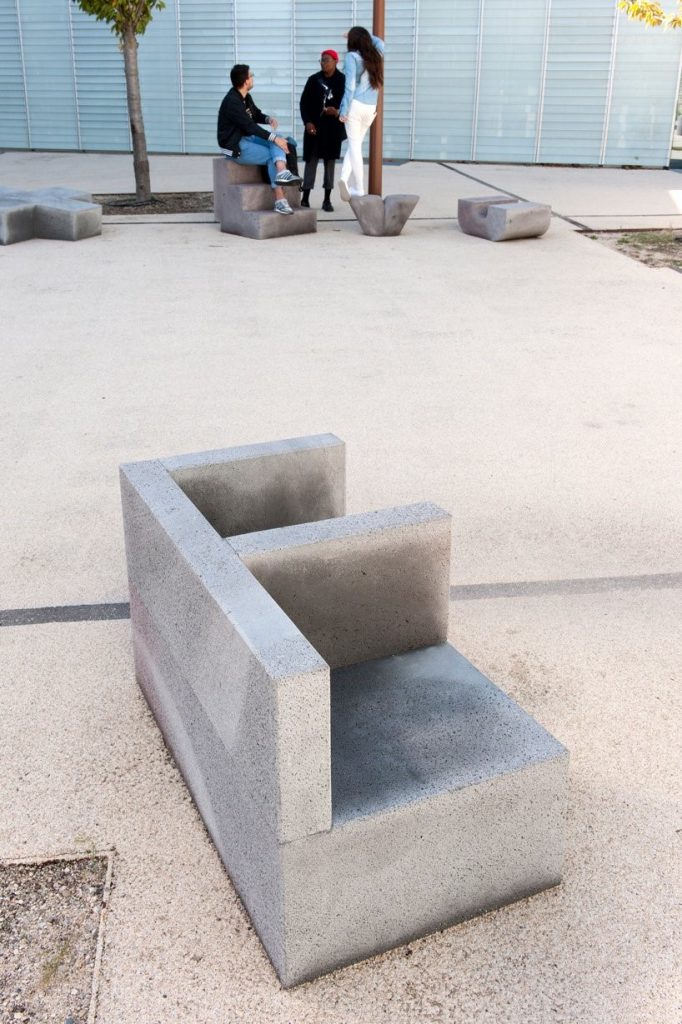
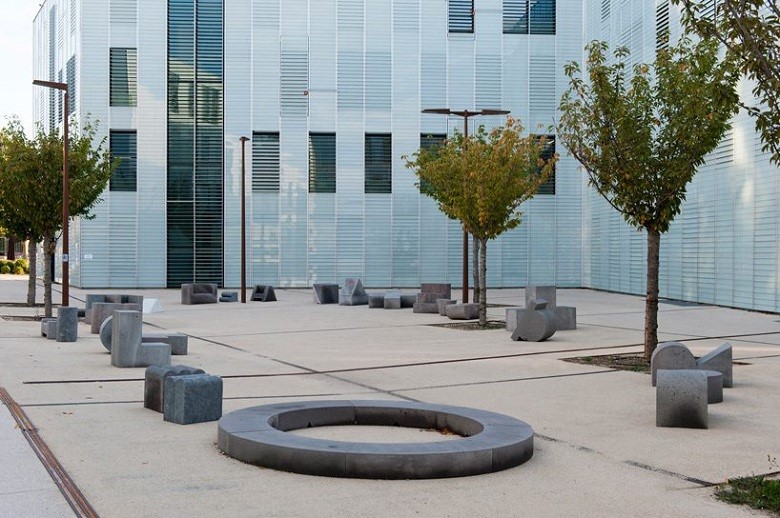
2018, he worked on “Orchester,” a series of bank benches designed for the
Literature and Humanities campus of Aix-Marseille University. These 26 open-air
abstract sculpture-like benches provide a positive space for people to come
together and interact. Made from lava stone (andesite) and small pieces of
marble extracted from a region in France, the benches are arranged in an
imaginary ellipse similar to that the stage of an ancient amphitheatre. Vadrot’s
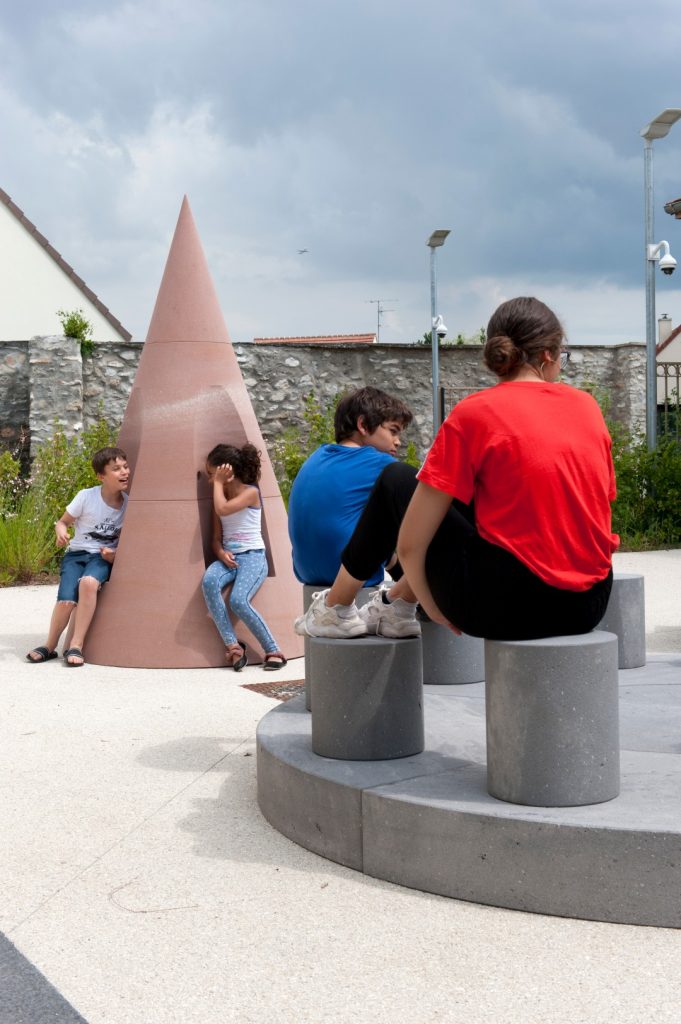
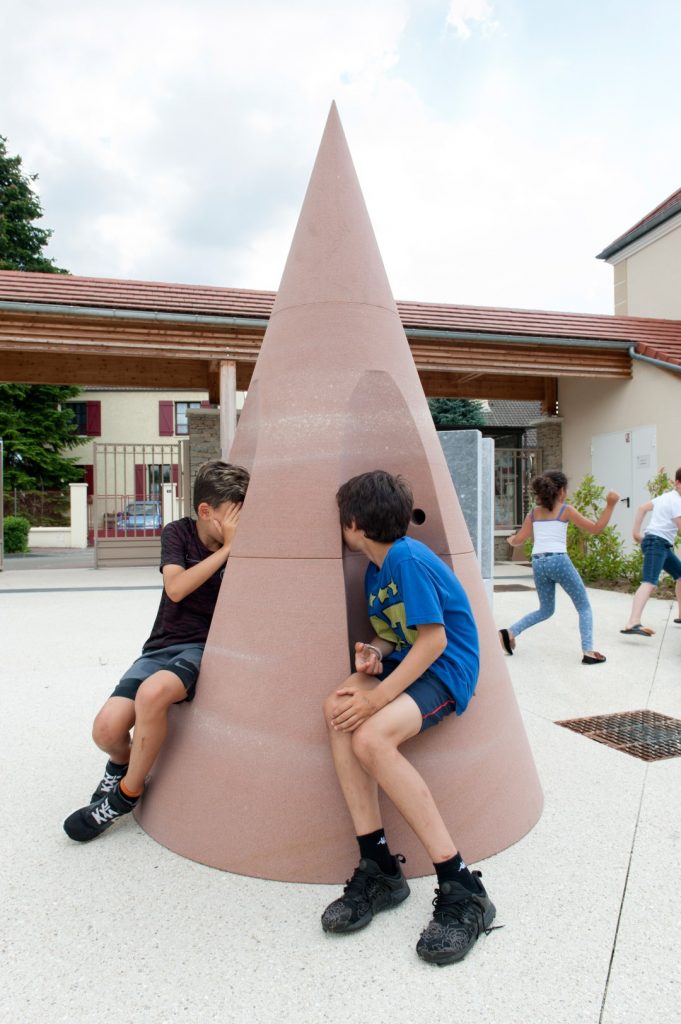
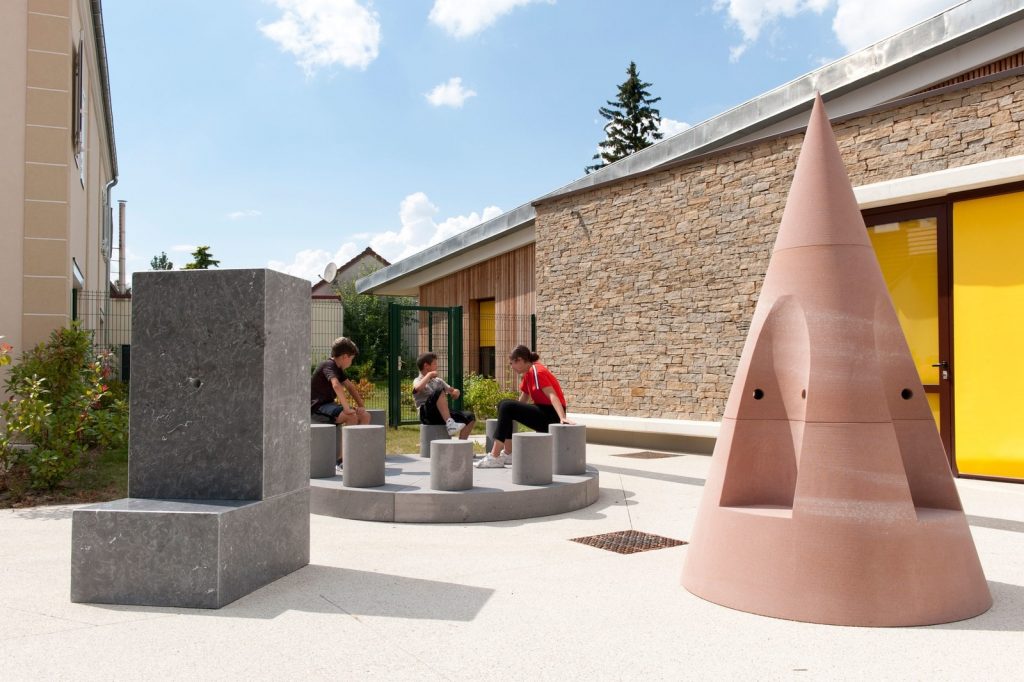
other project is an open-air playground consisting of three geometric stone
structures that encourage the children of Paris’s northeastern suburbs to
socialize. Titled “Conversations”, the project includes series of monumental
and long-lasting pieces that are timeless as well as, more importantly,
childproof. In an interview with the world renowned design portal Dezeen,
Vadrot described his La Passerelle playground as follows: “The monolithic shapes
that we created allow children to climb, walk around, and hide as they do
around/with trees and rocks. Moreover, it also invites them onto a stage that
encourages them to exchange ideas by imagining fictitious fictional stories
that are based the symbolic typology of each piece: a throne made of a pyrenic
marble block, a cone-shaped cockpit made of Vosges pink sandstone, and council
seats arranged as a miniature Stonehenge.”