
Odunpazarı Modern Museum (OMM) in Eskişehir opens its doors to all art
enthusiasts on September 8, subsequent to the opening event to be held
on September 7. OMM aspires to turn over a new leaf in this field with
its innovative exhibition programs and events that are open to different
disciplines and focused on cross-cultural communication.
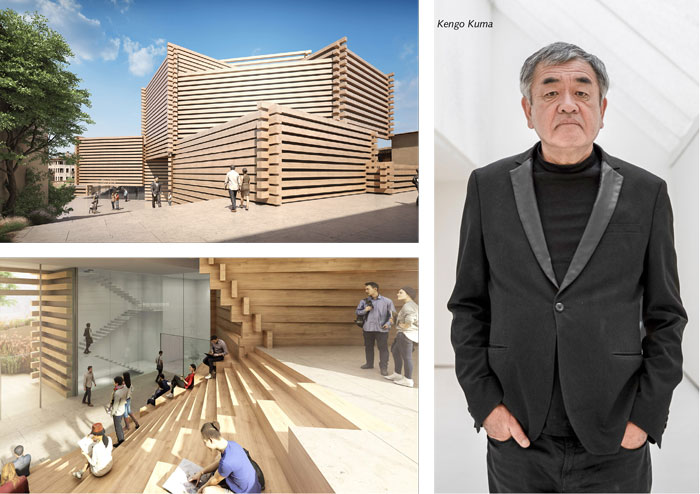
The visitors of OMM will be welcomed by a 4500-square-meter
contemporary art space, which is designed by the renowned Japanese
architecture studio Kengo Kuma and Associates (KKAA), whose designs
are followed by the entire world with keen interest, by drawing from the
elements pertaining to the civil architecture of Odunpazarı, Ottomanstyle
dome architecture, and traditional Japanese architecture. In additon
to exhibition spaces of different sizes; the museum store and workshop
areas also reflect the dynamic structure of the museum. It is envisaged that
this museum building will vitalize the district at night as much as during the
day with its wooden structure system making a reference to the historical
texture of Odunpazarı and its striking architecture and become the focal
point and symbol of the area, as well as a public center for gatherings.
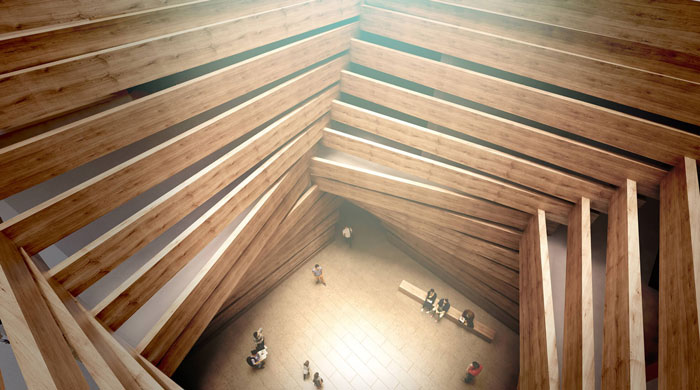
Aiming to present an inspiring museum experience with the decision to
direct daylight into the exhibition spaces spreading over three floors as well
as the common areas that are open for visitor use, OMM reflects the area’s
historical texture with its spacious ground floor while aspiring to take art
enthusiasts on an architectural journey thanks to its design that narrows
towards the upper floors.
OMM’s opening exhibition, which will be curated by Haldun Dostoğlu,
will present a special selection from the collection of businessperson
and collector Erol Tabanca, the founder of the museum. Featuring
approximately 200 works extending from 1950s to the present day
from over 60 local and foreign artists engaged in different disciplines,
the exhibition will present works from artists including Bedri Rahmi
Eyüboğlu, Canan Tolon, Erol Akyavaş, İlhan Koman, Ramazan
Bayrakoğlu, Sinan Demirtaş and Tayfun Erdoğmuş. “While working on
OMM’s first exhibition, I took inspiration from three scenes of reunion.
Firstly, Eskişehir is presented with a private modern art museum for the
first time in its history; Erol Tabanca realizes his dream of introducing his
collection to art enthusiasts by exhibiting his artworks which he brought
together as a result of many years of great effort and devotion, and
finally, works that had hitherto reached the audience in a limited number
get to go public for the first time. These three scenes of reunion guided
us to create the content of our opening exhibition,” stated curator
Haldun Dostoğlu regarding the exhibition.
Yet another work that can be seen at the museum’s opening is the
installation designed dedicatedly for OMM by the world-renowned
Japanese bamboo master Tanabe Chikuunsai IV, the studies of which
are still continuing in Eskişehir. Tanabe, who successfully continues his
family tradition of bamboo craftsmanship and who is known for his
fascinating works, is considered as the most talented bamboo artist of
his time.
Having spent time in the city before starting to create his work, which he
conceived by treating the bamboo as if it was a lacework in accordance
with the architectural texture and mission of the museum, grounding on the inspiration he drew from Eskişehir, Tanabe stated that he was
impressed by the deep-rooted history of Eskişehir and how its traditions
had been passed on from one generation to the next, which he found was
similar to his own culture. Emphasizing the necessity to carry the traditions
towards the future while preserving them, Tanabe said that he created this
work for OMM with this idea in mind.
Stating that he also drew from how KKAA, the architecture team of the
museum, and the founders of OMM carried on their works in a ecofriendly
manner, Tanabe from this point forth used human and four
elements (fire, air, water, earth) found in nature as a theme for his work.
Regarding this subject, Tanabe commented: “I perceive the space in which
the installation takes place as “void” and we, human beings, are filling up
this void with other elements. These elements are in a constant state of
transformation and they go upwards by intertwining with one another.
The fifth theme is actually the people I encountered with in Eskişehir, as
well as my relationship with them and the interaction that they brought
together. I focused on carrying this interaction and friendship to Eskişehir
and allowing them to absorb it. In a similar way, I imagine that, following
OMM’s opening in Eskişehir, the life here will spread to the entire city.”Having previously created installations for the buildings designed by Kengo
Kuma, Tanabe expressed that he is honored by the fact that his works are
being exhibited in world-renowned buildings of the architect who draws
inspiration from nature. Working with a material known as “tiger bamboo”,
which is located in the Japanese village of Kochi and only grows in that
region, Tanabe and his team used the woven bamboo technique for this
special installation, which melds into the architecture of the museum.
Designed especially for OMM, the installation will be presented to art
enthusiasts with a performance to be delivered with the final touch of the
artist during the opening.