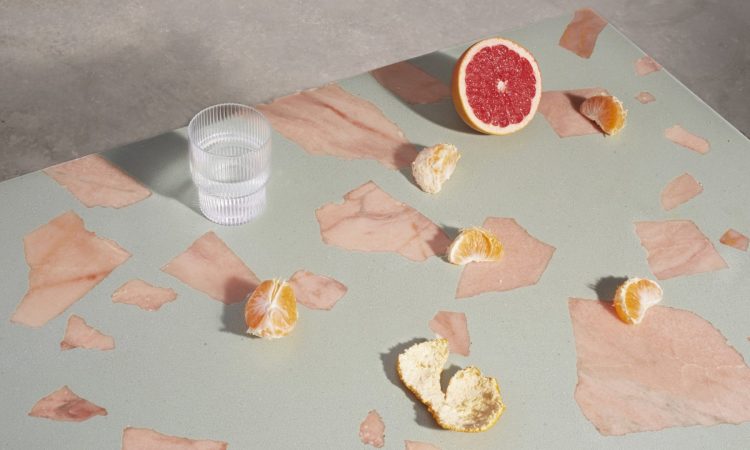
Altrock
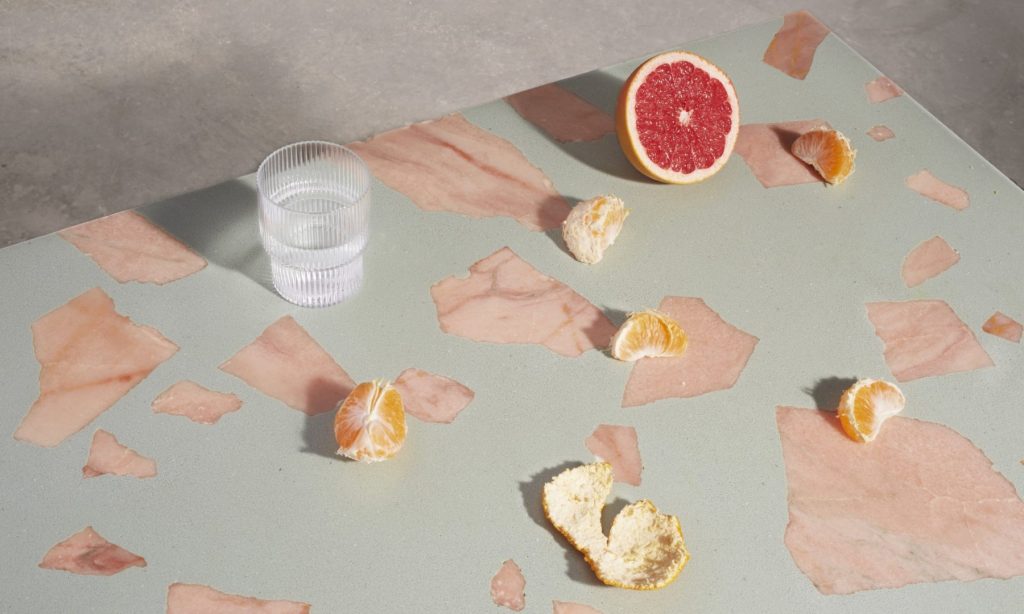
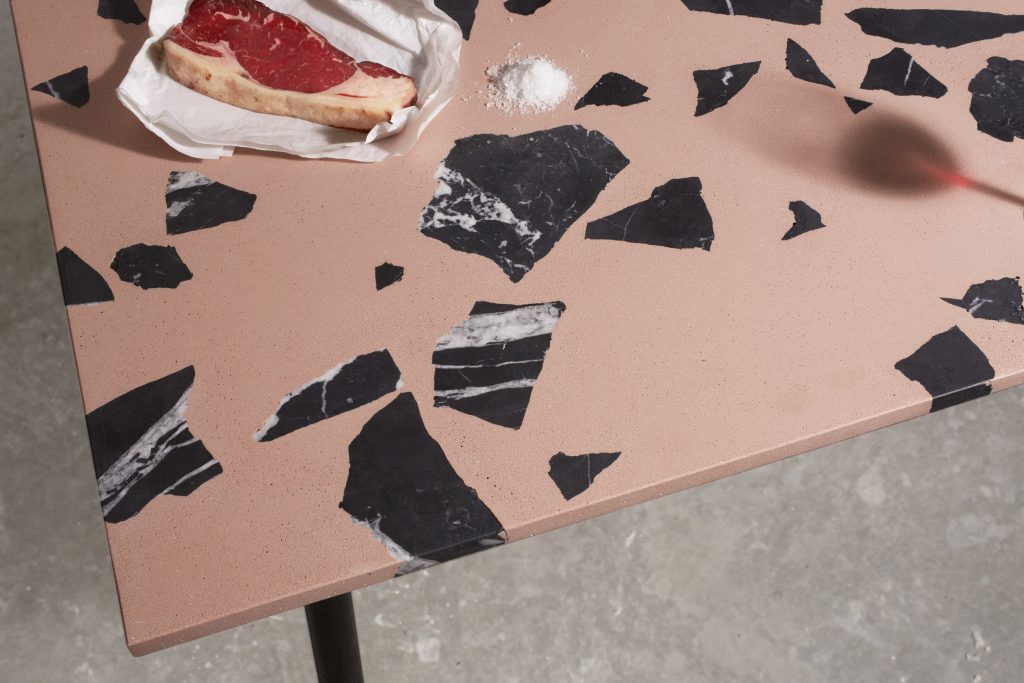
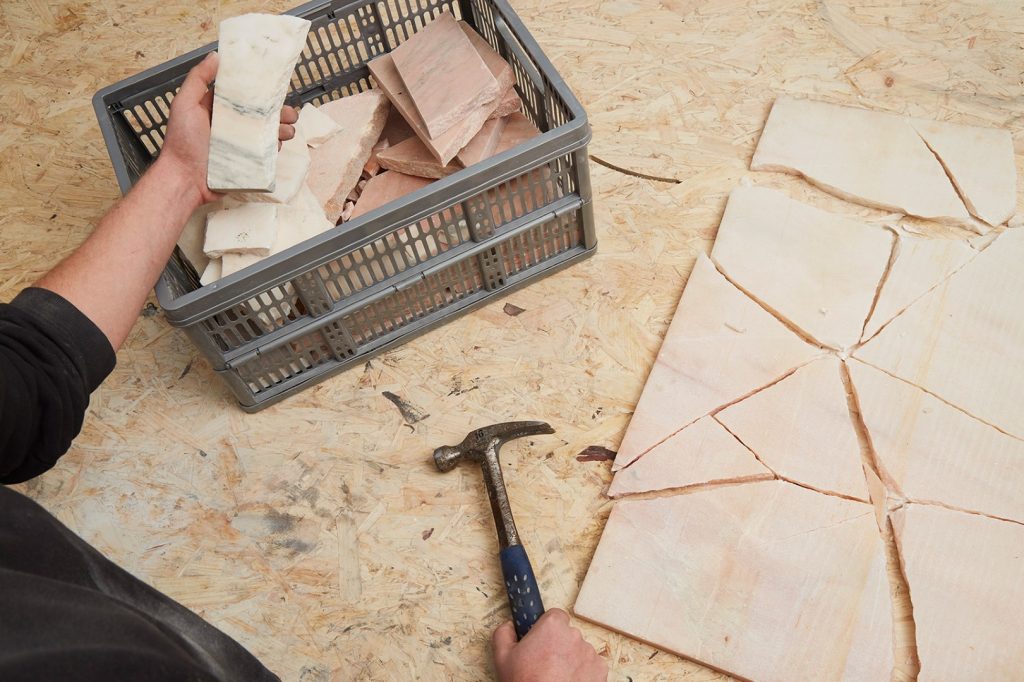
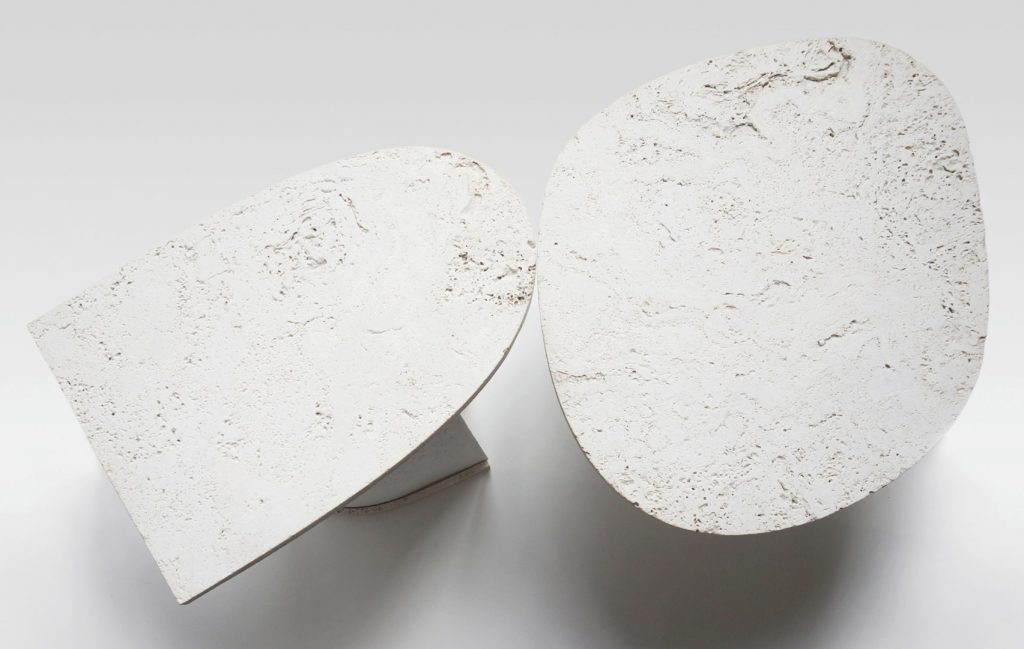
Altrock collection by London-based industrial designer Robin Grasby is created by marble dust, sawdust and broken pieces of marble from the cutting process. Mosaic material known as terrazzo is usually made of exposed concrete. Today, terrazzo can be produced from lighter and more modern materials. Robin Grasby, who often uses natural stone and marble materials in his designs, created the “Altrock” mosaic collection, a modern terrazzo interpretation, inspired by waste materials. The material has a wide range of uses such as worktops, Wall coverings, tables or tiles and it is produced using 87 recycled materials and the remaining 13 is made up of resin for durability. The surface is sealed with wax oil against staining. Saying that he likes to use natural stone and marble pieces in his designs, Robin Grasby states that he wants to bring a modern and futuristic interpretation of the natural beauty of the material. The design created in various colors and patterns with the random addition of broken marble pieces stands out in the interior. His collection of works which he uses the Altrock mosaic has been exhibited in London Design Fair in recent years. Also, his works took a place in a designed by Lukstudio cafe in Beijing and Lievito restaurant by MDDM Studio which was published in Natura’s 44th issue.
Chaud
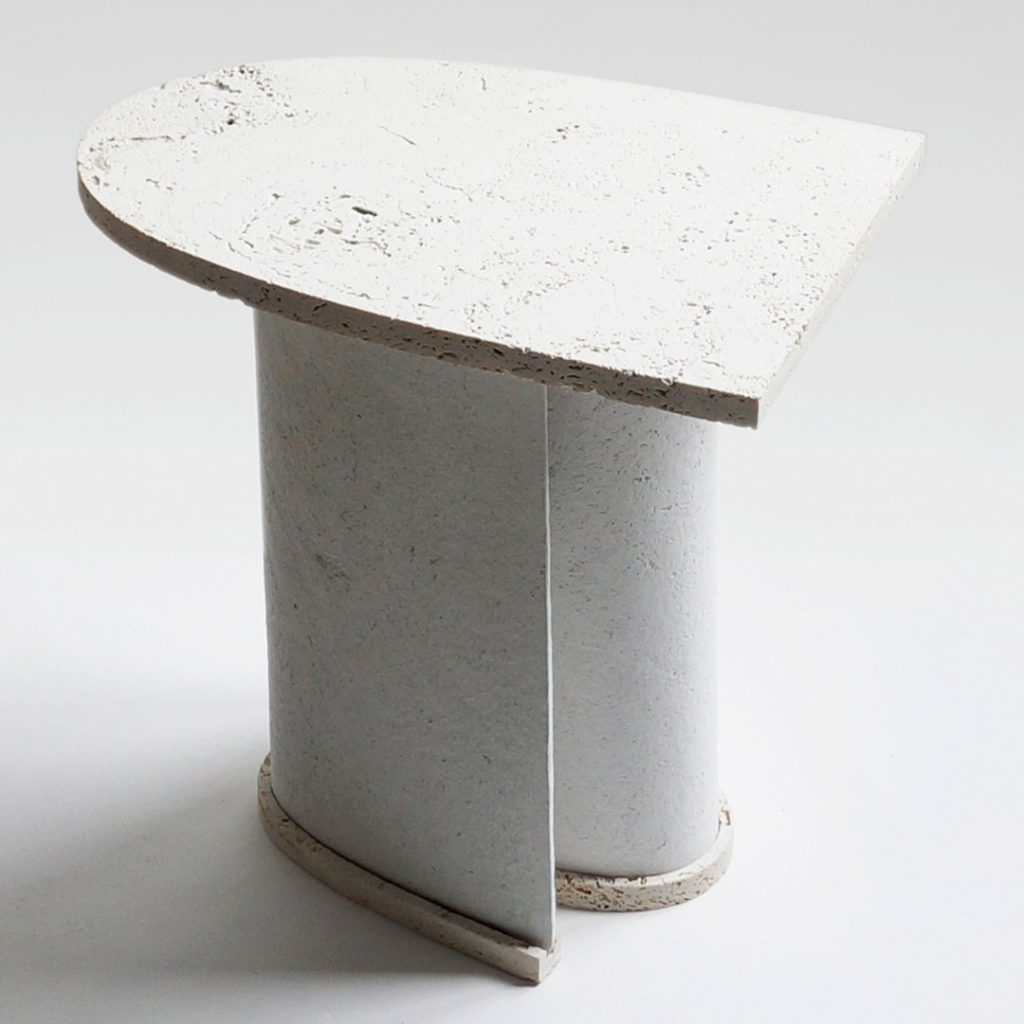
Belgian designer Charlotte Jonckheer has designed “Chaud” side table series made of waste paper and stone dust. The two side tables are named Chaud, which is also the given name of the composite material consists of a combination of waste paper and stone dust by Jonckheer. The material depicts Jonckheer research about how outdoor materials like stone could be made to feel warm and soft to the touch. Chaud is a handmade material, created by pressing together recycled paper pulp and stone dust. When the sheets of the composite are still wet, they are able to configure into any shape using a mold. As it dries in the air, the material gets stone-like aesthetic that carries the extraordinary
originality of recycling. Like other works of Jonckheer, she manages to give the different feel and material qualities on the surface that have similarities.
Calcarea
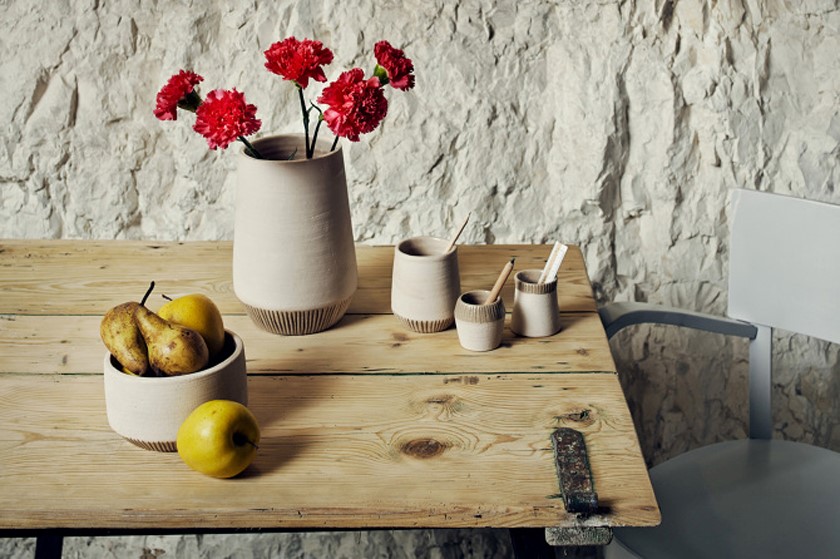
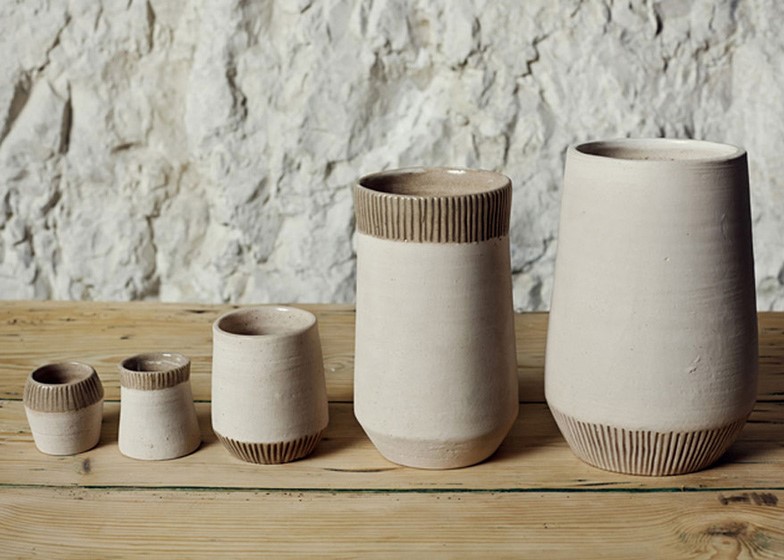
Another designer inspired by the waste materials from marble mining and cutting is Italian Francesca Gattello. Gattello worked with Rosso Ramina, a small Tuscan ceramic company, for developing a heterogeneous material by mixing clay with marble dust and designed rounded objects by kneading it. She uses a two-tone colour palette to emphasise the raw material and handscored grooves on it. The collection’s name “Calcarea” is linked to calcium (Ca), marble’s most important chemical element. Calcarea collection ranges from pots and cups, to vases and shallow bowls. These objects, produced in different sizes as prototypes, offer a unique experience as they carry the texture of marble and clay on them. The products are designed to be used both functionally and as an accessory.
Mining Dust
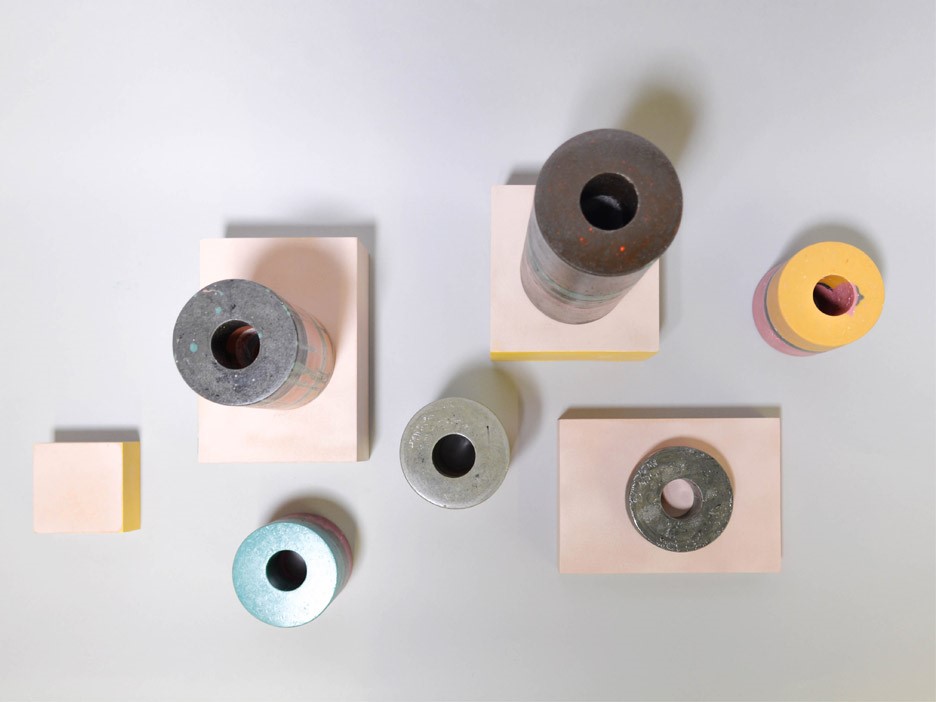
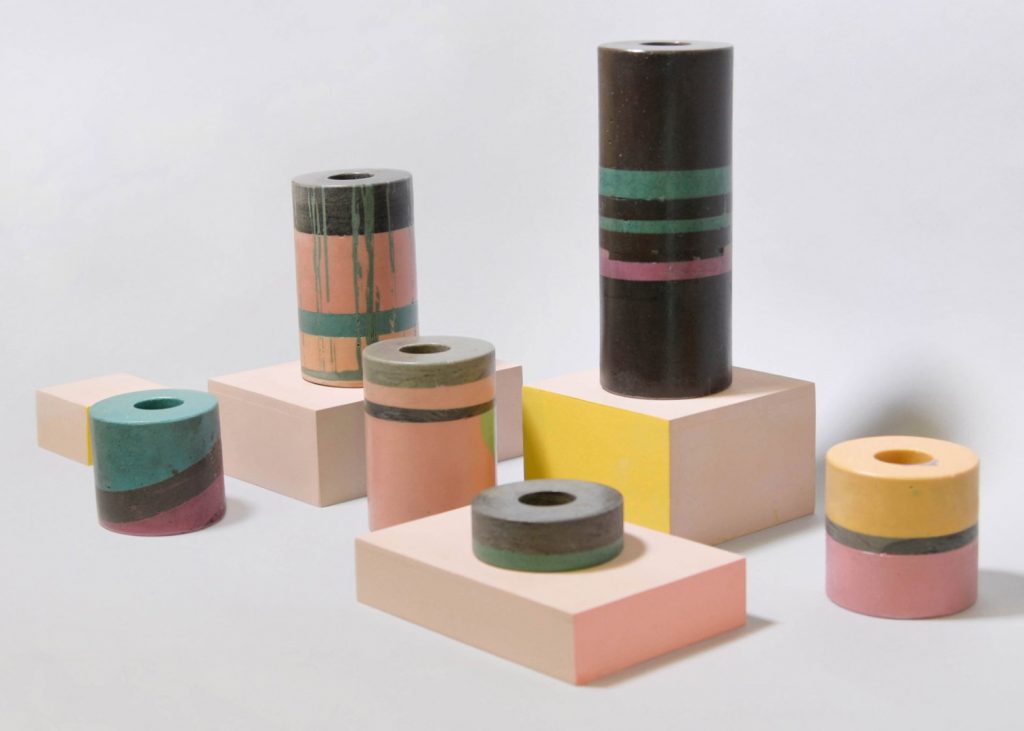
The student of London Central Saint Martins, has designed vases by using dust collected from a mineral mining quarry in Baoding City of China. The region has one of the largest marble mining industry in the country which in turn causes air pollution. She believes that if creating products with her method of mixing the dust with pine resin and natural local pigments to create a tough material become widespread, it can improve air quality. Zhang’s project also took a part in the graduate exhibition “MA Material Futures” in Central Saint Martins.
Little Gerla
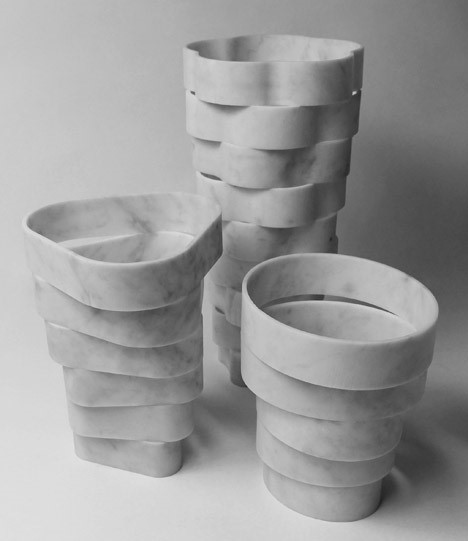
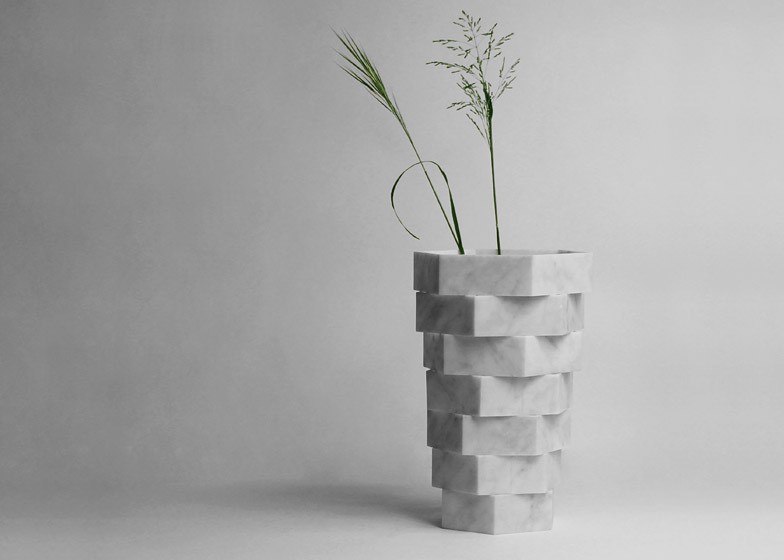
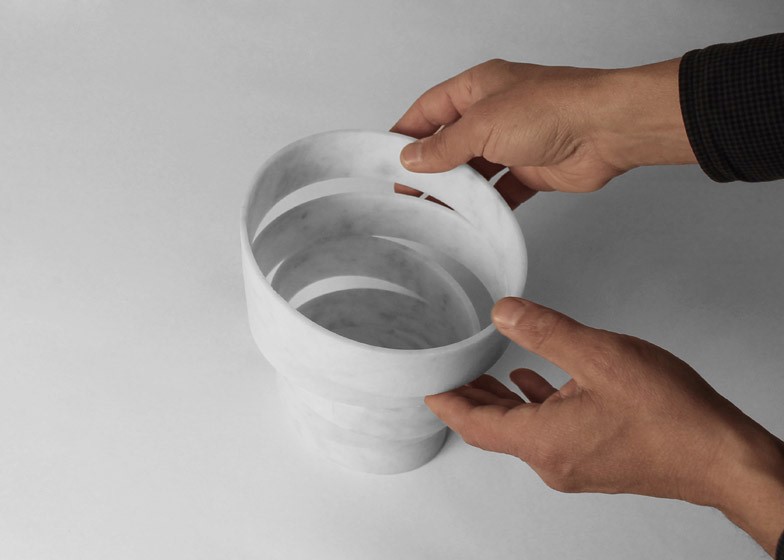
“Little Gerla”, a collection of four vases, designed by worldrenowned Italian designers Paolo Ulian and Moreno Ratti all made from a marble waste and without producing any waste. The tile was cut by water jet and divided into four equal pieces of 20 x 20 x 3 cm and from each of these thin concentric rings are superimposed and rotated among themselves. Stating that waste materials are the basis of their research, Ulian and Ratti’s vases are unexpectedly lightweight for something made from marble and their surfaces bear the characteristic markings of the water jet.