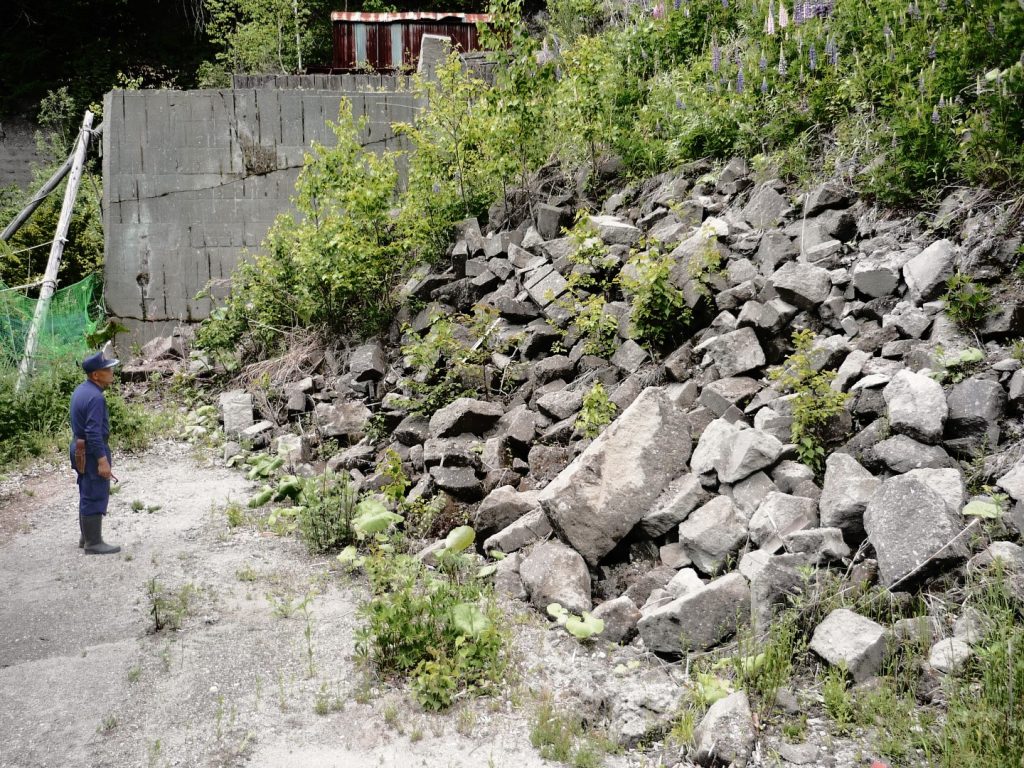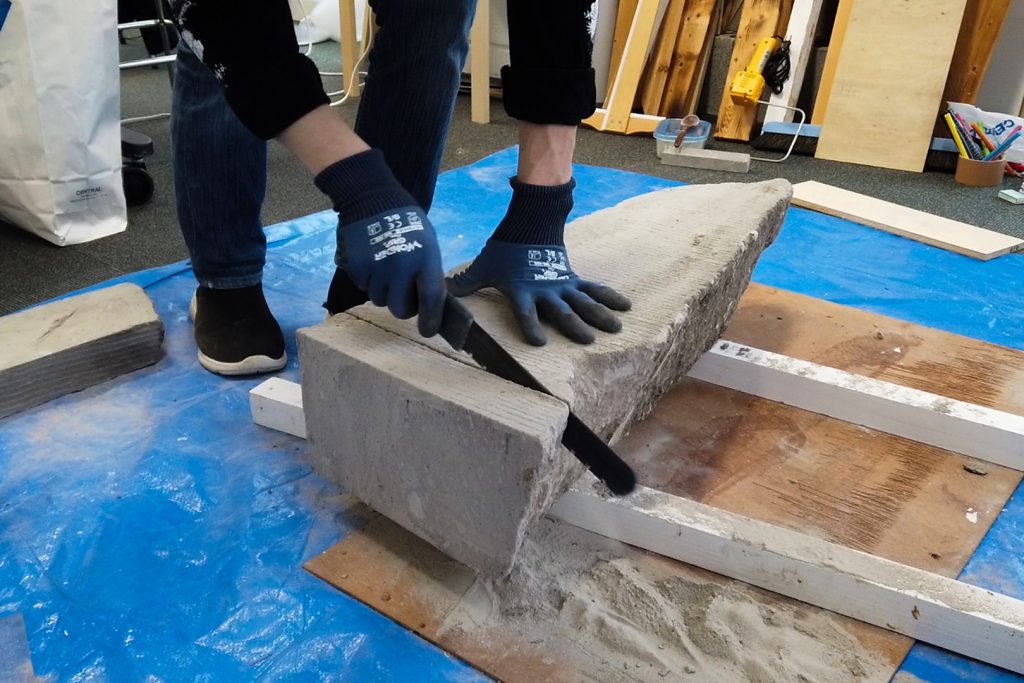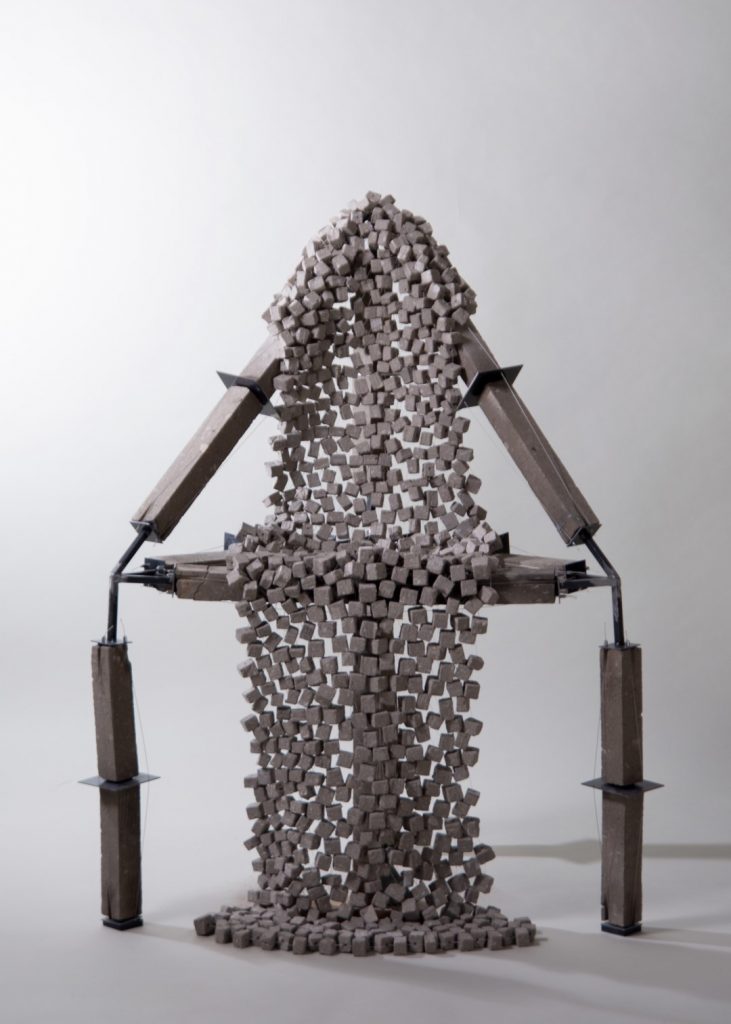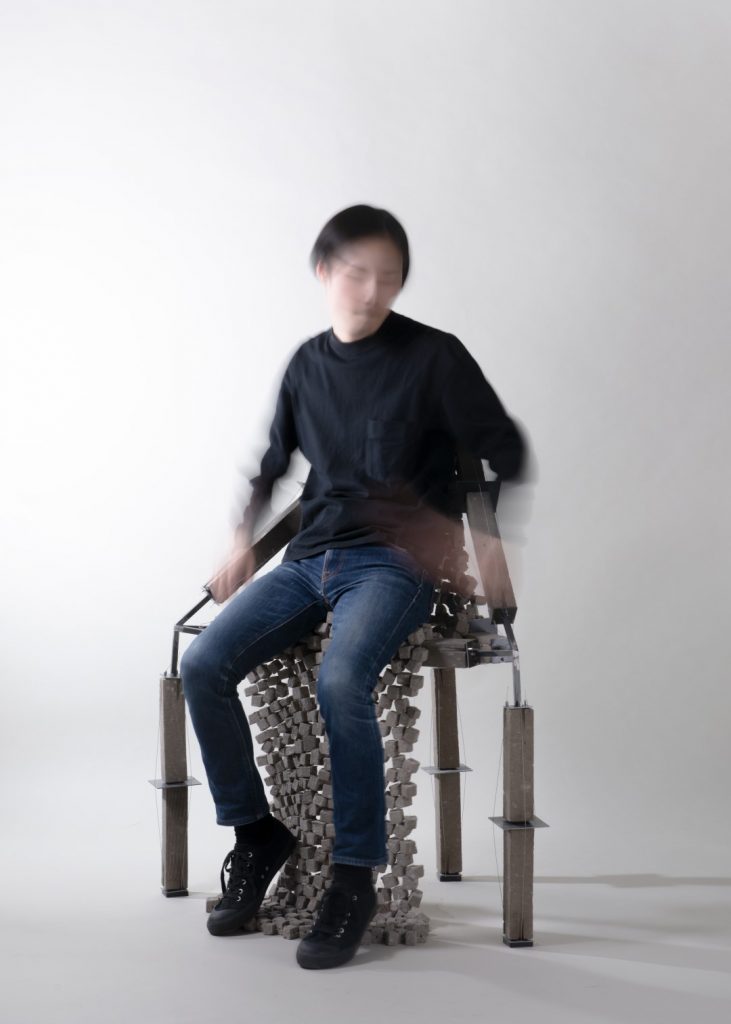
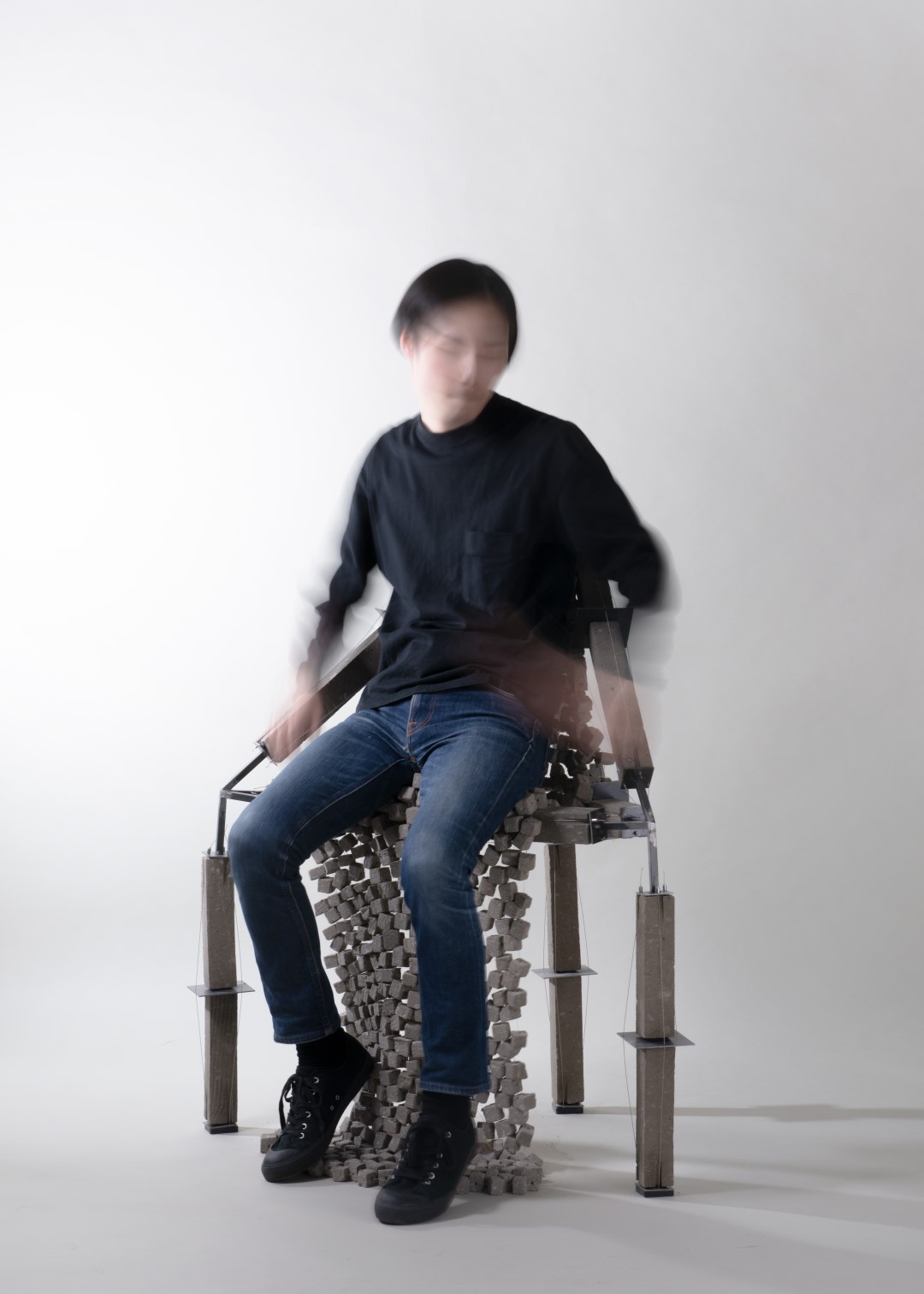
Designed by Arashi Abe, the Akuseki stone chair, using waste materials obtained from local sources in Sapporo, Japan, is the only chair in the world produced with these materials. Sapporo soft stone is a material that is only found in the Ishiyama region of Japan and is abandoned in large quantities in quarries because it has no commercial value. Among these stones, the very soft and amorphous ones are called Akuseki stone, which means “bad stone” in Japanese. Akuseki stone is used as the main material in the chair designed by the artist to show the charm and beautiful texture of the stone to many people, thanks to the iron, wire and clamps, “lightness” and “softness” are brought to the chair. Because Akuseki is such a soft stone, the artist used brick saws, electric drills and sandpaper to cut and drill the stone, as well as craft a special tool to properly machine the stone.
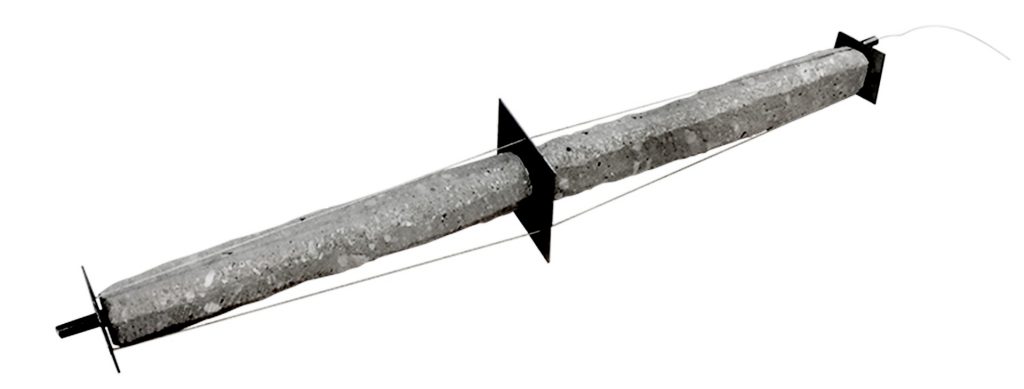
The design chair consists of a structural frame and a seat. Since the stone is very fragile, the two stones were joined together and the length of the chair was extended in case of fragmentation and shrinkage. To connect the two stones, a steel link was placed between them and the chair was fixed by the tensioning action of the wire. The chair’s structural framework is joined together by nine Akuseki stone units, and steel links connect each stone unit together to create a simple frame. A large amount of waste stone produced during the fabrication of the structural frame was used as the main material for the seat. 870 pieces of waste stones with holes of approximately 3 mm2 in them were knitted together to make the seating surface as soft as fabric. Since the artist aimed to minimize the amount of waste while designing the chair, he made the best use of the Akuseki stone fragments that emerged when the structural frame was created. Thus, he was able to use 95% of the Akuseki stone he bought as a part of the chair.