
The Capital of the Lycian Civilization
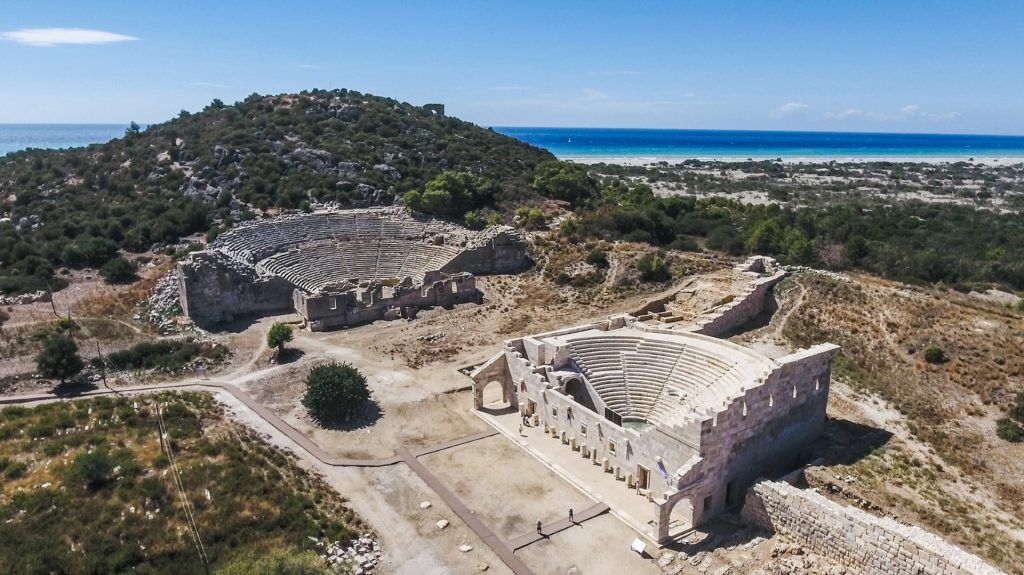
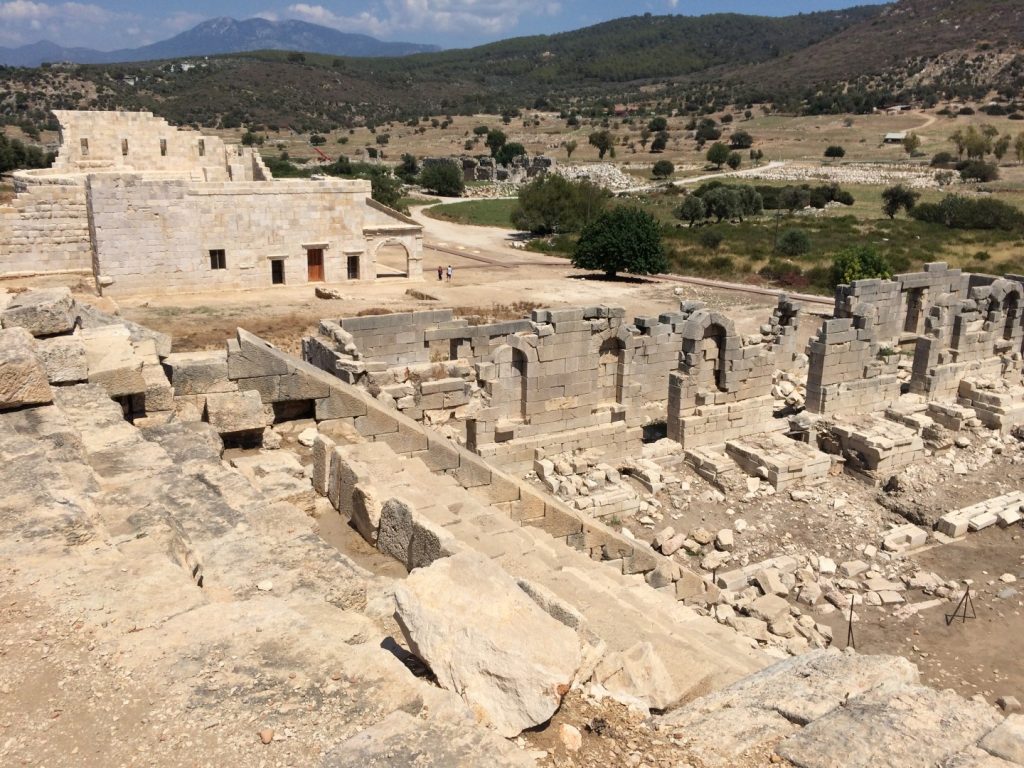
Lycians settled in what is now southwest of Turkey where they developed a unique culture and enriched the region. In 168 B.C., Patara became the capital city of the Lycian Union, which was mentioned as “Lukka” in the sources of the Hittite and Egyptian civilizations. In 143 B.C., the Roman Empire captured the city however, it remained as the capital in the region, which named as a Lycian province. Patara was used as a center where judicial works were carried out by the governorates during Roman times. The city had many buildings with different functions since it was the capital. Including, a granarium which is a warehouse for the grain products sent from Anatolia to Rome, Tepecik acropolis and the palace in it, a parliament building, the amphitheater, the Corinthian temple, the Vespasian bath, the Arch of Triumph and the Neron lighthouse are one of the main structures that can be seen at Patara archaeological site. Tepecik Cemetery, which was the acropolis of the period, and the basilica, which is one of the oldest and largest basilica of the Lycian province stand at the entrance of the city. Another of the most important structures of the city that have survived today is the Arch of Triumph. This structure is also known as the symbol of Patara city, it was constructed to honour Modestus, the governor of the period, and his family. It was built around 100 A.D. and also used as the part of the aqueduct. One of the other important structures of the city is the 21 rows of 1.400- seat parliament building where the elected representatives of the Lycian League met. On the south of the parliament building, there is an amphitheater structure with a capacity of 6.000 audiences. The lighthouse in the region, the Neron lighthouse is the oldest surviving lighthouse in the world. Neron Lighthouse, one of the most important structures in the region, has the title of the oldest lighthouse that has managed to survive to the present day. Only 4.5 meters of the 12-meter-long lighthouse built by the Roman Emperor Neron in 64 A.D. could remain.
The Natural Stones of Patara
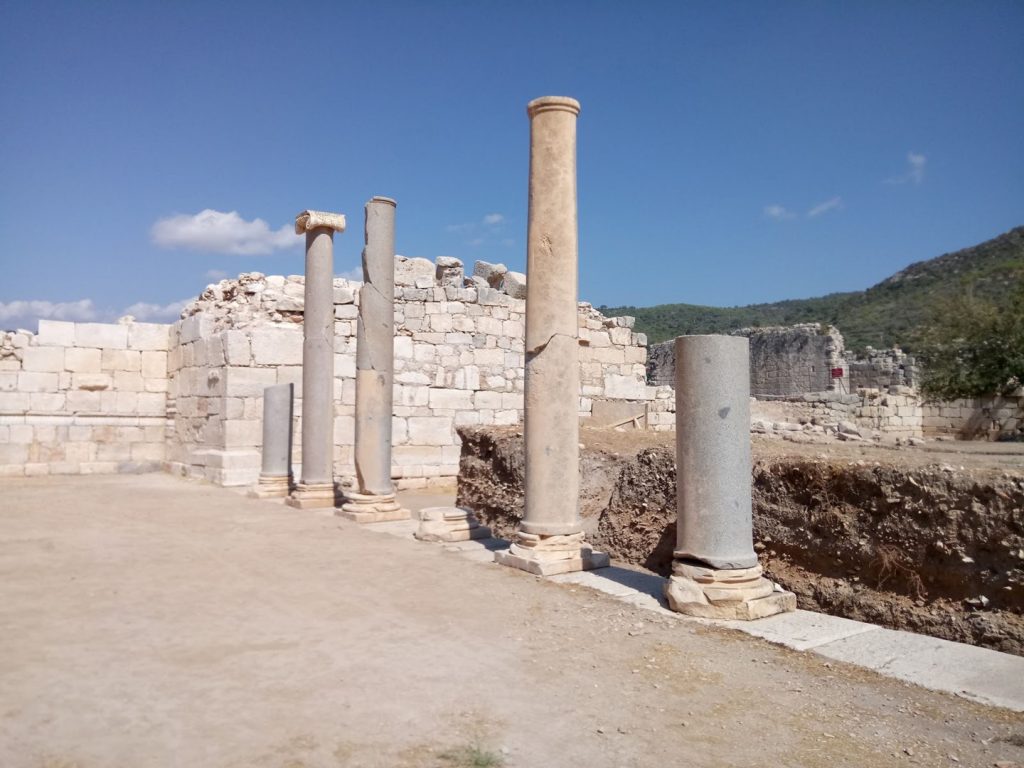
Mosaics in the main street with columns and the entrance of the Agora gate show that mosaic stones are used for the floor covering of this part of the city. During the excavation of the city walls, a large number of marble cladding panels were found. It is seen that marble was used not only as wall and floor covering in the city, but also in the construction of statues and capitals. The use of marble’s as an example for its usage in statues can be seen at the base and heading of Agora Gate which belongs 3 A.D. Excavations of the harbor bath demonstrate that the structure was covered with marble at the time of its construction, but later on the panels were replaced with limestone. In the construction of the northern city walls, it is observed that locally sourced natural stones in triangular, rectangular and polygonal forms are used, and they are covered with mortar in repairs over time. Patara, which was founded 5000 years ago, as a port city has maintained its importance throughout history thanks to its location and climatic features. It had the most developed period during the Roman Empire. Due to epidemic diseases and earthquakes that caused the loss of harbor, the population of Patara decreased and the city lost its importance. Excavations in Patara Ancient City, which have been going on since 1988, are carried out in cooperation with the Ministry of Culture and Tourism and Akdeniz University. The excavations are proceeding under the supervision of Prof. Dr. Havva İşkan Işık, head of the Department of Archaeology, Faculty of Arts and Sciences at Akdeniz University with the contribution of the scientists from Germany and Turkey. Patara, which is one of the most important city in the world in the economic, cultural and political sense, is expected to receive visitors from all over the world in 2020 with the promotional contributions and support of the Ministry of Culture and Tourism.