
By Nil Aynalı Eğler
STONE IS THE MAIN MATTER THAT CONSTITUTES THE ESSENCE OF EARTH. IT GAINS VARIOUS DIFFERENT FORMS AS IT IS UNEARTHED AND COMES ACROSS WITH HUMAN CULTURE. WE HAVE TALKED ABOUT THE CONDITIONS OF STONE WITH İHSAN BILGIN, ALONG A TRACK THAT DEPARTS FROM AN ARTIST’S STUDIO TO A THERMAL BATH IN THE ALPS, AN ENDLESS DESERT IN LOS ANGELES AND A MAUSOLEUM IN PORTBOU, ON THE BORDER OF FRANCE AND SPAIN TO THE NORTH OF THE CATALAN COASTAL TOWN LIMITS.
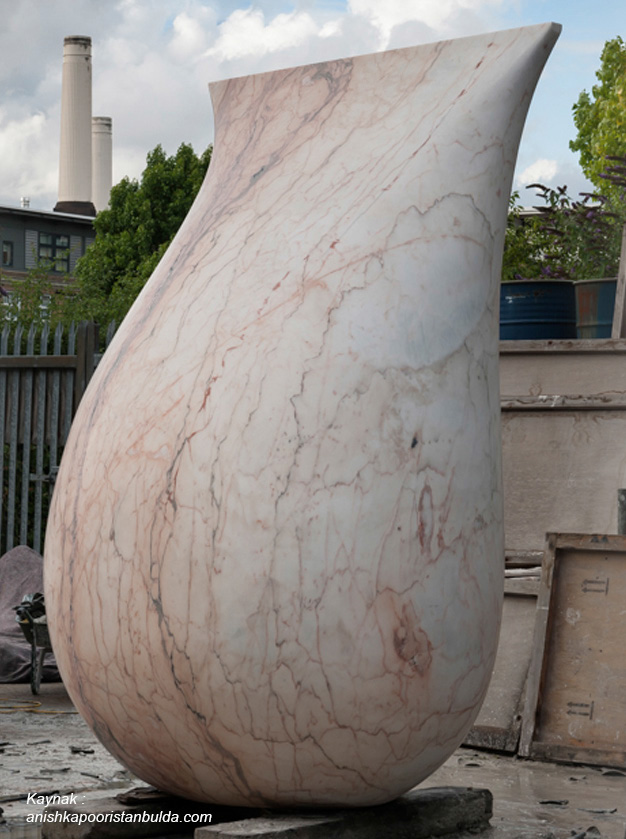
NAE: In your article entitled Stone’s Secret published on serbestiyet.com, you talk about the works of Anish Kapoor. There’s something that draws attention in the article: On the one hand you say that we see the given nature of stone. In fact, this goes to calling the workshop of the artist not a ‘workshop’ but a ‘quarry’. The stone with its state not detached from nature, still not incorporated in culture, has a self existence which can be called quite essential, even in that sense, a little mute. Stone is an integral part of the natural world. This is an existence we do not encounter and be reminded of much in metropolitan life.
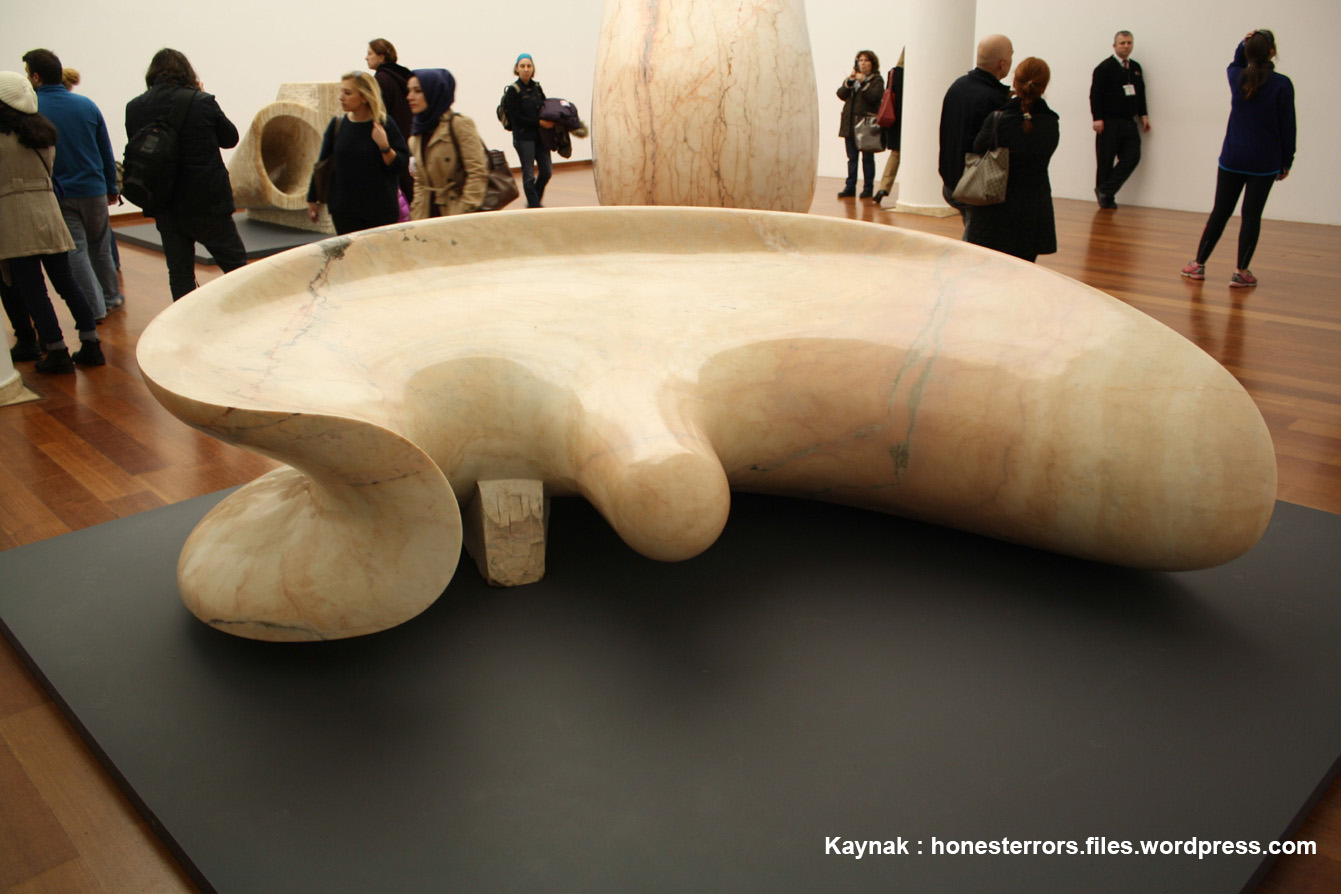
İB: More than being a part of it, actually stone is the essence of the earth. If we could weigh the whole earth, probably a large segment of it will come out to be stone. Actually, the earth is stone. So is the universe. Aren’t meteorites, asteroids, wandering stones going around in space? Realizing that earth is actually made of stone; Anish Kapoor, to solve this secret, seemingly drills a well on the earth itself, going to its depths without circumventing through culture and descends towards the center of the earth ever discovering various stones encountered at various layers. In fact, he doesn’t travel straight but zigzags so that he can discover the types which will not fall on that line. Of course what we call discovery means a process like in every artist. I mean he has gone on his way, processing the types of stones he came up with, testing their resistance, their capacities. When I toured the exhibition, this was what I felt and I had tried to explain this in my article. As a matter of fact, especially with those onyxes, his exceptional use of light has made me dream of the reflection of the light oozing from the cracks on the face of the earth onto the darkness of the below. Since basically I don’t think there is a thing called essence, it wouldn’t be right for me to utter the phrase stone’s essence. I’m more comfortable with concepts like substance. We better call it stone’s secret. Kapoor, at least makes it visible that there is a secret of interest. As we went round the exhibition, we felt that we were going around in the stone’s secret. Even if he didn’t tell us something directly like any artist, we were acting within a state of the world he unearthed which we wouldn’t notice without him.
EVEN ONE OF THE MOST ROBUST MATERIALS IN THE WORLD COULD NOT WITHSTAND THIS VELOCITY OF CHANGE WHICH TRANSFORMS EVERYTHING INTO RUBBLE.
NAE: Kapoor, on the one hand offers the stone “as is” as much as possible, yet on the other hand, he clads it form with its interventions.
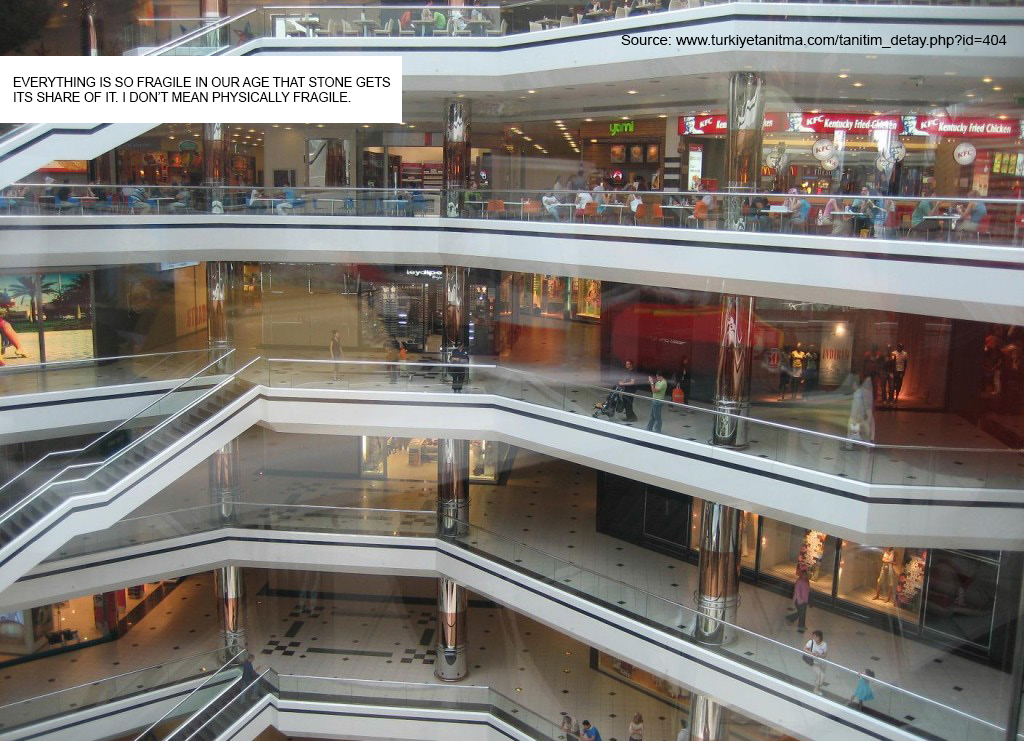
İB: Yes, in his work called “Blind”, he specifically concentrates on light transmittance of onyx. It was one of those which impressed me most just in a catalogue despite not being in the exhibition. Everything is so fragile in our age that stone gets its share of it. I don’t mean physically fragile. Let me tell you an anecdote. I have two epiphany1 memories from early 80s when I was a novice architect. I’m using epiphany not with its part relating to enlightenment, I mean comprehension, but its sense of enchantment by stimulation. One of these was: There was a wood veneer craftsman in one of the shops close to the Pera side on top of Yüksekkaldırım: Isak Benveniste. I’m sure he’s still there. When I entered the shop, I used to think of the fabric sellers I visited with my mom. He laid out the veneers before us as if they were rolls of fabric. What is called veneer is oak, mahogany, walnut. Everybody knows them. We go to the store, he pulls out the recently arriving veneers for us. One of the most enchanting was radica. A veneer coming out of the root of trees gave great snags. I did a lot of work with them. In fact, I can say that the reason why some of my works were appreciated a lot was because of those materials more than my own skill. So one of those epiphany moments was the moment when I looked at the veneers in that shop. In fact, one time, they brought roots with small snags and the material was also colored; white, light blue and pink. They had managed to do the coloring without looking too artificial. I also had a great polisher: Abdullah Usta; the best polisher in İstanbul. Taking pieces from those veneers, we have them coated on chipwood, a glass-like polish, those coming to the office can’t take their eyes off them saying “What are these”.
NAE: So important that you place in the formation of the material…
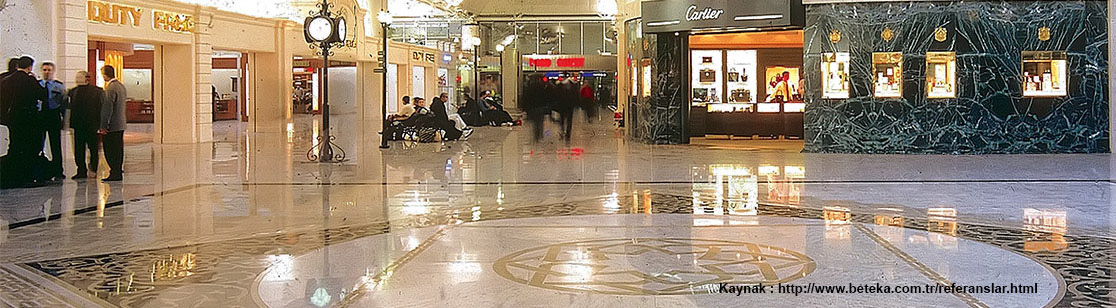
İB: Material is the essence of this job. We had just opened an office trying to get to know the materials and trying to discover new ones, actually it was our office who first discovered the roots of Benveniste. The second one, as you may expect, involves stone. One day, a stone craftsman came with A4 size granites which were also burnished well. This was in early 80s. Hence, when I say granite, these were only the cubic formed stones laid on roads, those dark gray ones with white spots. The men laid them out on the desk, the beige, red, the black, the two-colored ones. I can’t forget Nero, a pitch black stone I couldn’t take my eyes off. Once again we laid them out. Anyone who comes and goes looked at them, one couldn’t keep himself from thinking: “You can have the world tipped over whatever you do with these”. He took us some place near Tuzla. There are stones that are the size of this room, from Italy. Each one is a different type of granite. They cut them in slabs and pile them up. Before us, they wet a large plate with a hose, allowing us to conjure its polished state. Think of a piece as big as that wall, it appears before you in polished form. You say “How easy this job has become”. “For sure, whatever you do with these will be fine and appealing”. Years went by. We came to the mall world of 90s. If now you ask me what is a mall, after a few concepts we know of like globalism, neo-liberalism, etc., what I would say would be granite and stainless steel. Look at the place the types of granite which enchanted me like the tropical fish in an aquarium! They have become the cliché of the most average standard. It’s not a century that has gone by but thirty years. Would you believe, when I see them laid some place, I decide that it is just an average venue. This was what I meant by fragileness. Even one of the most robust materials in the world could not withstand this velocity of change which transforms everything into rubble.
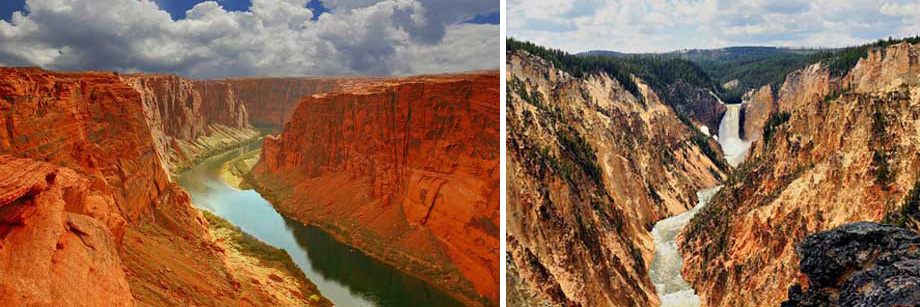
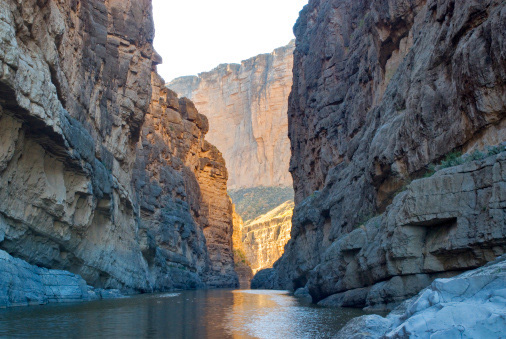
ZUMTHOR IN THE BATH, HE HAS PILED STONES AS GEOLOGICAL LAYERS THEY EXIST IN NATURE. HE SAYS HE THINKS OF THE MATERIAL FIRST.
NAE: Here the stone we’re talking about, I mean natural object perhaps transforms into sole image someway going through cultural filters. It starts to make an appeal not because of their intrinsic qualities but for what they symbolize. They’re used in such a way that as if any veneer looking like granite and real granite will give the same effect. From here, let’s link the subject to Peter Zumthor’s Vals Thermal as a building where natural stone is used intensely. There stands a robust concrete structure but its surfaces are built with stone. Indeed, we’re not touching anything other than stone.
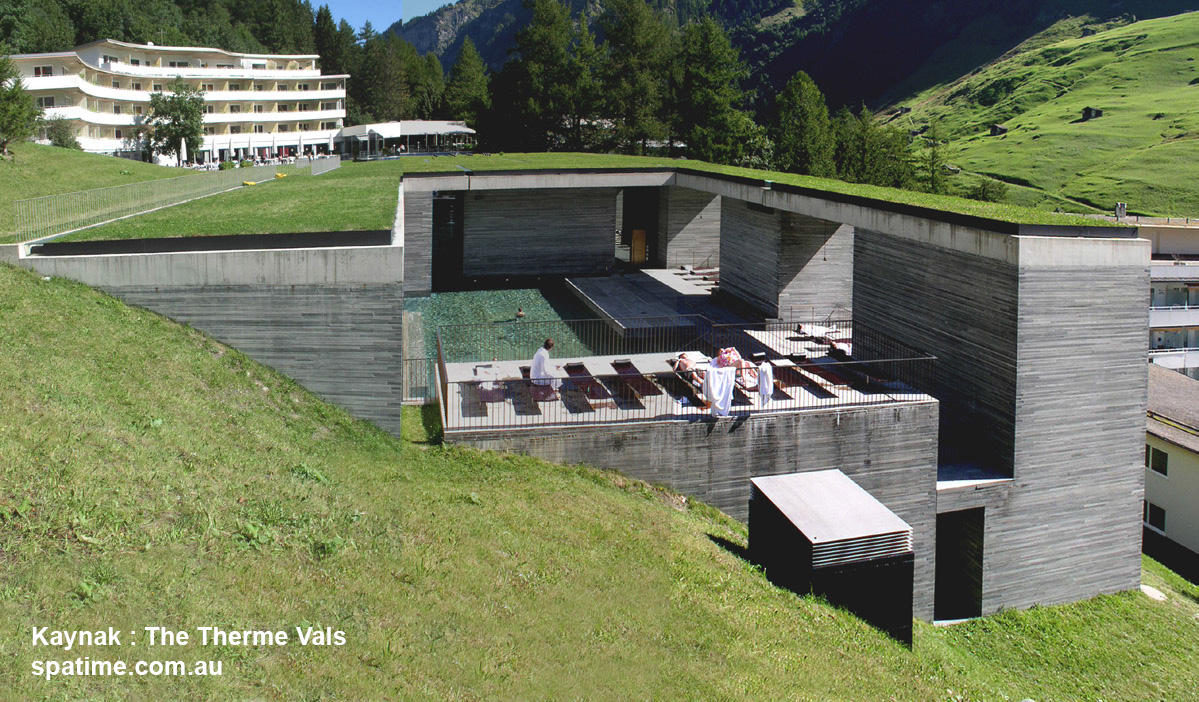
İB: Yes but there he really piles stones on top of each other. It’s not just coating. Of course, the whole wall is not made by piling those stones on top of each other but they’re not fine coatings either, the fine cross-section we see has depth. This is a strategy used a lot by Zumthor when creating the setting which enchants us all the time, the piling technique. He makes use of the density of the material. It doesn’t matter which one by thoroughly compressing any possibly impressive material unearths the appeal potential of that material phenomenally. In the Swiss pavilion he piled up the wood, plus he piled them like in warehouses in a quite radical attitude. In the bath, he has piled stones as geological layers they exist in nature. He says he thinks of the material first. The material has a very important place in his architecture. He has realized that the bath is stone as much as it’s water very well and has designed the atmosphere in that fashion. Water’s liquid and vapor state and stone’s slab and cross-section state, that’s all, there is nothing else. Hot water and water vapor gives a slight buzz to a person. Contacting stone is an integral part of it. Zumthor too has a sound work he had commissioned for a room of Thermal Waltz; the resonance room, the name of the work is “Stone and Water”. You know, this structure comprises cavities, each one of which caters to a sense. For example, there is a resonance room which you enter not through water but from outside. Inside, there are two beds set against two sides of the room. There’s nothing else lying on those beds. All of the walls inside are covered by a material with sparse-textured fabric on top of sponge: You get the sense that you are in a giant speaker. You lie down and those sounds entitled “stone and water” are heard from all walls. It is a cavity with no water inside but they come in as sound from the walls. These are the sounds of falling on water and stone of hundreds, thousands of water droplets. They drop sometimes inside water, sometimes on the stone. He has animated this by sound. Thousands of droplets. Such things must be happening in nature but you cannot capture it and perceive it. I had thought as a waterfall flows into a sea with rocks from high above, you have found a cavity at the shore of the surface it lends upon with a roar and hide in it. As if you are hearing the sound of a vein, a trail dripping by one by one from the edge of that roaring flood. This is almost the sound of a fragile crack remaining after a noise you couldn’t hear. This is just what I meant when I said you are entering not a room but inside the source of sound. There you lie down and let yourself go to this sound arriving from four sides. Although it is not there itself, the water is present as the dropping sound of thousands of droplets and the stone you step on sea and touch is that gray green stone of the region, the Alps. He has figured out that the bath is water and stone and has set this up again in a striking manner. I can’t tell you how a relaxing and calming experience those few days we spent over there were.
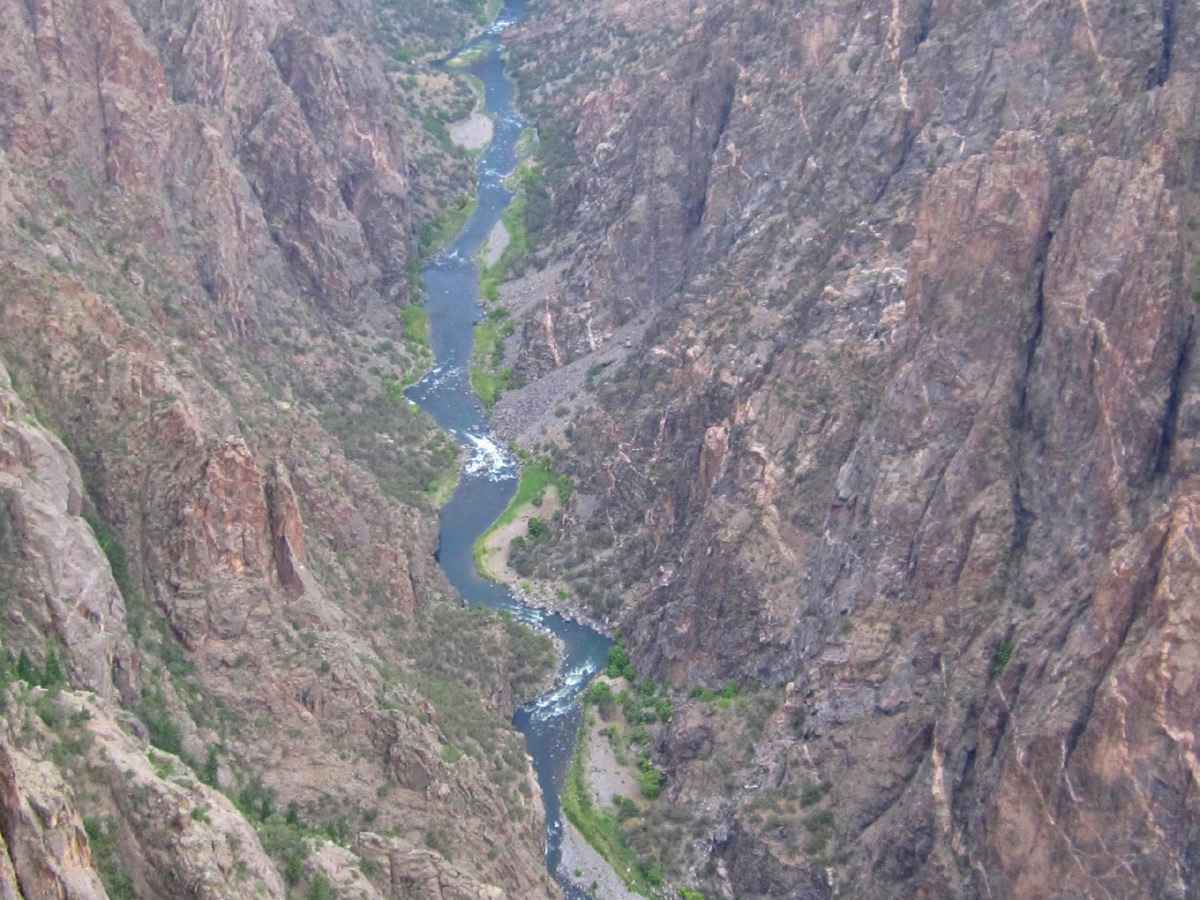
“THIS IS JUST THE THRESHOLD WHERE THE STONE WINS THE WAR, LOS ANGELES IS THE WAR ZONE OF THE OCEAN’S WATER AND DESERT’S STONE, A CLIMATE WAR ZONE”
NAE: Do you have any other memory relating to natural stone?
İB: A striking memory of mine in connection with stone is this: I was affected even more than that of granite adventure. Los Angeles lies between the Pasific Ocean and a rocky landscape covering approximately half of North America. On its west, the largest space of the world, the Pasific, and it’s striking enough to think that the shores of Eastern Asia lie across, think of the humidity of this space full of water. In fact, when one says Los Angeles, one always thinks of this Pacific Coast with palms and beach volleyball, Santa Monica, Venice, etc. The other side, on the other hand, is an endless rock land, the places called the “wild West””, that land of lonely cowboys where no organism other than cacti can grow. Barren, this time it’s endless stones instead of endless water. My friend who took us there stopped by the road and said “Get off!”. We had got in the car in a climate like Antalya’s, İstanbul’s August, when we got off, we are in Ankara or Kayseri, I mean, in the steps of Anatolia. Let alone Central Anatolia, it is like a bone-dry fridge. He said “This is just the threshold where the stone wins the war”, that’s why he had made us leave the car, He said “Los Angeles is the war zone of the Ocean’s water and desert’s stone, a climate war zone”. Nobody had said something like this before, it was much more impressive to experience it so suddenly. This too was an experience of stone and water in gigantic magnitude. Think of a broad hilly area. It’s like a plain but is full of average height hills, all stone and you are going eastward east on an asphalt road. Then when that Sting song “Desert Rose LA” is released and I heard it, I said “At last, a melody pointing to the secret of this city”, but then when I saw the video clip and realized that what he meant by desert was a desert of sand with Arabian fantasy, it was a big disappointment. Also while travelling on that desert road, we noticed a small green concentration which could be called an oasis. The road branching in between was heading Palm Springs which is perhaps the first and maybe the most exaggerated and tasteless example of “gated community”, the trend of the last 30 years. An oasis as a huge garrison town set up with water carried at great cost from far away. After entering through a checkpoint, even then you can access very few places. A few ice-cream parlors, a beer parlor, a couple of motels, the rest is walls, then what follows is complexes within complexes. It is a rich where rich American retired live in solidarity with similar people without any contact to the rest of the world: A type of early Dubai mockup with no highrise, there’s no sign that there lives the hustle and bustle of a giant city whose gross income of its court could compete with India, a hundred kilometers away.
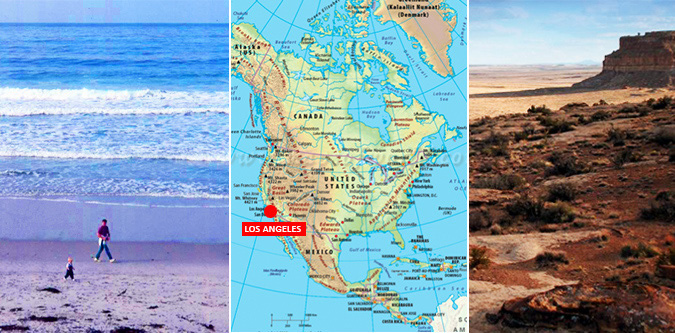
NAE: We understand that in the desert you talk about, there is a space just of stone. This must be affecting not only the climate but also the sensibility of space. If at this point we go back to Vals Thermal, there too we find a space of stone, we see stone on all surfaces, all surfaces contacted by humans are stone…
İB: There are large slabs of covering stones on the floor but everything you see as a wall is done by weighing out the thin side of the stone on top of each other. But they too are not like lines drawn on a surface. They have a depth.
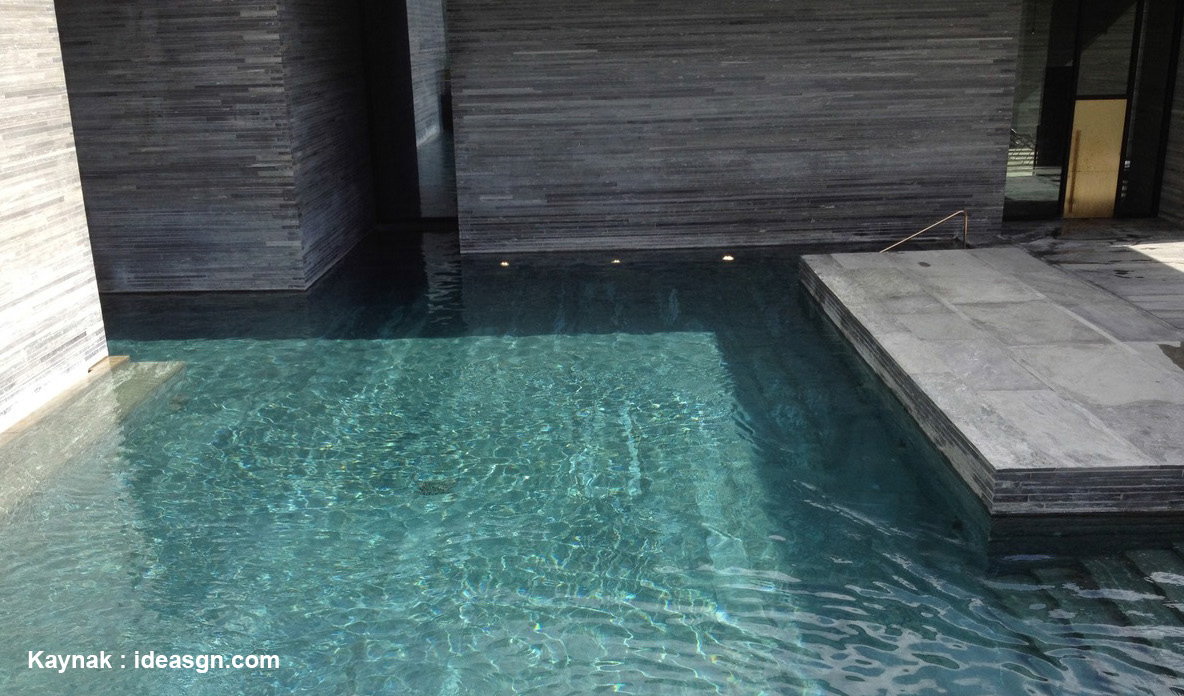
WE KNOW THAT THIS CONCERNS TOUCHES RATHER THAN APPEARANCE.
NAE: In a sense, it’s similar to De Stijl movement of Holland to set up architecture from the start on three axes like x, y and z. Zumthor too sets up the space as if laying the stone on the x, y axis always in the same direction. When hitting a floor, they appear in the form of wide slabs and if they hit vertical surfaces, only the thin wall thickness of the plates are visible.
İB: Yes, this is true, although we know that he will not be pleased with De Stijl comparison, he happens to have done things similar to what you talk about… But we know that this concerns touches rather than appearances… There is a setting installed for stimulating the touching organ, skin, rather than the seeing sense organ, eye. The most striking moment of seeing is a look outside, not inside, a look at snow covered green hills between vapors, lying on a lounge chair in the outer stone yard, this time, a shudder remaining between the dry cold of snow and the humid warmth of vapor accompanies this image.
NAE: This is the way an architect creates his own world with that material. Then there is the stone in vernacular architecture. Stone was used in different ways in architecture through history. We see different examples in the architecture of Greek, Roman and Ottoman periods. In vernacular, I mean rural architecture, stone has a slower changing and more persistent tradition where current technology is used less. Even if period changed, rural architecture has always existed. Zumthor’s building, on the other hand, although is not a vernacular structure traditionally; it sets up a relationship with the concept of “vernacular”.
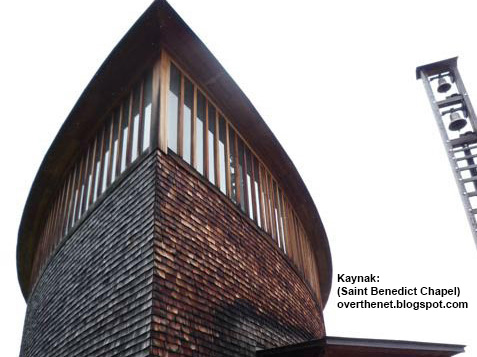
İB: What you say is largely the difference of sculpting; empires like Hellenistic, Roman and Ottoman have also made a type of statement with the aid of stone. They were almost proving how they break the resistance of the stone making it their servant with fine motifs they repeat, showing it first to themselves and also the whole world. Aren’t Doric, Ionic, Corinthian column heads and in all its types, mukarnas, this? Indeed, we find this type of the expression of contention rather in cities, rural areas are more humble in terms of capabilities and using the stone of the region is lack of contention rather than a claim for conformity. Bringing stones from other locations is an arduous and expensive option. Of course, this doesn’t apply to the work of Zumthor. His choice concerns belonging to the place it is. So much so that when he builds a chapel for a mountain village, he covers them with bark just like what village homes do, using this regionality of material and construction technique as an expression of a counter-opulence of all types. This engagement also goes for, for example Nevzat (Sayın) too as it is for Zumthor, using its stone is part of it. Also, in another project, he does this. The question you ask was important. The city means the space that is expensive. Means “Density”. This was what we learned from Mübeccel Kıray, which was underscored over and over. Get condensation in your city chimerae say. Picking up the stone, taking it away, turning it the most sculpted state it could have, bringing it into such small ten centimeters to ten centimeters in size stones and laying on the road, you cannot build a village road like this, you cannot spend so much effort, time, I mean money. Therefore, since the stone is there naturally, it is cheap. When you turn them into cubes ten cm a side, it becomes expensive, I mean when it is sculpted, they use it as it is in the village. When in city, the thing may be taken up to transforming into a mall land being part or that contention.
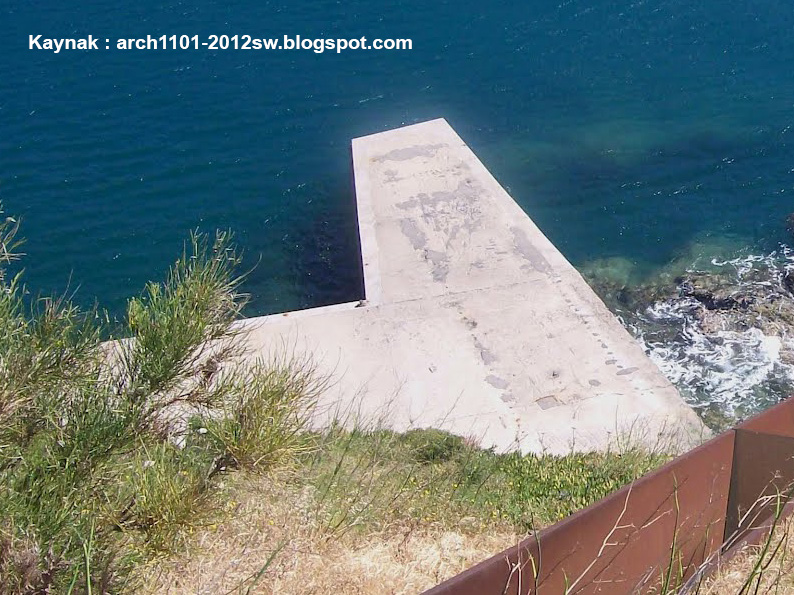
NAE: If we consider what you say, vernacular develops someway as if an extension of where it is. It cannot be detached from the location and the context it is in and the building develops as a continuation of the location. There is also an arrangement designed by Dani Karavan in Portbou, the mauseloum of Walter Benjamin2. It establishes a rather tight relationship with location; is built up as a part of the location.
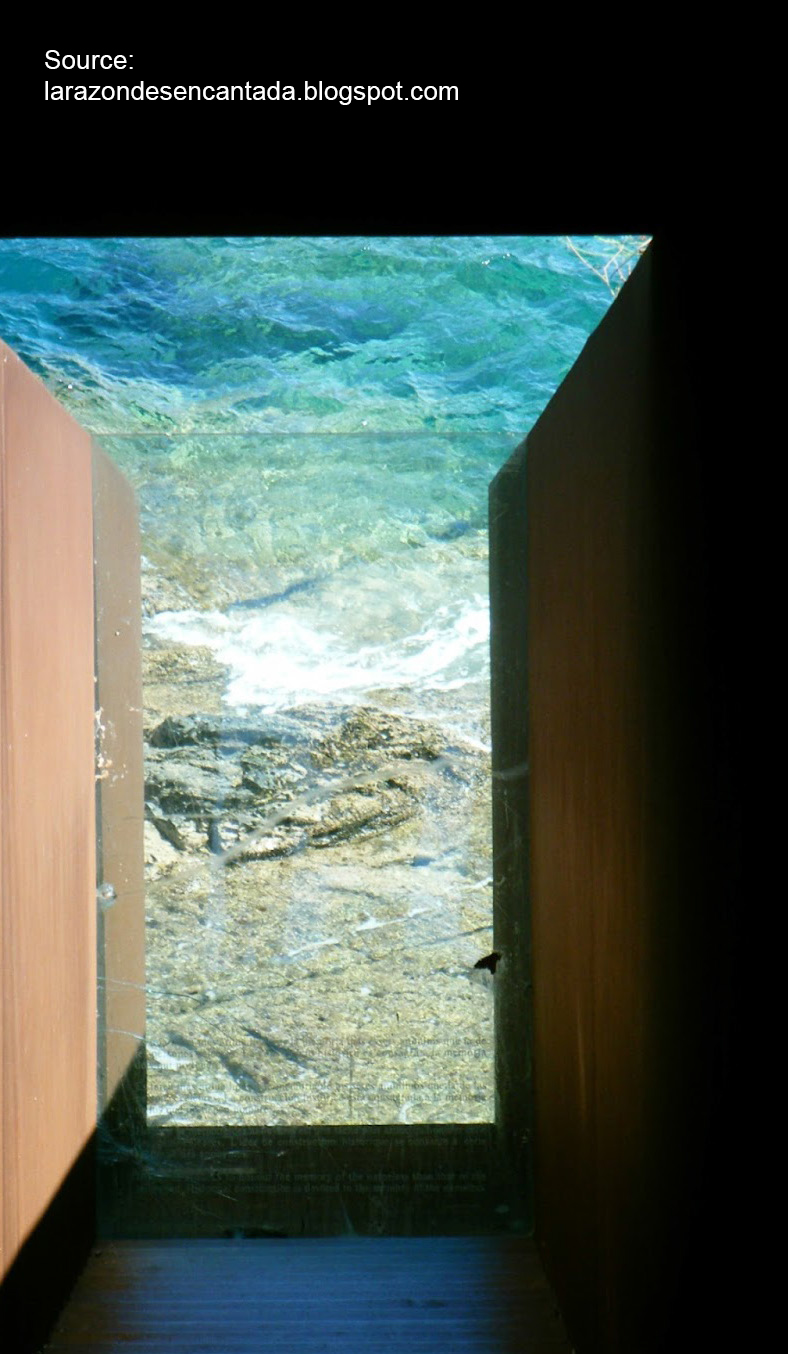
İB: You mean Benjamin’s gravestone. Yes. First it takes you around in the cemetery. Then you reach the gravestone. He has placed a largish stone in some place. He has leaned a big piece of rock on the wall of the cemetery. The small tip of the conic stone is on top. He has scattered gravel on it, even on the edges. Here you stand and pray. You get out, there’s the mouth of a tunnel, a little farther away. It descends towards the sea with the stairs. When you go down the stairs, at some point it suddenly becomes outdoors and ends with a transparent plexy board on which selected sentences by Benjamin are inscribed. The two sides of the tunnel are rocky. It’s already in a natural sublime natural environment. During this small tour, you also see the rocks in the sea and other mountains. You’re almost consoled with nature. The union of the humbleness of the monument grave and nature’s breathtaking call becomes the source of a mysticism not foreign to Benjamin at all either.
1 An epiphany (from the ancient Greek ἐπ, epiphaneia, “manifestation, striking appearance”) is an experience of sudden and striking realization. Generally the term is used to describe scientific breakthrough, religious or philosophical discoveries, but it can apply in any situation in which an enlightening realization allows a problem or situation to be understood from a new and deeper perspective.
2 Walter Bendix Schönflies Benjamin (German: [ˈvaltɐ ˈbɛnjamiːn]; 15 July 1892 – 26 September 1940)[ was a German philosopher and cultural critic.
NAE: Here, we see the presence of stone also when we look towards inside the sea on the rocks, and this happens on a gravestone which itself is a natural stone…
İB: An unsculpted stone. Almost a rock rolling down from the mountain.