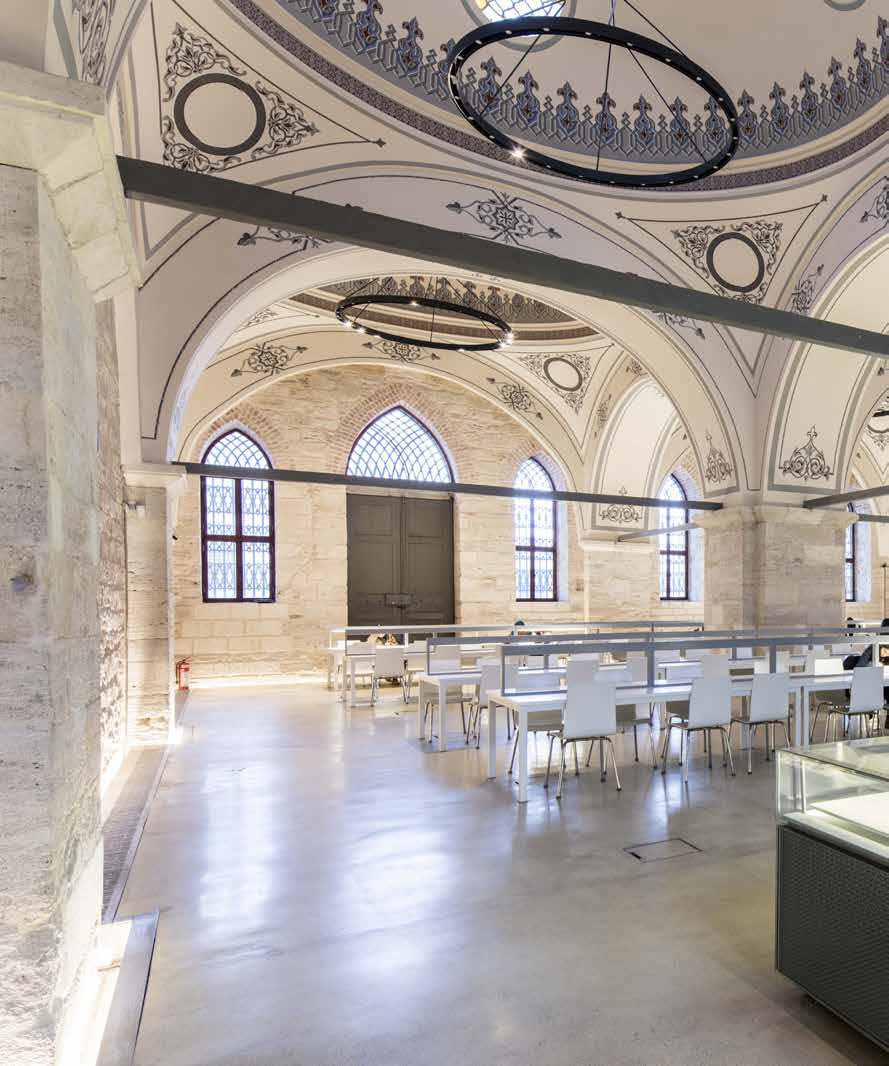
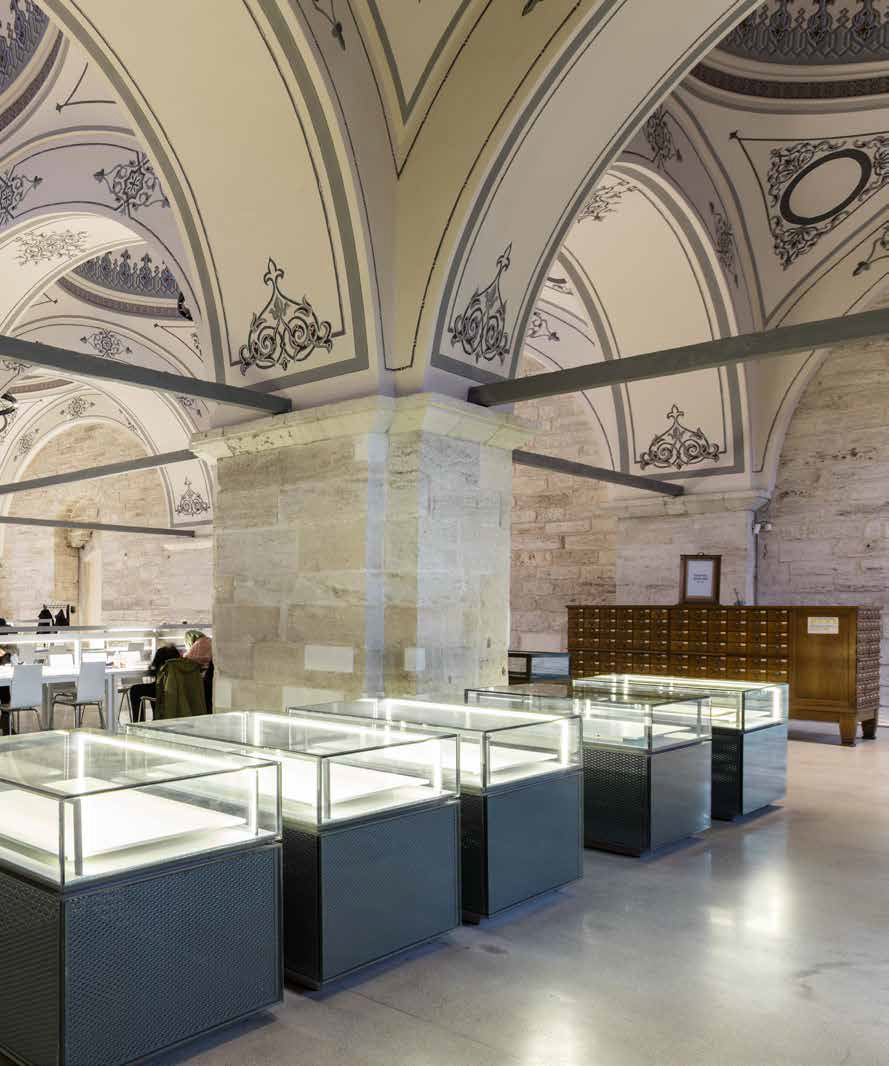
Being a part of the Complex of Bayezid Mosque which was constructed in the 16th century and currently functioning as a Library; the projects of surveying,restitution, restoration and further refunctioning the space as a modern library, have been realized by Tabanlıoğlu Architects. Along with an infrastructural arrangement that provides storage and exhibition of the rare books, the library will become an urban attraction center with the retrieval of spaces that will host various cultural activities. Concurrently, the project also aims to lead the way to revitalize the public square quality of the Beyazıt Square.
First founded in 1884 under the name “Kütüphane-I Umum-i Osmani (Ottoman Public Library)”, Beyazıt State Library is one of the most established and important libraries of Istanbul. Hospice and inn buildings of the Complex of Bayezid II, which define one of the most vibrant public spaces that is connected to the spine of the historical peninsula, Divanyolu, form the area of the Library. The quarter, where the State Library sits, is infused with historical connections of a literary nature as powerful as the Library; the Booksellers’ Market (the old book bazaar) is located ahead of the wall that the structure leans against. Adjacent to this bazaar, the Küllük Coffeehouse, which served as a meeting place for hundreds of years especially for intellectual gatherings and which still preserves its essence today even though it has been transformed multiple times before the booksellers; continues its existence under the historic plane tree as an urban meeting place. Right across the Library, the main campus of Istanbul University is located which defines yet another boundary of the square. The restoration project of the State Library, sensitively reorganizes the interior functions and attentively examines the structural fabric where the multi-domed reading hall gets connected. Through the articulation of various elements, it does not damage the historic wall and floors, it sets distance between the shell and the surface and strengthens the authentic aura of the space while gets updated in the sharp yet harmonious contrast between the material and details.
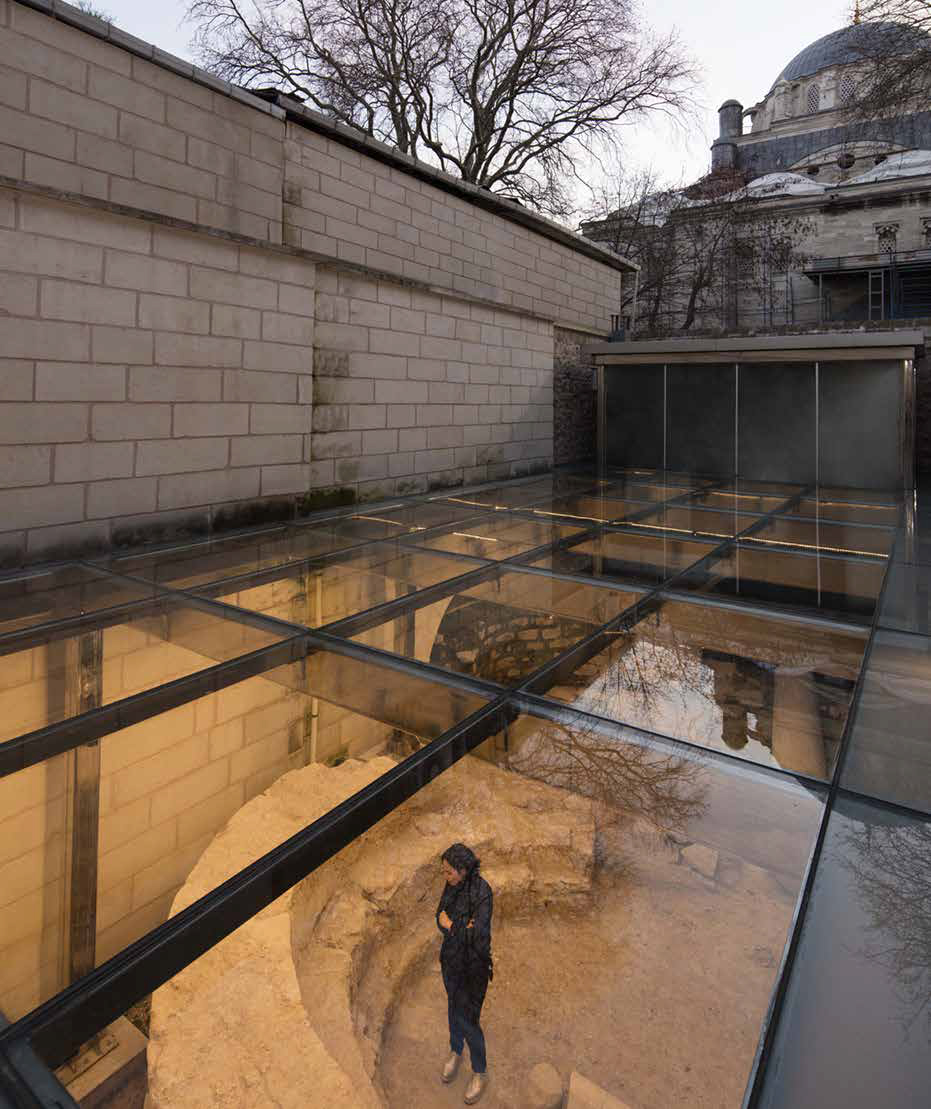
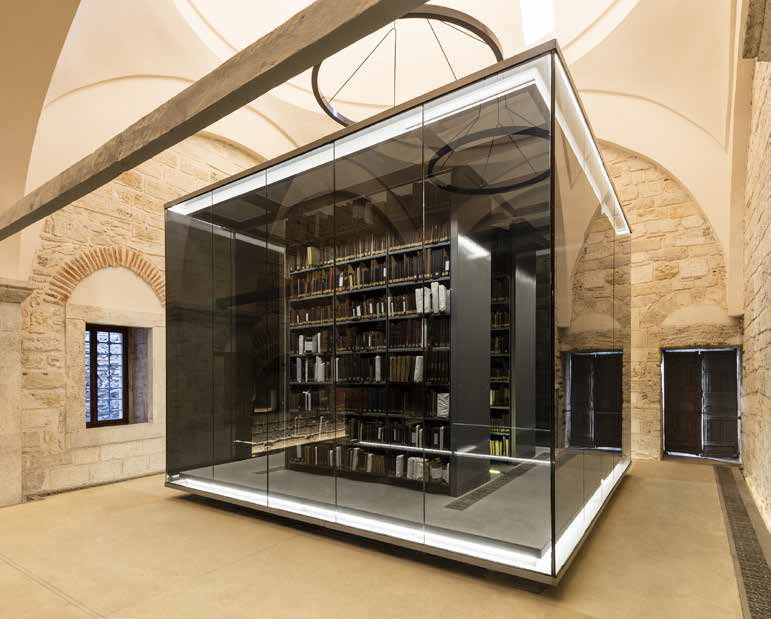
Interventions do not only ensure a modern infrastructure but also pragmatically suggest a new flow. The entrance is allowed in the courtyard as an impressive reception space. Small and big reading halls, museum-like exhibition-storage spaces consisting of rare books and manuscripts are aligned around this courtyard. The courtyard is covered with a light and transparent inflatable membrane system that filters the daylight and provides a controlled atmosphere. Therefore an interior-outer space that can be utilized for different meetings and exhibitions in any climatic condition is ensured. In the renovated infrastructure of the building, there are black glass boxes that are specially designed for storing the manuscripts in the most ideal conditions possible. Along with a glass surface that allows visitors to walk on top of ruins of a church that dates back to Byzantine period which were discovered in the renovation process, a preserved exhibition opportunity is provided. The Manuscript Library and Beyazıt State Library provide service as two separate organizations inside two structures that are connected through a “zen garden” located in the backyard.
Heval Zeliha Yüksel Mimar / Architect