


.
Mountain houses -or “chalets” with their other names- designed at the highest altitudes of the world, are the object of desire of everyone with their wide openings that include unique views of their geography, using natural materials and mostly shaped around an iconic fireplace. Having an architecture that is both functional and aesthetically compatible with nature, chalets are pleasant living spaces that offer calmness, peace, and an embracing atmosphere of nature. We have compiled different examples of chalets shaped with natural stone, which draw attention with their climate-shaped forms, harmony with topography, and interior spaces embracing the landscape.
.
.
DES FORGES RESIDENCE
.


.
Bourgeois Lechasseur Architects was inspired by the natural and cultural landscape of the curvy St. Maurice River in the design concept of Des Forges residence. The structure consists of three wings placed on a foundation built of natural stone. Each of the wings is supported by a steel main structure and a secondary wooden structure.
.


.
The house entrance is designed as a sheltered, closed area surrounded by arches on all four sides. Influenced by Les Forges du Saint-Maurice, the design of the arches reflects traditional natural stone techniques. In the bedroom, the fireplace integrated into a solid stone wall adds a calm atmosphere to the room, while a warm contrast is created with concrete, steel and glass. An environmentally sensitive approach has been adopted in the design of the residence, which is fed by the cultural texture and scenery of Les Forges du Saint-Maurice.
.


.
Architectural Design: Bourgeois | Lechasseur Architects
Building Date: 2023
Location: Canada
Photographs: Adrien Williams
.
.
.
HOUSE ON THE MOUNTAIN
.

.
The house is a result of several stone boxes piled up on the side of a sloping area which was designed by Alric Galindez Architects in Argentina. Each one of these cases frames an outstanding view, where we can find Catedral, Otto, and Ventana mountains, as the main characters of the landscape seen from inside.
.


.
Designers used local stones to keep a coherent language with the harsh and wonderful surroundings, trying to create the idea that the house was always there, just as another rock or an unnoticed natural feature. Snow seasons reinforce the idea. A white vast dominating view, only a few mountain peaks appear in dark contrast, and the house is always there.
.


.
Architectural Design: Alric Galindez Architects
Building Date: 2008
Area: 591 m2
Location: Argentina
Photographs: Alric Galindez
.
.
.
HUSHH HOUSE
.

.
Hushh House was designed by Elliott Architects in the United Kingdom. The site is level and rectilinear and may have been used as a source of stone for the village before latterly becoming a tennis court. This, along with the existing high stone walls which form boundaries to the site meant that using this material in the proposal would create a link with the character of the historic context.
.


.
The use of local sandstone to match the predominant material of the village creates a house that essentially becomes a hidden walled garden, sitting beneath the beds of flowers above. The Hushh House is simple yet sophisticated; it has been delivered with craft and care, with great respect and consideration of its clients’ needs and its cultural and historic contexts, and most importantly, with real joy at its heart.
.


.
Architectural Design: Elliott Architects
Building Date: 2021
Area: 280 m2
Location: United Kingdom
Photographs: Jill Tate Photography
.
.
.
MOUNTAIN HOUSE
.

.
David Guerra’s design idea was to create a house linked to nature which works as a big deck of contemplation and sociability using natural material to make an atmosphere of snugness in a contemporary proposal. All private and social areas were developed in one single level which faces the mountains. It was challenging to find a harmonious solution for the mixture of natural, rustic, and contemporary elements and their materials which were necessary to satisfy the different tastes of the occupants.
.


.
The materials were chosen with the aim to combine beauty, snugness, and ease of maintenance and to create a contrast between natural and technological materials such as reclaimed wood, stones, earthenware, bamboo, tile, fiber, metal, stainless steel, double-glazed and laminated glass, glass tile, anodized aluminum, wood Venetian and tecnocimento.
.


.
Architectural Design: David Guerra
Building Date: 2009
Area: 745 m2
.
.
.
MOUNTAIN RANCH
.

.
The chalet owners ask for a cozy design that integrated all the environments of the house so Hana Lerner the architect of the house designed the project and chose coverings with natural textures: stone walls and floors, and wood panels to bring a warm touch.
.


.
In the bathroom, organic-shaped mirrors bring charm, and a stone-carved tub. Large farmhouse doors create a cozy atmosphere, and the stone cladding brings that rustic look that reminds of the houses in Tuscany that owners wanted for the project. The idea was to bring a local feel to the room, with large rustic wooden doors that allow full integration between the house and the surrounding mountain landscape.
.


.
Architectural Design: Hana Lerner
Building Date: 2021
Area: 260 m2
Location: Brazil
Photographs: Andre Nazareth
.
.
.
MOUNTAIN WOOD HOUSE
.

.
The organizing concept for the Mountain Wood residence began as an exploration of separate buildings arranged to create a variety of complementary indoor and outdoor living experiences. Given the rural context of the town of Woodside, regional agrarian compounds and ionic forms were referenced for inspiration, as well as functionality.
.


.
All buildings share a common language of strong asymmetrical lines with a shared material palette of stone, Western Red Cedar, glass, and steel, together under a steel roof. The use of stone evokes rusticity; rooting portions of the structures to past homesteads, while the randomly patterned cedar planking and zinc roofing, recall the rural vernacular of the California hay barn. The barn, positioned at the front of the property, serves as a symbolic entry, reinforcing the rural character of the surrounding context.
.


.
Architectural Design: Walker Warner Architects
Building Date: 2010
Area: 474 m2
Location: USA
Photographs: Matthew Millman
.


.
.
.
WHIDBEY ISLAND FARM RETREAT
.

.
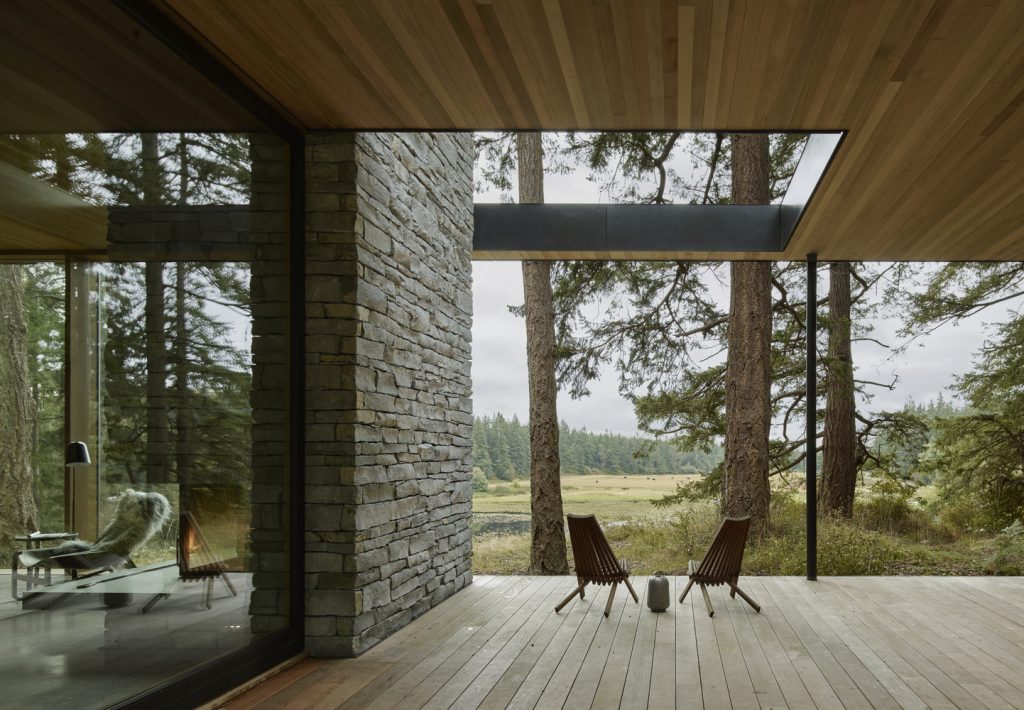
Located on a rural site on Whidbey Island, a local family sought a new home and retreat on the site of their family farm. With a palette of naturally weathered woods, concrete, locally quarried stone walls, deep oak window jambs, solo plaster walls, and black steel accents, the house strives to be warm and rustic yet simple, clear, and open—a house that honors both the timelessness of the forest and agricultural heritage of the site.
.


.
The house was designed as both retreat and part-time residence for a growing family with strong local roots going back several generations on the island. At the owner’s request, intense care and effort during design and construction placed the protection of the trees over construction expediency.
.
Architectural Design: mwworks
Building Date: 2019
Area: 411 m2
Location: USA
Photographs: Kevin Scott
.


.
.
.
OLD STONE HOUSE
.
The Old Stone House is a chalet located in the beautiful Hudson Valley, designed for a young couple to use on the weekends. The homeowners wanted the existing stone walls to be incorporated into the new design. The roof and walls that surround the stone structure and bring the light inside to create a simple barn form illuminated by natural light, formed the concept of the chalet.
.

.
The existing cult stone texture is combined with a metal roof and stained cedar cladding to create a monolithic look. Accompanied by a two-story wall, the living room creates a warm atmosphere with a wood-burning stove and comfortable seating. The dining table was designed using heavy iron legs to reinforce the vintage concept, and this stone house was given an industrial look with special pendant lights on it.
.


.
Architectural Design: TAKATINA LLC
Building Date: 2017
Area: 93 m2
Location: USA
Photographs: Mikiko Kikuyama
.


.
.
.
THREE SUMMITS HOUSE
.

.
Three Summits House, designed by NÓS and located in the heart of the Green Mountains in Vermont, was designed to bring together three different generations of the same family. This house, which was designed in a simple form in a rocky area with an understanding framing the exquisite view of the region and to return to the roots of domestic life, is freely positioned on the land.
.


.
It creates a unity with nature with its simple and even primitive structure, away from ornaments. The stone monoliths used on the first floor of the house almost form the base of a triangular prism. Located at the highest point of its site’s topography, this house maximizes unobstructed views of the dispersed terrain. It plunges the visitor into the heart of the forest on the drive-through access road before exploring the landscape of the Green Mountains.
.


.
Architectural Design: NÓS
Building Date: 2023
Location: United States
Photographs: Eric Petschek
.
Simay Sevimbige / M.Sc. Interior Architect & Editor