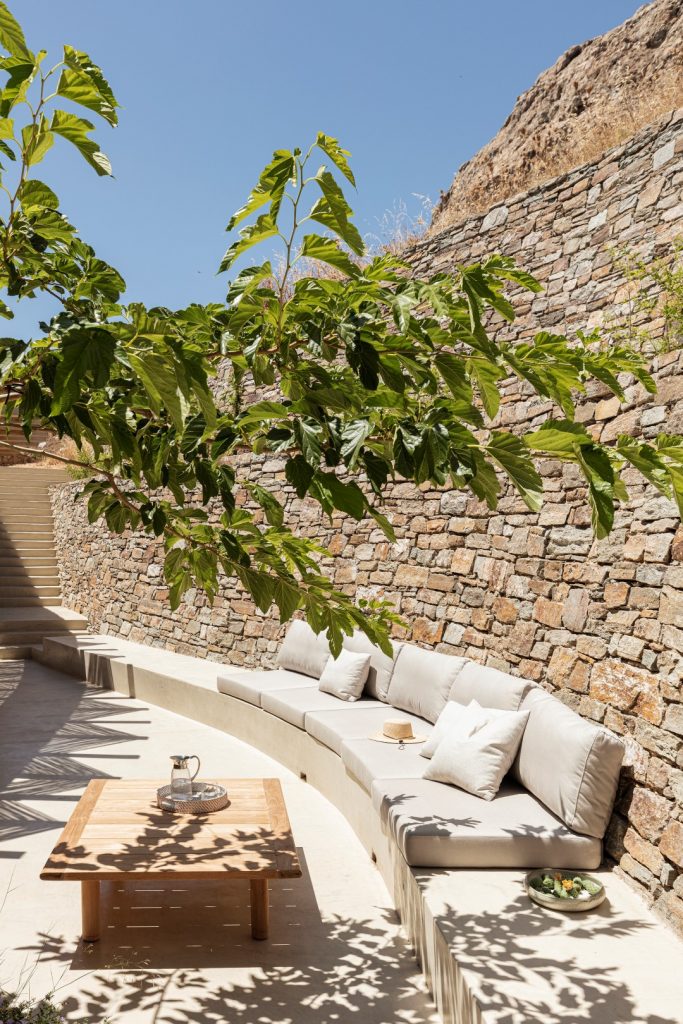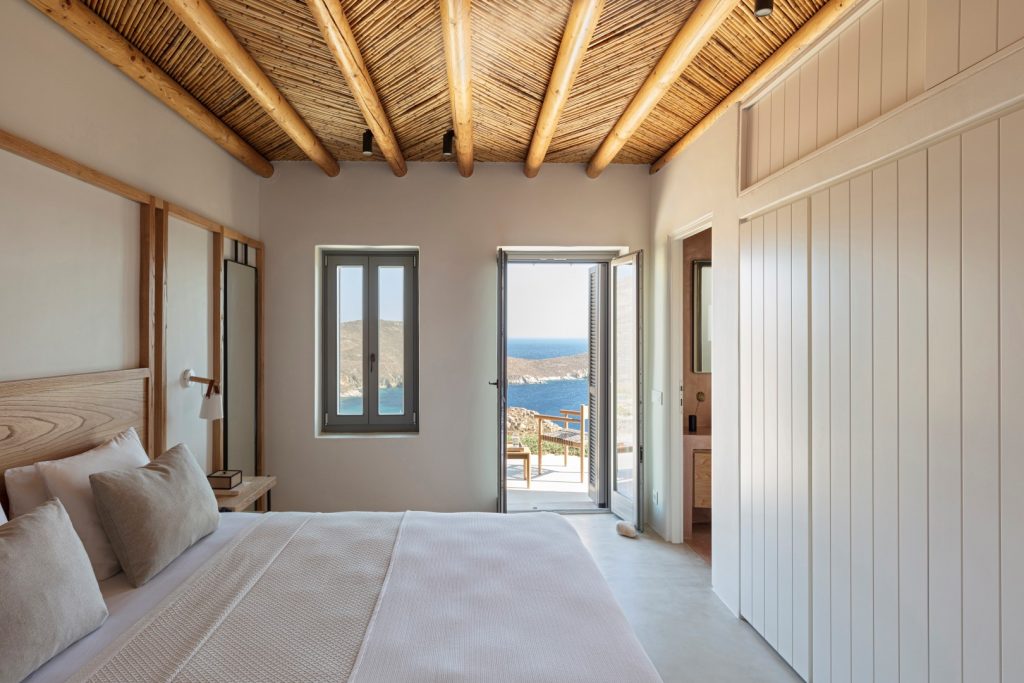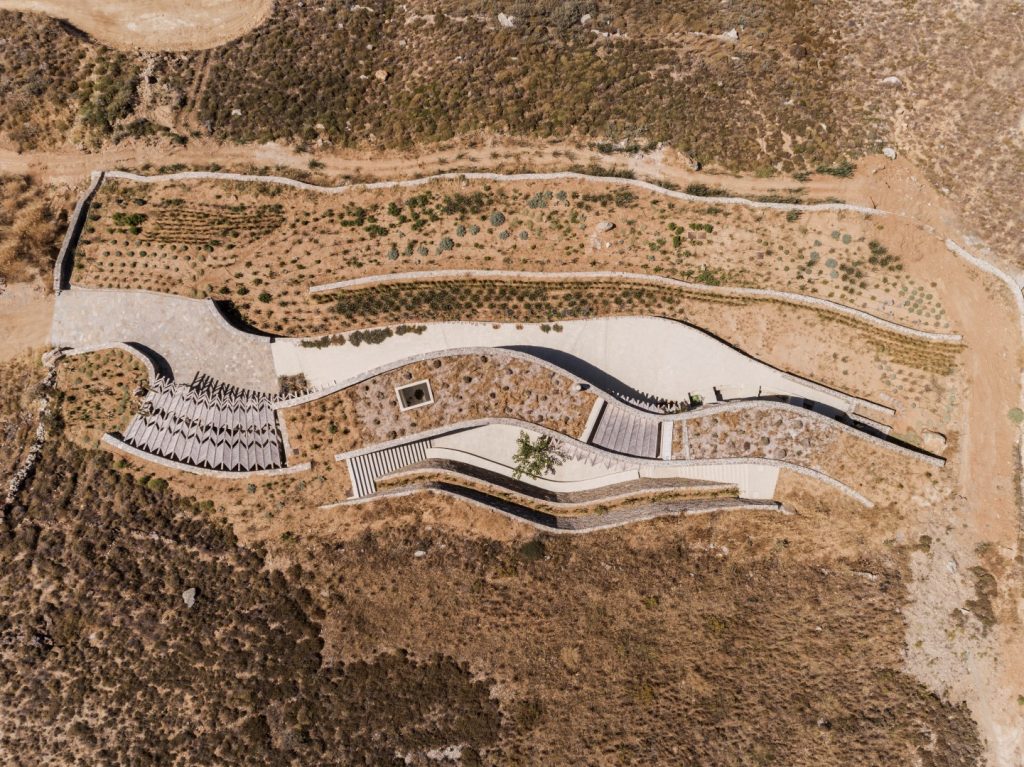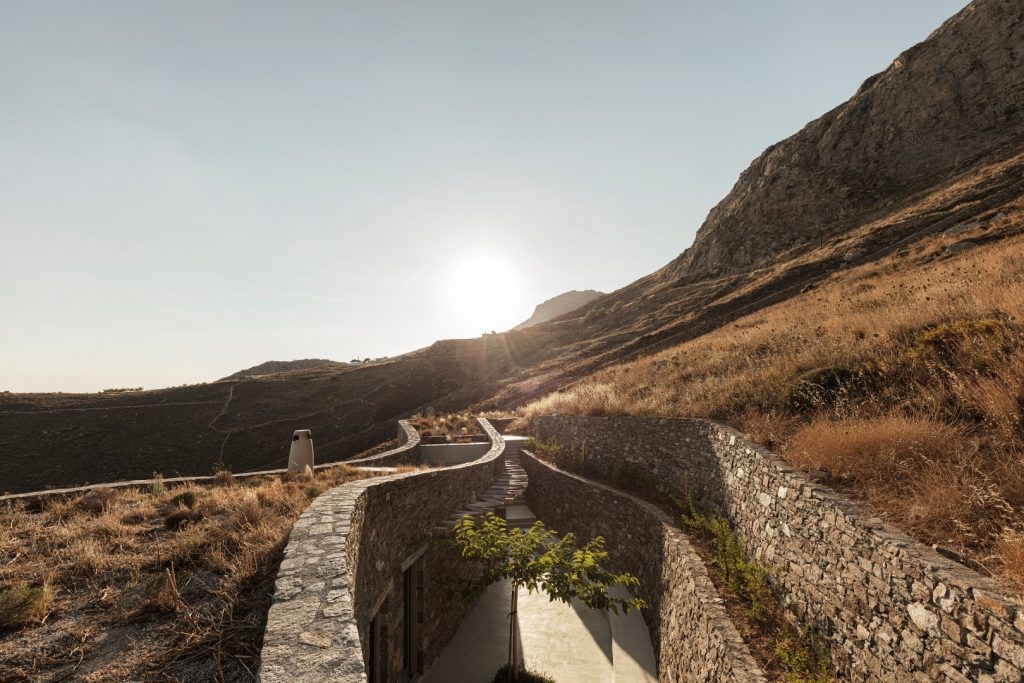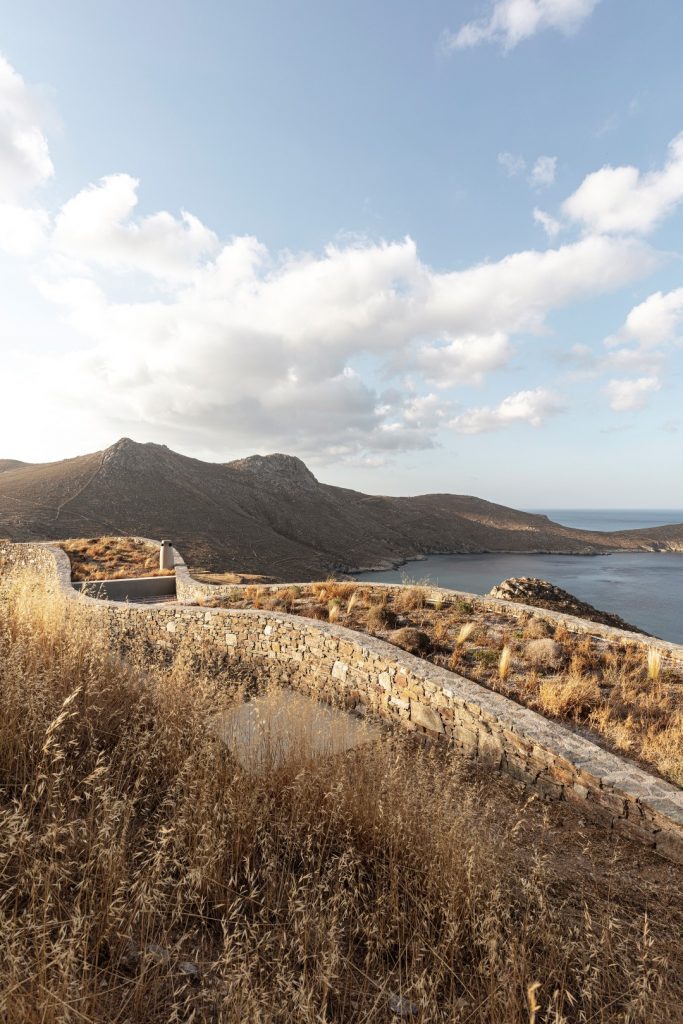

Integrating with the landscape while respecting the natural elements, local architecture and traditional building methods, the focus of the design of the Xerolithi House was to adapt to the context, which is made up of scattering wild bushes and gravelly slopes adorned with giant cliffs. Short stone retaining walls, locally called “xerolithies”, built for land cultivation a long time ago, were included in the design process as the most striking element in the existing plot. These walls, which usually do not exceed one meter in height, form straight strips parallel to the slope and run over the entire surface of the slope. Although the Greek Islands come to mind with white boxes, the architects challenged this morphological bias by imagining the main facades of the house as xerolites, with walls that start low and rise gradually. The walls have been transformed into independent structures that approach and diverge according to the slope by creating spaces between them. To achieve this, all the programs of the house were placed in order, thus giving the building a long and narrow form. The walls, which were built with traditional methods and without the use of joint mortar, on the front and back facades of the building, are independent of each other and approach and move away from each other according to the slope, making room for living spaces. The walls are positioned as blown pieces, inspired by the strong island winds. In line with the “Xerolithia” reference, the roof of the house is covered with soil and vegetation that mimics the natural landscape. This made the house almost invisible.
Architectural Design: Sinas Architects
Building Date: 2019
Area: 245 sqm
Location: Serifos Islands, Greece
Photography: Yiorgos Kordakis
Natural Stone: Xerolithi stone
Location: Exterior walls surrounding the building, building walls