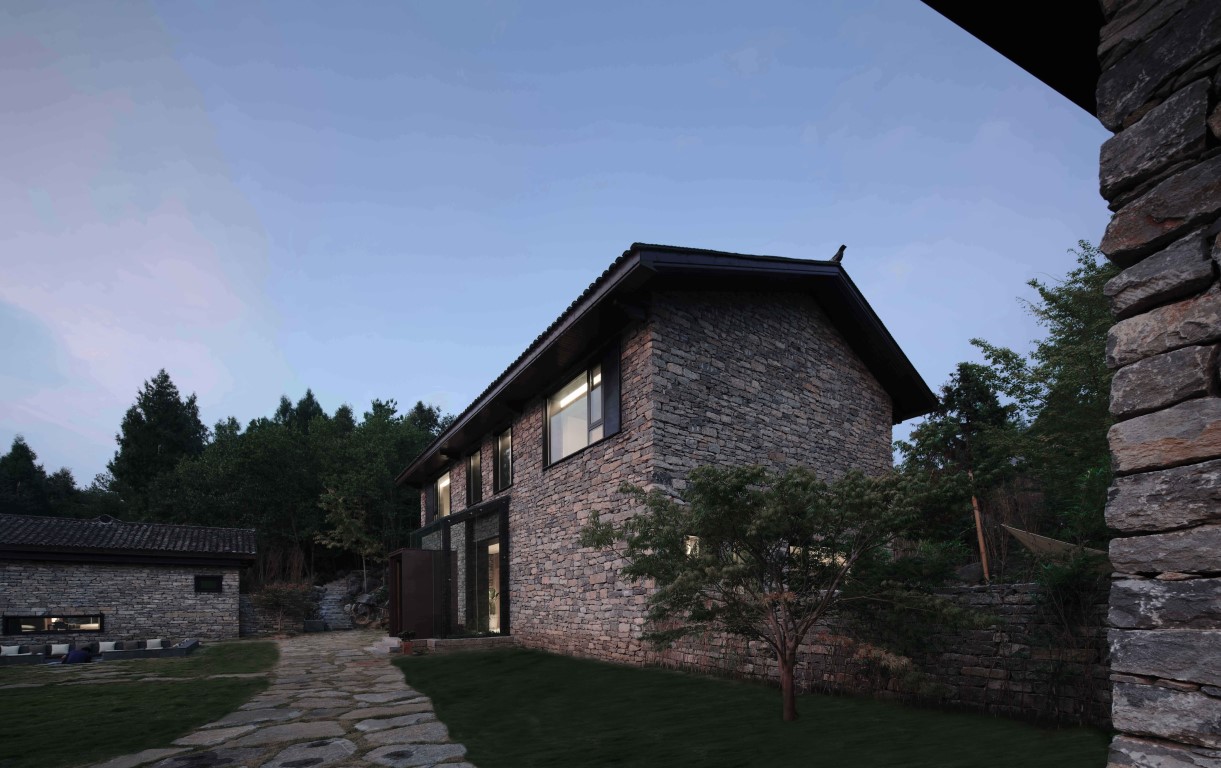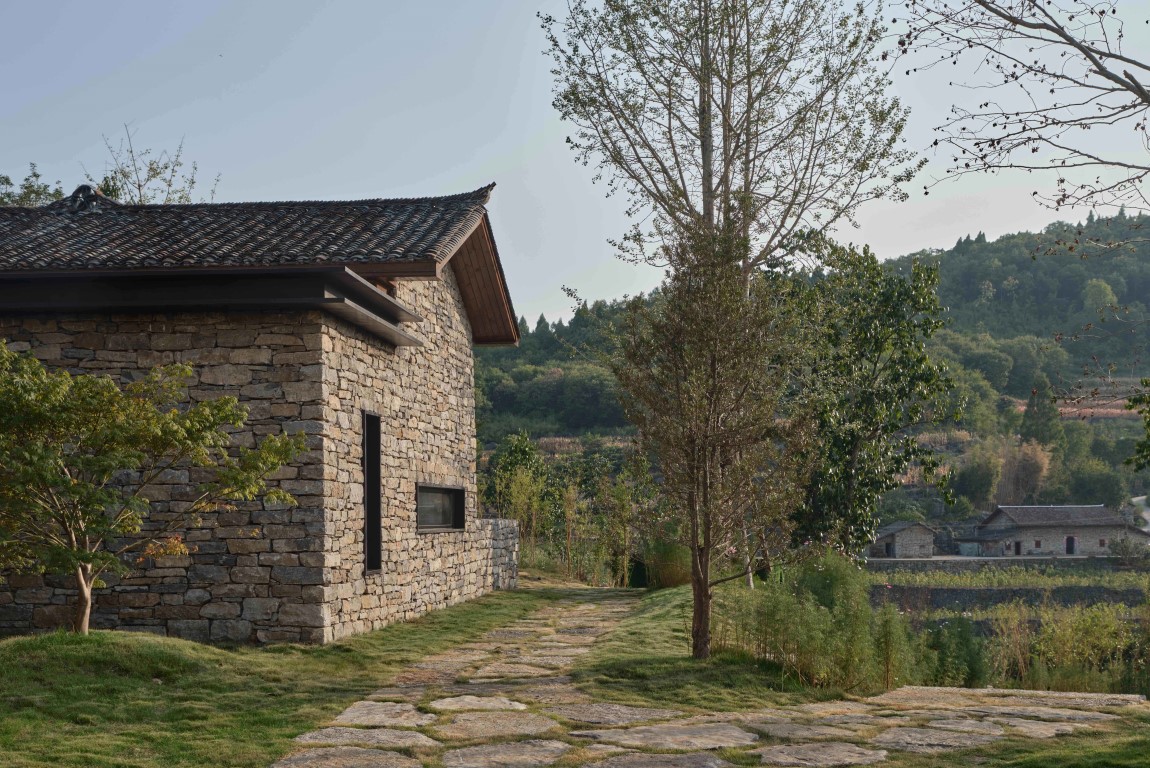
Nanchawan Stone Houses project which is located in a small mountain village in Hubei Province, designed by CALAADI was planned with a clear concept that the “countryside takes precedence over design”. The local landscape is dotted with small mountain villages, offering an abundance of cultural and natural beauty. The first phase of the Nanchawan Stone Houses project was completed in 2020, during which time the architects had already planned the second phase.
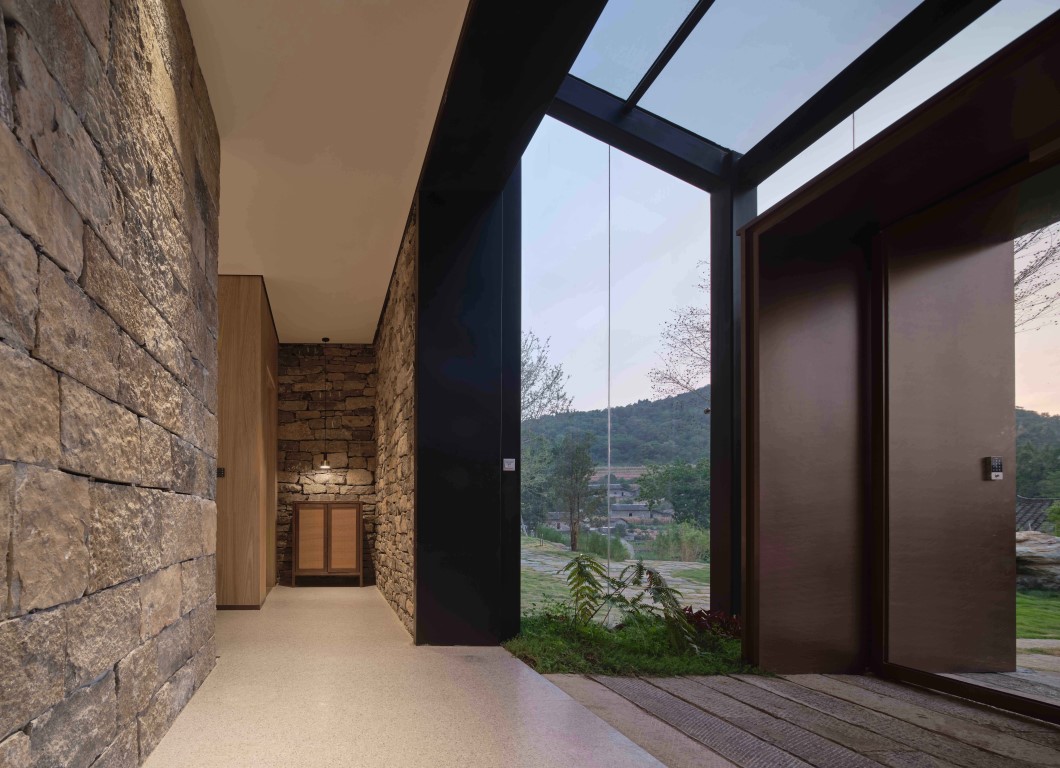
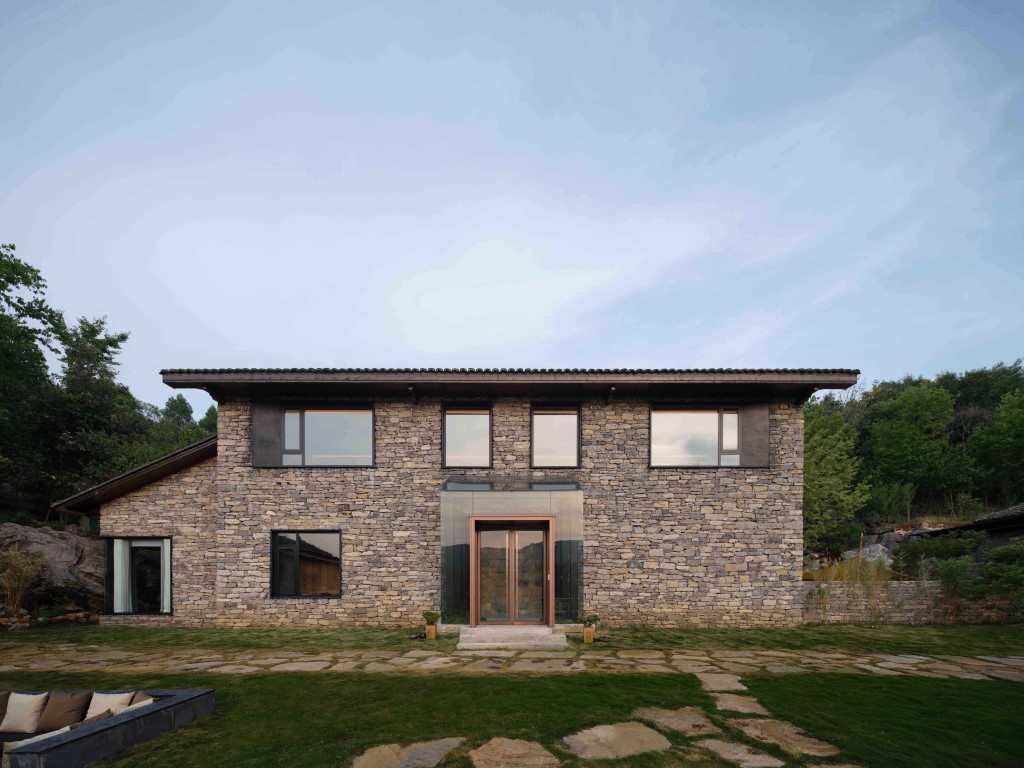
After an initial site visit to Nanchawan village, two buildings in Phase 1 were developed. Originally, the buildings belonged to two brothers: like the buildings belonging to the other villagers, they were built from locally sourced mountain stone. The architects used traditional Yichang stone architecture as the original reference for the project. The design of the new houses aims to retain the original character of the ancient village, while expressing both the continuity and progression of time. Due to the distinctive regional attributes of the local stone, its presence in the new houses provides a clear connection to rural aesthetics, while providing a quality of timelessness.
The second phase consists of several buildings laid out on the hillside in an irregular pattern, which continues and evolves the architectural relationship with the site that was established with the first phase stone houses. The second phase houses have been sited in response to the environment, in contrast to the first phase: rather than being oriented towards one another, their positions on the hill are determined by the contours of the terrain, similar to the way existing ancient rural houses have been built in the area. With this method, a sense of organic order is achieved while respecting the existing environmental conditions of the site.
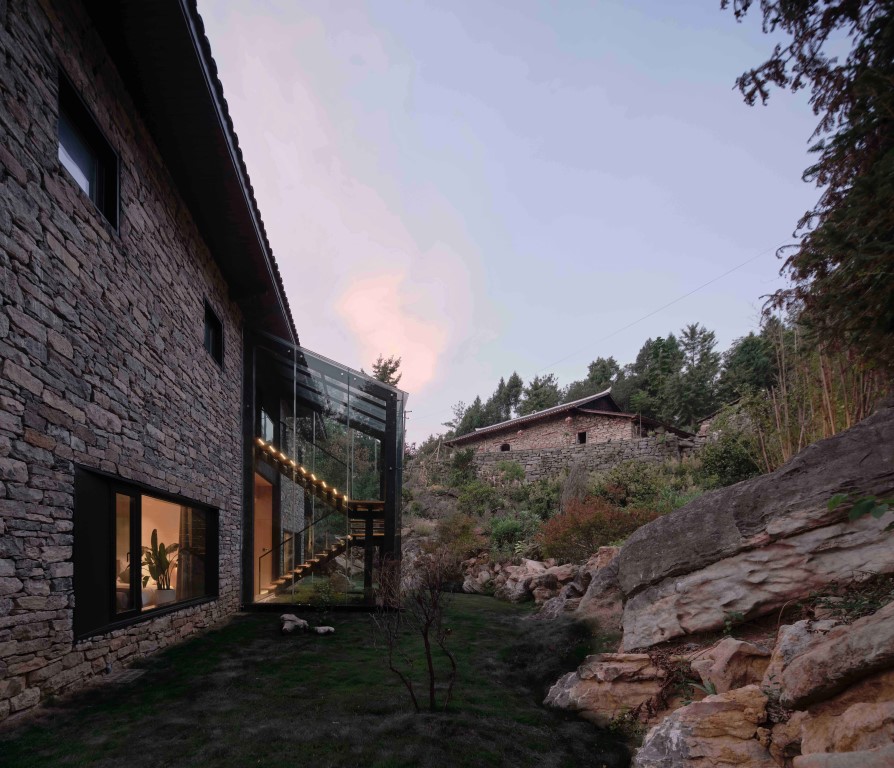
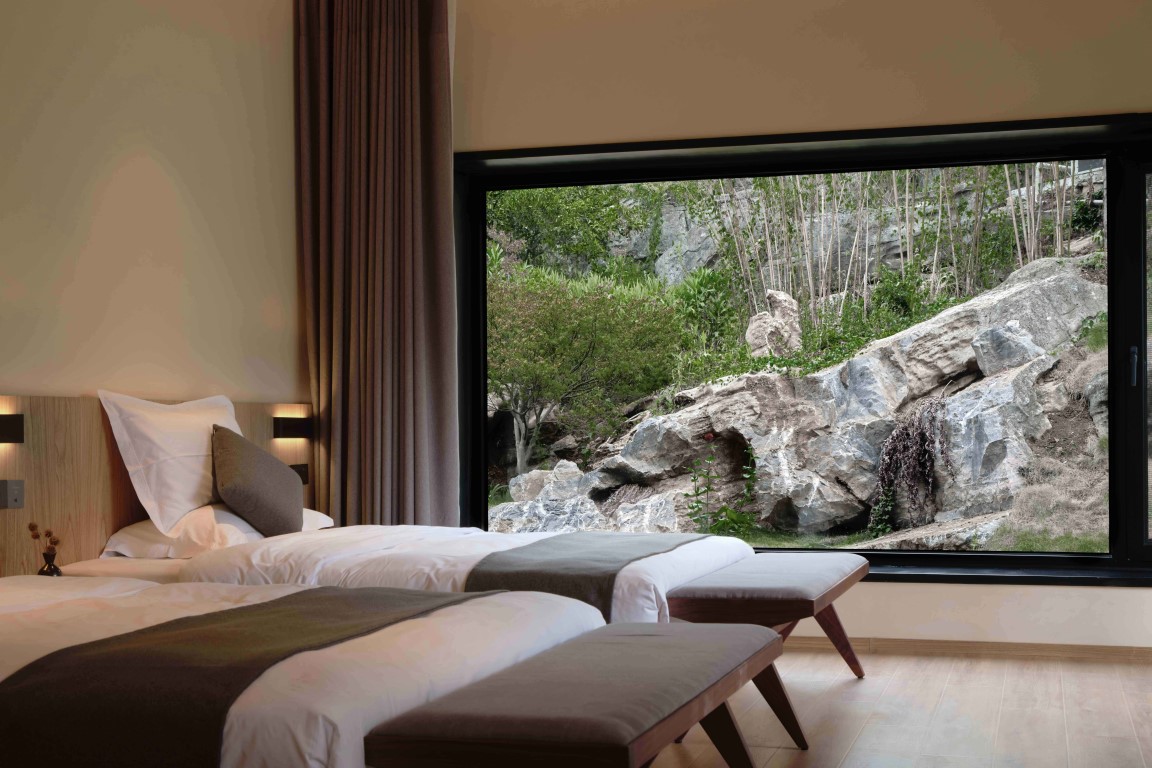
Throughout the project, stone has been used in lieu of traditional wood, and is connected to a steel structural system. Traditional sloping roof forms have been implemented with simplified eaves, while a modern window frame system composed of varying opening sizes provides a wide range of views towards the surroundings. In this way the outdoor environment is brought closer to the indoor spaces of the project, allowing impressions of rural life and nature to be seen from within new interiors of modern sensibility.
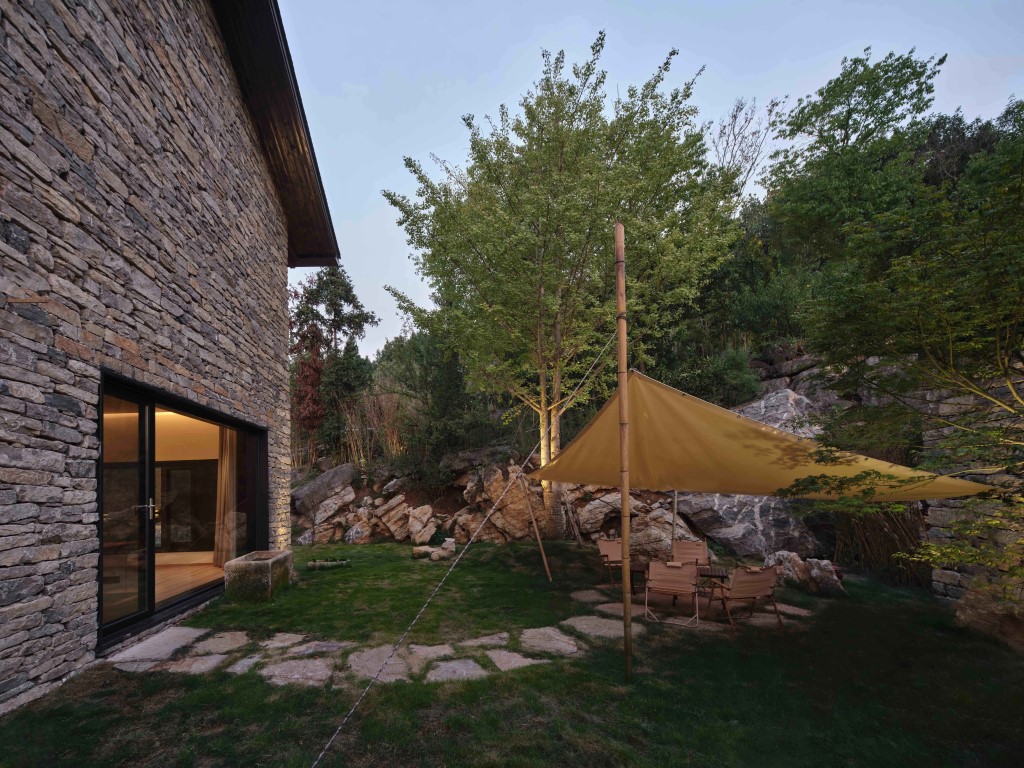
The project provided occasional surprises during the construction process: in the process of excavating part of the existing mountain soil, an impressive swathe of rock was gradually uncovered. A decision was made to have the larger windows of the buildings face these rocks as much as possible, creating a very powerful visual relationship with the architecture, and the visitors within it.
The texture of mountain stone is also representative of a natural order within disorder: the layout of the buildings and their window openings correspond to its proximity and distance, providing subtle shifts in view and atmosphere, so that each indoor space has a unique frame onto this timeless aspect of the landscape. Mountain stone and wood are also used internally, bringing
“Rural construction requires time, especially conducted with the hand-crafted techniques”. The architects understood traditional building techniques could not be done overnight, and ensured that the project was built in close collaboration with local craftsmen.
While stone is used as both a construction material and internal decoration, the interior has been designed to be in accordance with a contemporary lifestyle. Varying proportions of wood, steel, and stone have been implemented to create a large number of different interior combinations. By recruiting local craftsmen with a varied cross-section of skills, the timeless nature of the countryside can be felt and seen in the project’s materials.
To be sure, the contemporary countryside is not all rosy, and it is certainly not a place for designers to display any elitism. The concept behind the stone houses of Nanchawan Village aims to create an architectural aesthetic paradigm that can be promoted in the countryside by embracing the existing conditions of rural China, and has been developed in the hope that its values may be taken up in other future projects.
Architectural and Landscape Design: The Design Institute of Landscape & Architecture, China Academy of Art Co., Ltd.
Project Date: 2021
Total Construction Area: 700 sqm
Location: Nanchawan, Yiling Township, Yichang City, Hubei Province
Photography: AOGVISION
NATURAL STONE:
WALLS:
LIMESTONE