
The coronavirus emerged on scene towards the end of 2019, only to rapidly grip the entire world by the throat shortly thereafter. Now, it is all humanity can talk about. Corona has paralyzed the world economically and socially as much as it paralyzed human health. The World Health Organization has even declared it a “pandemic.” Known also by its medical name, COVID-19, has pushed the healthcare systems of the countries into where it has spread onto the brink, especially in terms of capacity. The sudden spike in the number of patients has likewise pushed the need for medical supplies onto the brink as well. Intensive care units and healthcare workers alike are in desperate need of beds, masks, and visors. Different branches of industry have had to roll up their sleeves in order provide fast, namely, economic to meet these demands. Standing alongside them are key figures from the world of architecture and design to assume responsibility and support these efforts with innovative solutions of their own. We have compiled for you some very ingenious solutions indeed that are quick, easy on the wallet, and straight from the minds of internationally renowned architects and designers.
Carlo Ratti Associati
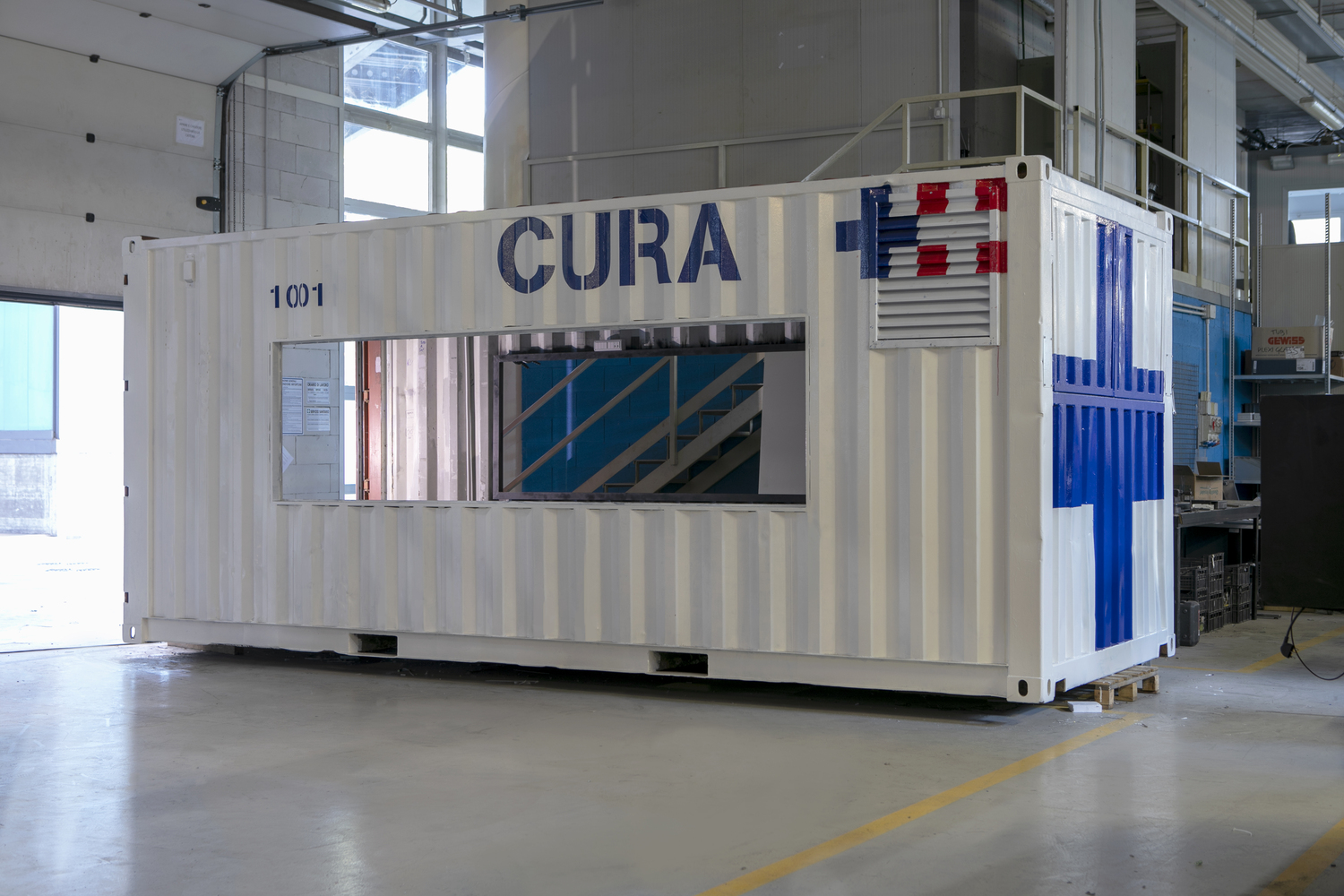
Carlo Ratti Associati and Italo Rota, together with an international team of experts, have transformed shipping containers into intensive care units that they refer to as CURA. Designed to support overcrowded hospitals pushed beyond their capacity due to the COVID-19 outbreak, the first prototype of the units are being produced in Milan. CURA means “treatment” Latin. CURA units can be rapidly assembled, and are both easily transportable as well as highly dependable. Negative pressure protection in each unit allows up to two intensive care corona patients to be treated in total isolation, complete with all the necessary equipment. Each unit can work collectively or independently of one another, and they can even create different combinations via modular inflatable structures. The units can be placed either within the vicinity of the hospital or be used to create new hospitals in their own right by placing them – especially the adjustable ones – on empty plots of land. Financing the project, which currently is in the manufacturing phase, is the The World Economic Form. UniCredit is sponsoring the initial units. The CURA units are to be shared as an open resource meant to support the entire world. You can preview them on the designer’s website.
Foster + Partners Face Visors
Foster + Partners has designed a face visor, suitable for cleaning and resuse. The first prototype consists of just three components, and is meant to be produced on mass to meet the needs of health care workers. In doing this, Fosters + Partners is offering digital and laser cutting machines as a faster alternative to 3D printing technology, having demonstrated that they can produce 217 visors per hour. The prototype visor is made from 0.5 mm optically clear PETG, an interlocking soft PP headband, and a surgical silicone rubber head strap that ties the together. They have been designed to be easily disassembled, cleaned, and reused, addressing the growing shortage of raw materials for production. Out of their desire to help, the firm is delivering the prototype visors to a number of hospitals in need in London, where they are being tested.
Jupe Health Mobile Units
Jupe Health has set out to address the shortage of beds across England’s hospitals, which have been pushed beyond their capacity due to the coronavirus pandemic, by designing mobile health units. The team explains that, with the health care system being on the verge of collapse, the project is designed as rapidly deployed rest and recovery, as well as mobile intensive care units. The Jupe Health units are built for healthcare workers’ rest, and when necessary, for patients’ treatment and recovery. Up to 24 health units can be deployed on a single flat bed pick up truck to both rural and urban areas. “Jupe Rest” units offer a rest / sleep unit for medical professionals. “Jupe Care” units are a meant for isolating non-critical patients. “Jupe Plus” units serve as ICUs for patients in critical care. Designed for comfort, care, and emergencies, the units are highly scalable and cost effective. Moreover, they use technology inspired by the automotive industry and are currently awaiting a patent.
Plastique Fantastique’s Mobile PPS
Plastique Fantastique is known for its designs of inflatable structures. This time, they have come up with pneumatic mobile personal protection spaces or care units where doctors and other health professionals can treat patients meanwhile protecting themselves from contracting the coronavirus. Each unit has constant overpressure that doesn’t allow contaminated air to come inside, further preventing them form exposure to infection should their masks or protective suit fail them. First, the physician enters an air lock area that prepares them with disinfection procedures. Then, they enter the transparent bubble, a 4 x 8 sqm space that contains all medical equipment required for treatment. It acts as a sickbay of sorts. Doctors can also use pneumatic systems as relaxation areas in between shifts.
The Boysen Pavilion by WTA Design
Architecture and design studio WTA has come up with a temporary alternative to help support hospitals with the increasing number of patients left in the wake of the coronavirus. Dubbed the Boysen Pavilion, this alternative offers a simple, fast, and scalable solution to quarantine units. Each facility is rectangular in form, measures 6 x 26 sqm and will have 15 beds and two toilets. They are made from a wooden frame and plastic coating in order to facilitate fast mass production. Patients and healthcare workers will have two different entrances, complete with directed airflow. You can find drawings and images of the facilities, which can be used anywhere in the world, on WTA’s website.