
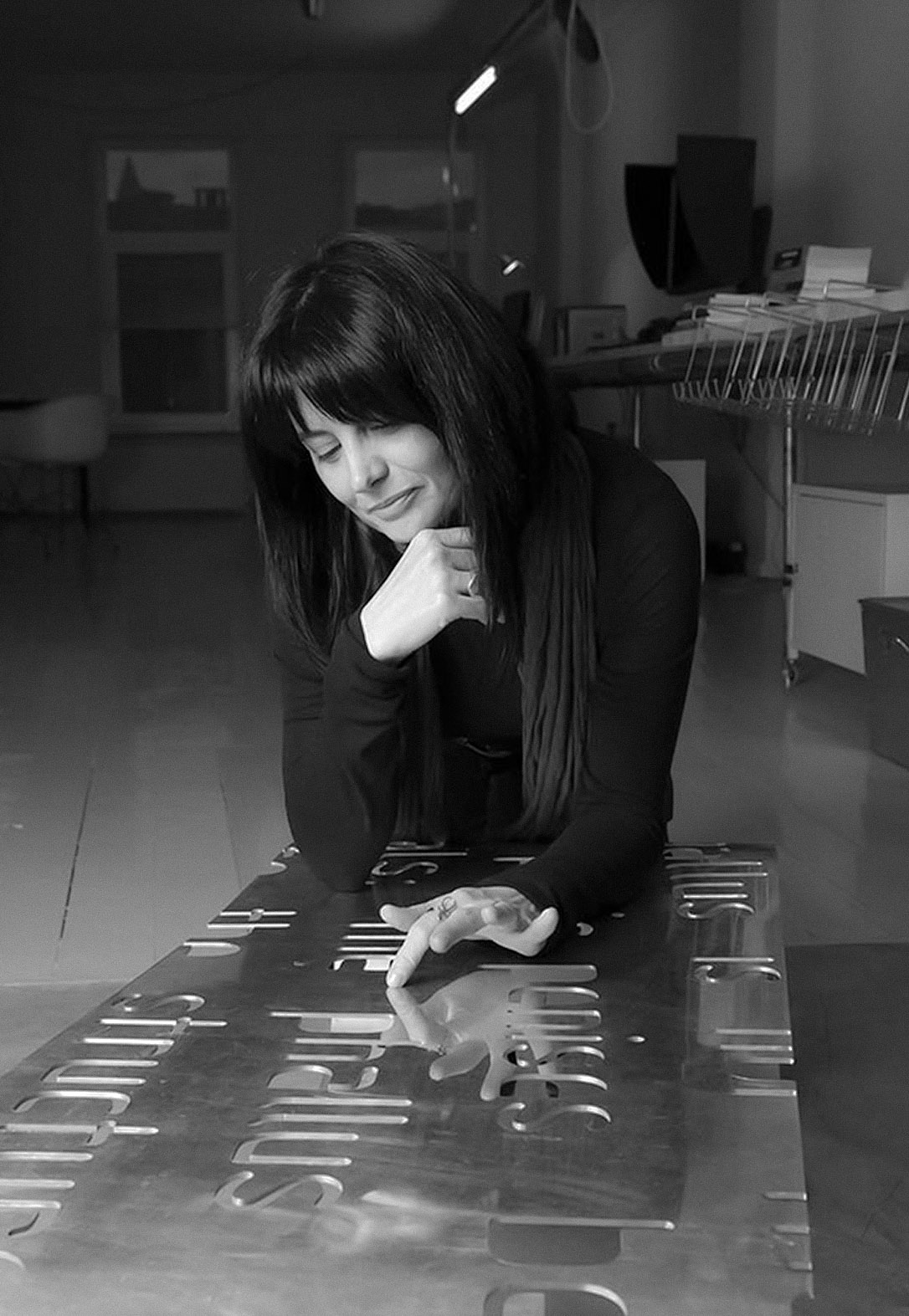
INTERIOR ARCHITECT AND PHOTOGRAPH ARTIST BURCU AKSOY IS ONE OF THOSE WHO SIMULTANEOUSLY WORKS TWO JOBS. BESIDES HER WELL-DESIGNED SPATIAL ARRANGEMENTS AND SUCCESSFUL FURNITURE DESIGNS, SHE UNFOLDS DIFFERENT MOMENTARY ASPECTS OF STRUCTURAL ARCHITECTURE. NATURALLY, HER WORKS ARE BASED ON ARCHITECTURE. WHAT BROUGHT US TOGETHER IS THE ARCHITECTURE AND THE EXPERIENCES IN HER EYES, HER PRODUCTIONS AND THE APPROACH OF PRESENTING THE STREAM OF MIND OVER PHOTOGRAPHY, THROUGH DESIGNING THEM WITH ARCHITECTURAL TOOLS. FOR THIS REASON, I WANTED TO INTRODUCE HER WITH OUR READERS. WE TALKED WITH BURCU AKSOY ON HER RECENT AND PHOTOGRAPHIC WORKS…strong>
Heval Zeliha Yüksel Mimar / Architect
Could you tell us a bit about the works from your workshop and your interior architecture projects?
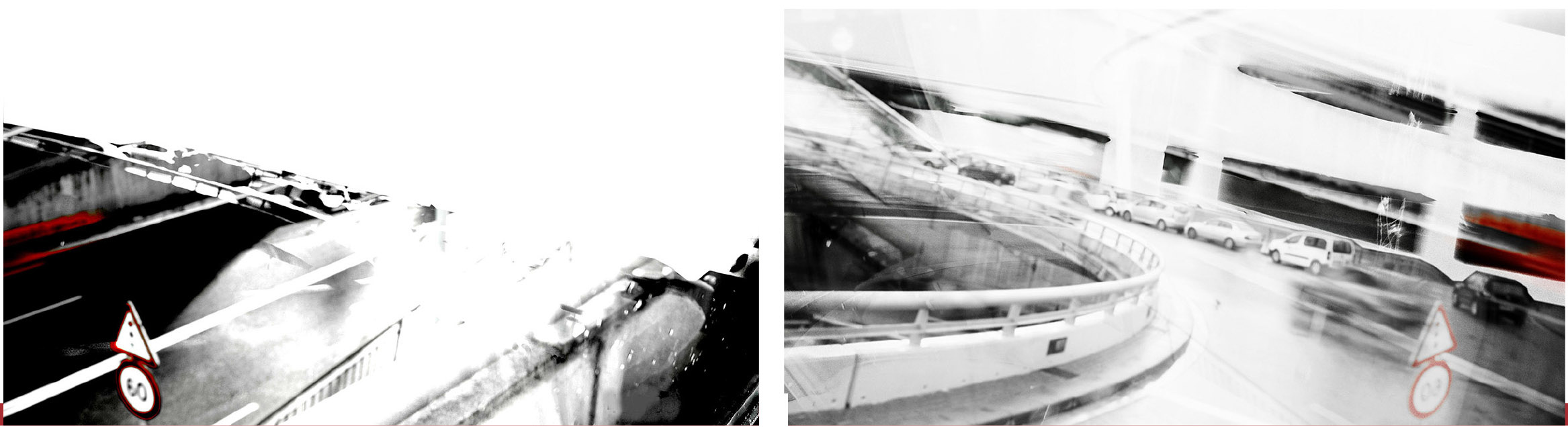
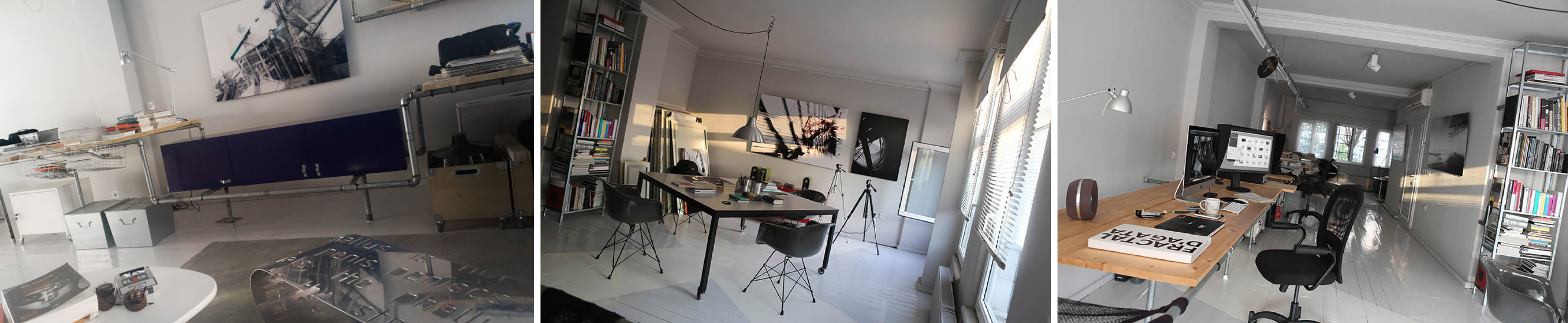
Of late years, i am engaged with a discipline that i describe as photographic works composed with architecture – space images where i use the photography as a means of expression. I can say that design and interior architecture are remained in the background yet not thrown away during the recent years where my artistic identity became prominent. On the contrary, space and design subjects on a theoretical and conceptual basis are already in my life for photography and architecture coexist together.
As in the sum of the interior-design projects, especially the enhancement of the conceptual space designs that i started to create in 2005, the new ideas and designs integrated to these concepts during the progress came into question. At the same time, other conceptual projects emerged from this progress are also being prepared and endeavored to be realized.
In my opinion, photography is a must for the architect. What we perceived momentarily can be envisaged later on and go beyond being merely a moment, create identity. Relations of the architects with the photography are nubile. Within this context, could you tell us about your photographic works?
Although it’s not possible for us to say that architecture is a must for photography, we could easily state the opposite, i agree with you.. Even though i didn’t capture any photograph for memory purposes, you are also right about creation of identity; we are talking about a field where it’s impossible to be personal, the field of photography. As for the architecture and interior design field, space for what is personal is limited; there is always a residual ‘surplus’ left at the end of the studies. This ‘surplus’ is one of the things reflecting on photographic works and further creating it. What the architects frame while photographing their work is a perspective of the same ‘surplus’.
The architectural expression designates the language of my photographic works. Language and which creates it, are distinct in forms of vision, methods and habits. I’m talking about the perspective of learning to create in three dimensions on a two dimensional paper. Lines, planes, stains forming ‘space’ when gathered, emptiness and fulness, volumes, manners of view to the geometry. Photographic works are compositions with predominant graphic design and architecture-space features. For me, graphic design inside a photograph or a photographic work is more important than the photograph inside a graphic design.We can see the approach of creating the visual that is kept out of the lens and no one else could imagine rather than the creator, in the photographs and the way of presentation, forming the next forthcoming solo exhibition.
We are seeing construction structures in your series that appear as a follow-up. What kind of technique are you performing?
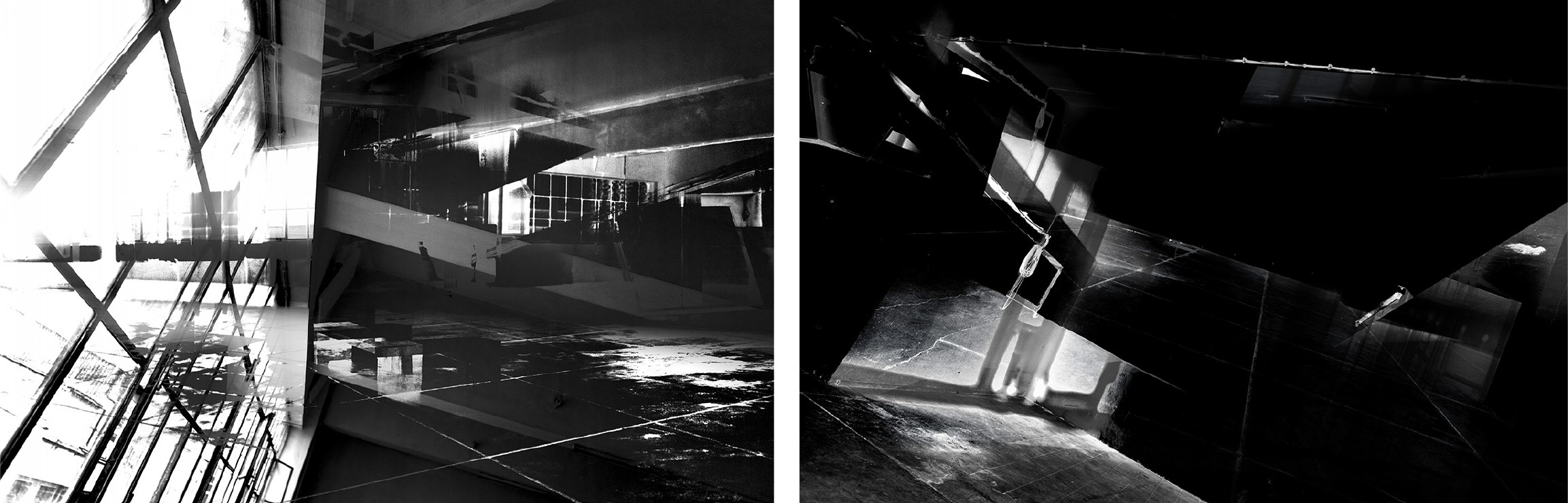
Consciously or unconsciously, the world i perceive has unique characteristic features that i see in a way that require or force me through the personality structure that i am composed and/or transformed with. Forms that can be described as organic, living forms like humans or animals are out my sight. As for the forms that you see as construction structures, in other words, the forms that contain sharp geometry, intersections, contrasts are within my perceptual bounds.
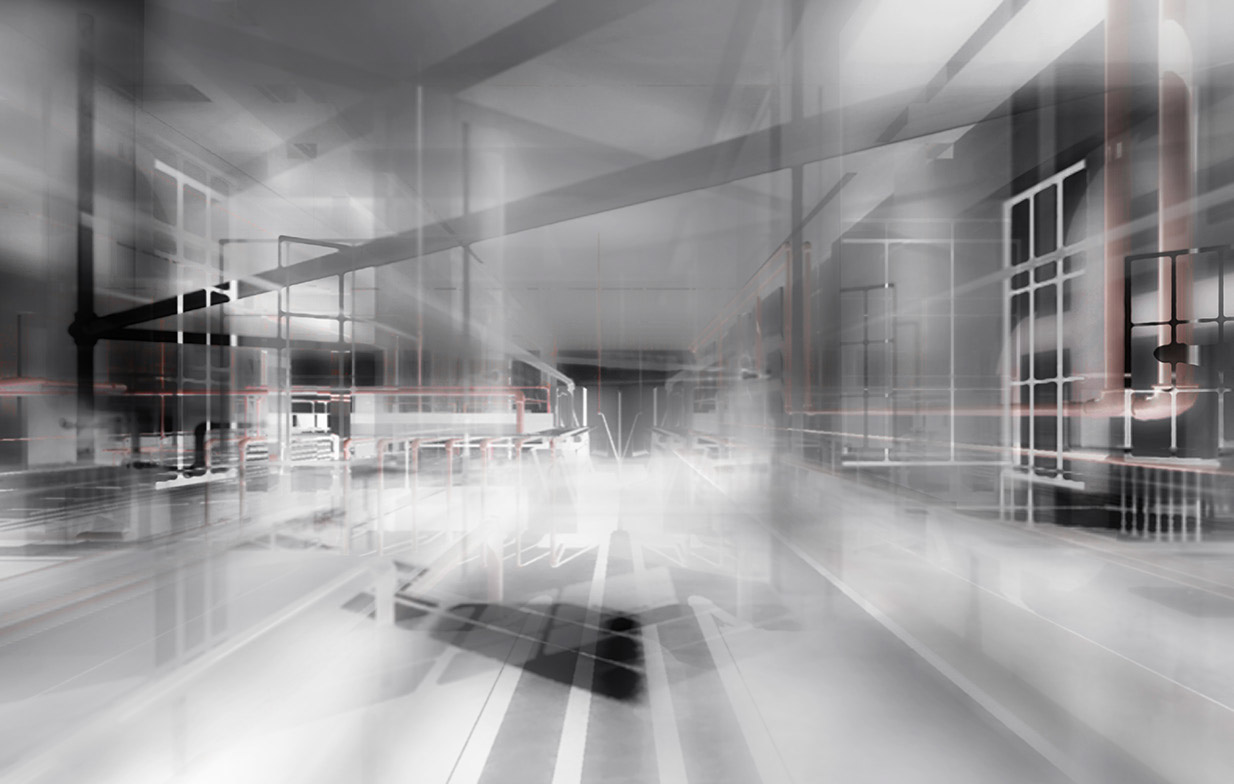
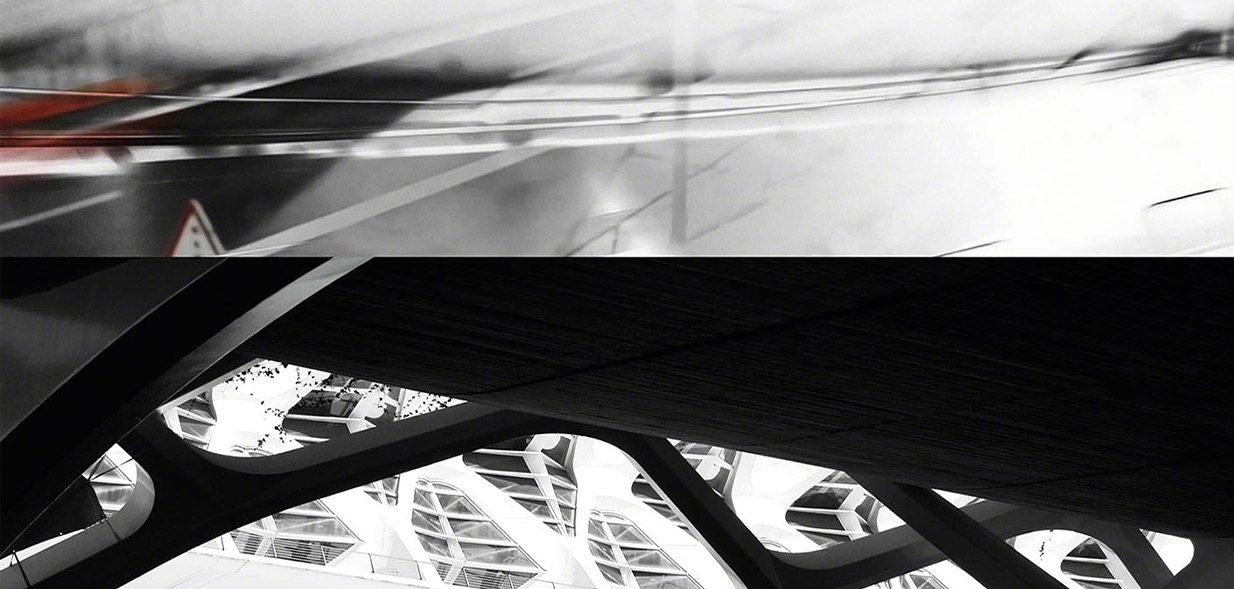
Photographic works are each ‘end frames’. They consist of the assemblage of many photographs that i designate as ‘source photographs’, taken within the technical rules and possibilities of conventional photography. When the end frame becomes apparent in my mind, i gather the photographs in a digital platform after performing the required photo shoots to generate it. Then i process the image through using the data of certain disciplines –especially painting- in the field of fine arts. When the mind is satisfied, the end frame is complete. The quantity of the photographic works that compose the aforementioned series is determined through the alternatives of the ‘end frames’ in my mind.
Is there any fundamental fact that you wanted to state with this series?
If we’re talking about human, any human activity and therefore creativity, then we’re talking about psychiatry and psychoanalysis which is a method of psycotherapy, also comprising of a certain amount of philosophy. I know for a fact that any condition related to human behavior can be explained through these two disciplines/sciences. For me, the visuals generated by extraordinary states of mind, revealed through the conscious and subconscious are important. The ambition to create things that are capable to overcome the familiar meanings and perceptions of the objects and actions, form the basis of my artistic studies. It’s a known fact that reality and concepts of reality are different when considered with Lacan’s description. It’s worth to dwell on the conditions of reality between photography and spatial design. I always think that the meaning of ‘reality’ is not limited with what it seems like and how it’s perceived yet it carries a secondary meaning. Despite their resemblances, senses are unique. If we think of the human as a sum of the senses depending on the mood it’s both aware and unaware of, we see that events and its’ interpretations have as much combinations as the human population. Therefore the creation impulse and reason of the artistic creations are as much as the people who can create. Images generating my photographic works are a result of examining these senses without restraining the possibilities and capacities of the mind.
We can see the approach of creating the visual that is kept out of the lens and no one else could imagine rather than the creator, in the photographs and the way of presentation forming the next forthcoming solo exhibition.
You entitle your series with different moments of the clock. Does it mean anything? Also, could we say that your works from this period are a follow-up of your photographic works entitled 00:00 from 2013?
The names of all my series are composed with terms of psychoanalysis and psychiatry. At the same time, each one of the photographic works forming the series carries a timezone as a name, such as 13:45, 05:56, in opposition to the expression that photograph identifies the ‘moment’. Each one of the many photographs forming the ‘end frame’ has its own ‘moment’. These ‘moments’ lose their significance after they come together. As a way to indicate the transformation of numerous different ‘moments’ into a single ‘moment’, i use a single specific timezone.
00:00 is the name of my solo exhibition from 2013. It’s a timezone designating the beginning for the first solo exhibition; it hadn’t even been started. There were three different series available in the exhibition. They had the features that composed the characteristic of the series from my early period as an artist. However, the works in one of the series entitled series 16 – Catalepsy, serve as a preview for the next series, hosting a gradually increasing atmosphere of uncanniness.

Architecture and photographs are your way of expressing your life. What do you actually want to narrate in your works?
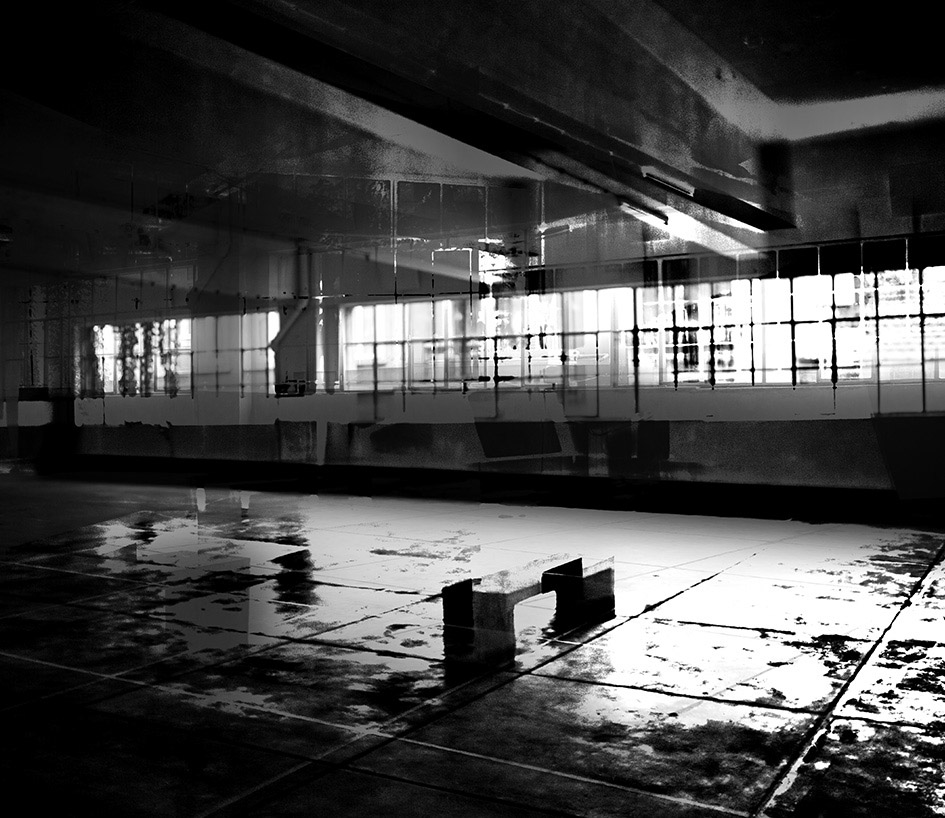
This is a matter of all the features of a mind integrating in the seeing-looking habit of the architectural discipline. At the same time, it’s related to the encounters while getting inside the discipline of psychoanalysis and psychiatry. According to the fact that conscious needs to be formed initially by the subconscious, images generated by some states of mind that solely the subconscious could reveal, in other words the ambition to create and narrate things that overcome the perception of everyday activities underlies my design and artistic works. My photographic works are the two dimensional expressions of these ideas in the digital platform. Besides, as i have stated before, the ‘surplus’ transferred from a confined space of intimateness into a completely private space matters. I like the objects to lose their identities appeared in the consciousness and transform into new structures and forms. In the aforementioned ‘end frame’, the observed space turns into a reality which is different from the frames generating itself. You can’t tell that such image-space exists or not.
Could you tell us about your current and future works?
In the recent series that i’ve worked, we observe the uncanny feeling that space creates upon people. It serves as a language that becomes more prominent than the characteristic geometrical language that you are familiar with the spaces that i have created until now. It’s another result of gathering the basis formed through psychoanalysis and psychiatry with the perspective of architecture. ‘Mental(!) institutions’ are interesting as places where the states of mind introduced by these two disciplines come across, get through or stick inside. For the uncanniness of a space can be discussed through the definition of uncanny as a concept in psychiatry and psychoanalysis, it’s possible to trace and interpret it in hospitals and mental(!) institutions. The most significant issue for me is to trace the uncanniness within the concept of the spaces. The works forming my solo exhibition opening in April, will be composed of the interpretations of this exact feeling. I defend the right for visuals to be both tempting and repelling and i am currently preparing an exhibition where i’ll be exercising this right. Also, i can say that i’m working on the possibilities to elude the two dimensional expression.
In my next works, i will also be using the possibilities of architecture and photography to express the uncanniness and different states of mind.
Thank you so much for all the information you’ve shared with us.
It was a pleasure. You are welcome..