“What is a cultural institution for? This is the central question of today.
We embrace the idea that culture is deeply useful and necessary as well as
attractive and engaging. Culture should help us with our everyday lives,
and understand how we, and the world, are changing. This assumption
will be key for the Fondazione’s future activities.
Art is the Fondazione’s main and given instrument of working and learning.
A territory of freethinking in which established, indelible figures as
well as emerging approaches are welcomed. The Prada Collection, comprising
mostly of works from the 20th and 21st centuries, is another one of
our given instruments. Our collection is conceived as a resource of perspectives
and of potential energy. We will invite different kinds of people
to provide new interpretations of undetected ideas from the collection:
curators, artists, architects but also scientists and students, thinkers and
writers. This emphasis on range and repertoire of knowledge is reflected
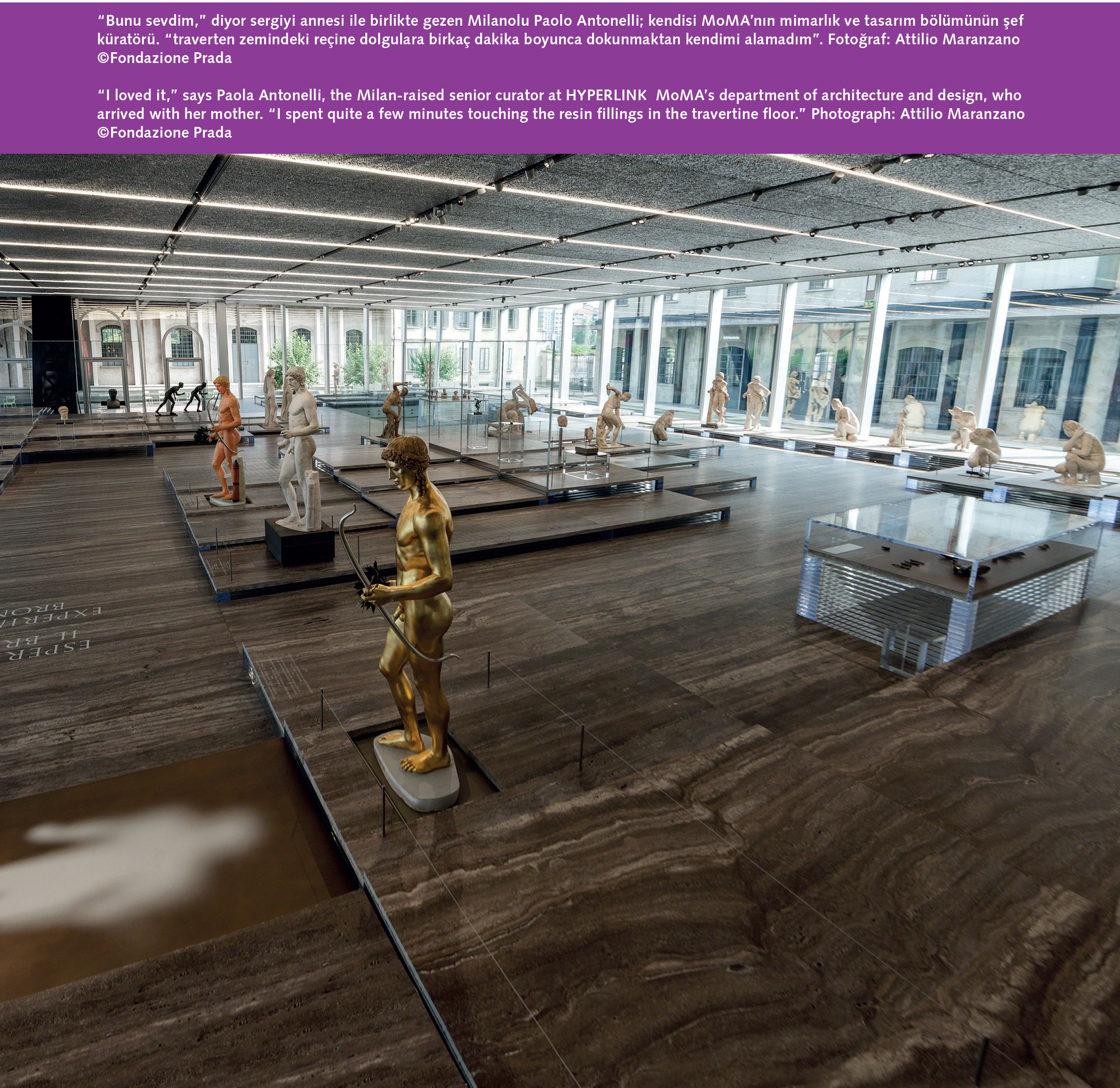
in the spatial composition of the Fondazione Prada in Milan. Formerly a
distillery dating back to the 1910s, the transformation leads to an architectural
configuration that combines preexisting buildings with three new
structures. The combined result is a campus of post-industrial and new
spaces, alternately intimate and expansive, while the courtyards provide a
common public ground, open to the city. This rich spatial array will encourage
quick and improvised reactions to cultural stimuli.
BAR LUCE
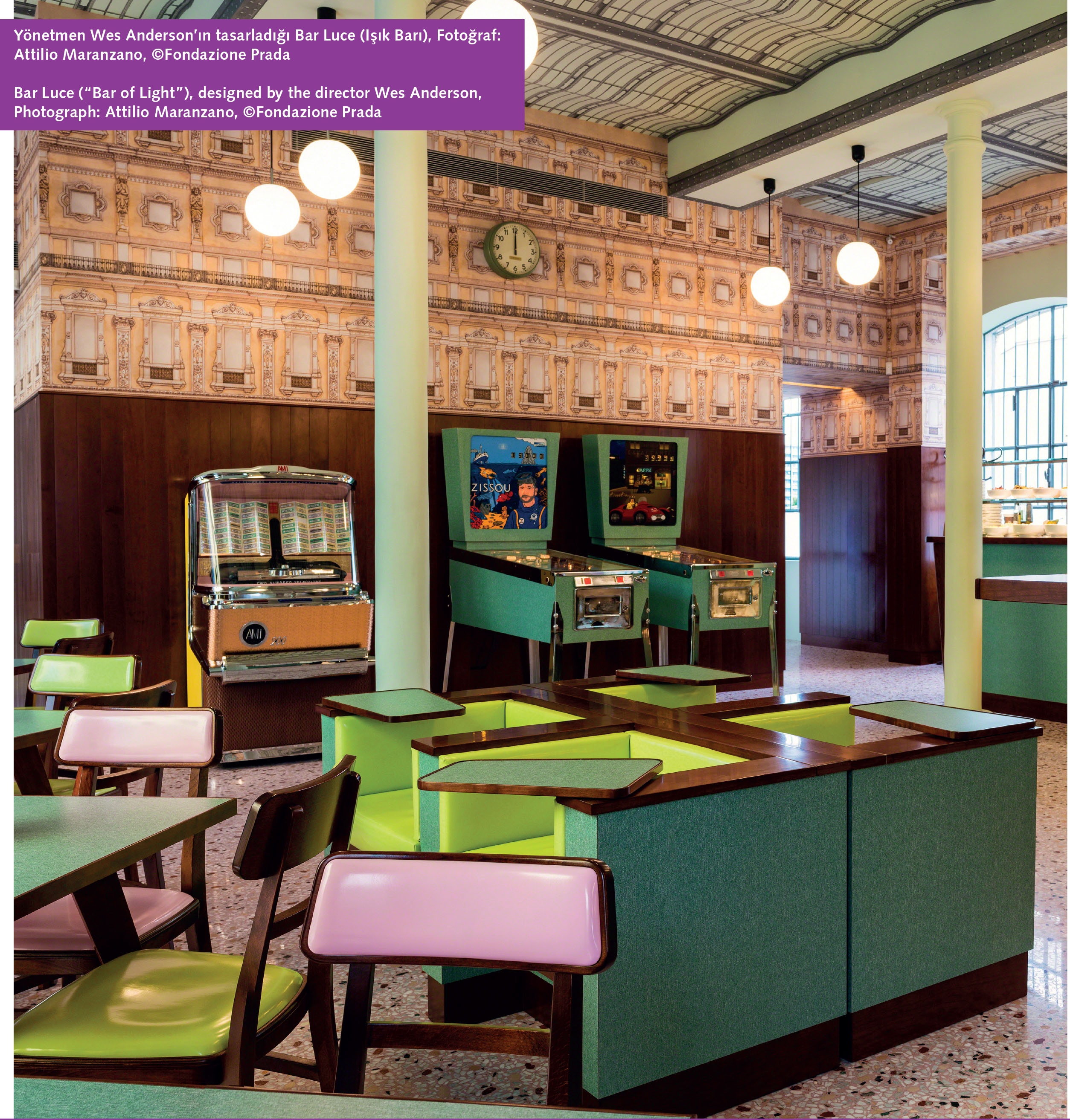
The Bar Luce, conceived by American film director Wes Anderson and
located in the entrance building of the new venue, recreates the atmosphere
of a typical Milanese café.
The ceiling and wall decorations suggest a miniature version one of the
city’s landmarks, Galleria Vittorio Emanuele; while the formica furniture,
chairs, and terrazzo floor pay homage to Italian movies of the 50’s
and 60’s, especially to two Milanese films in particular: Miracle in Milan
(1951) by Vittorio De Sica and Rocco and His Brothers (1960) by Luchino
Visconti.
Although inspired by the cinema, Anderson says his intention was “to
design not a set but a space for real life – but maybe it will be a good place
to write a movie.”