

İlknur Özer, Architect.
The wineries, which we reviewed in this month’s Showcase pages, located among or on the shores of vineyards far from the city, highlight the architectural identity of the regions they are located in, both with their construction techniques and the use of natural stone. While some of the wineries that are spatially localized and carry traces of the geography they belong to, allow the production stages of wine to be experienced, others adopt the idea of socialization by creating large consumption and activity areas and are handled as more public spaces. We have compiled for you the most qualified examples of wineries from Turkey and the world, which reflect the local characteristics of the region they are located in and set an example for the most effective use of natural stone with its landscape.
.
.
La Grajera Winery
Architectural Design: Virai Arquitectos
Building Date: 2011
Location: La Rioja, Spain
Area: 6.900 sqm
Photographs: José Manuel Cutillas, Diego Carreño and Rafael Lafuente
Natural Stone: Sandstone, slate
Place: Facade, interior walls, and floor
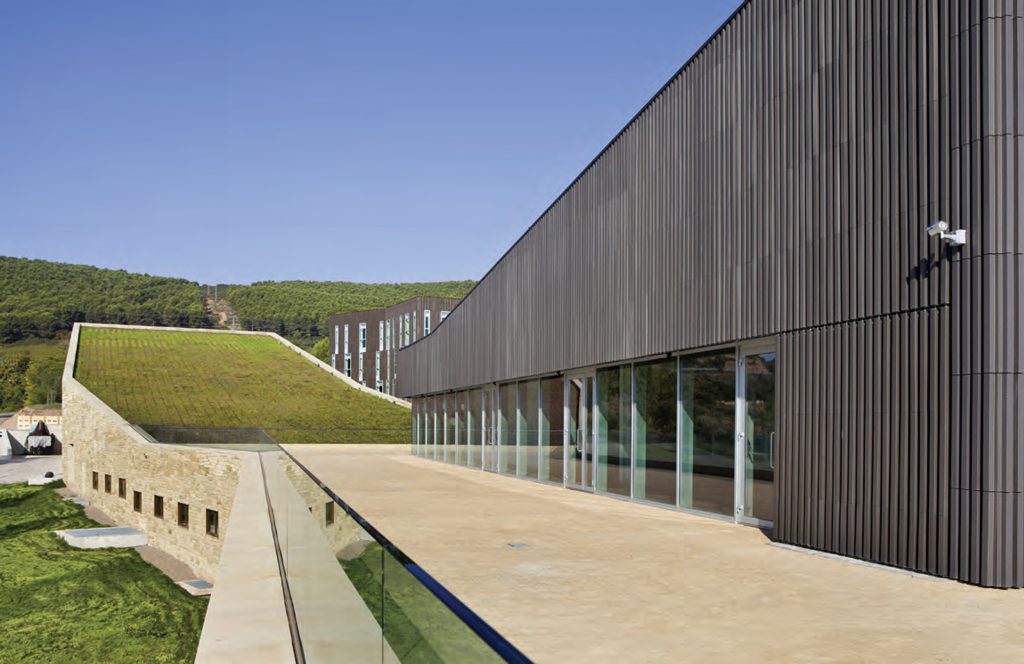
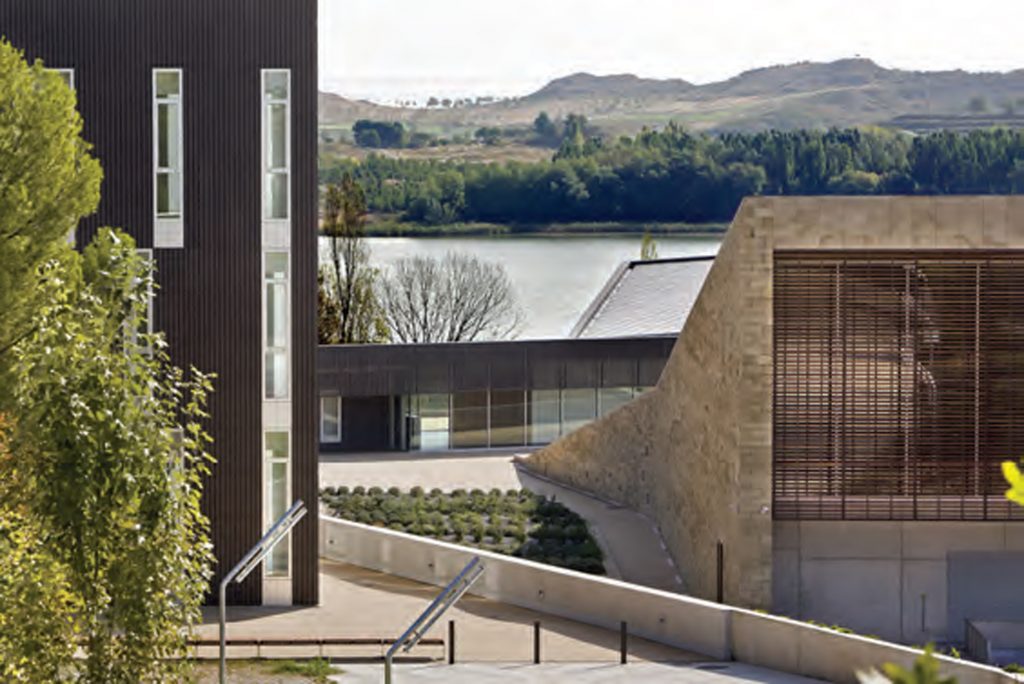
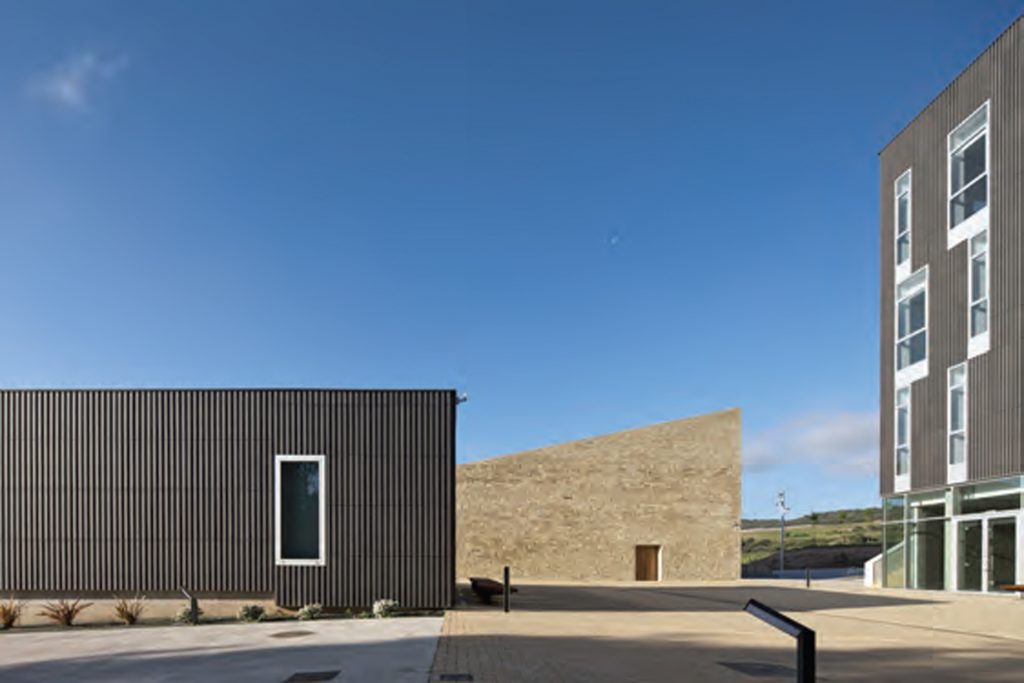
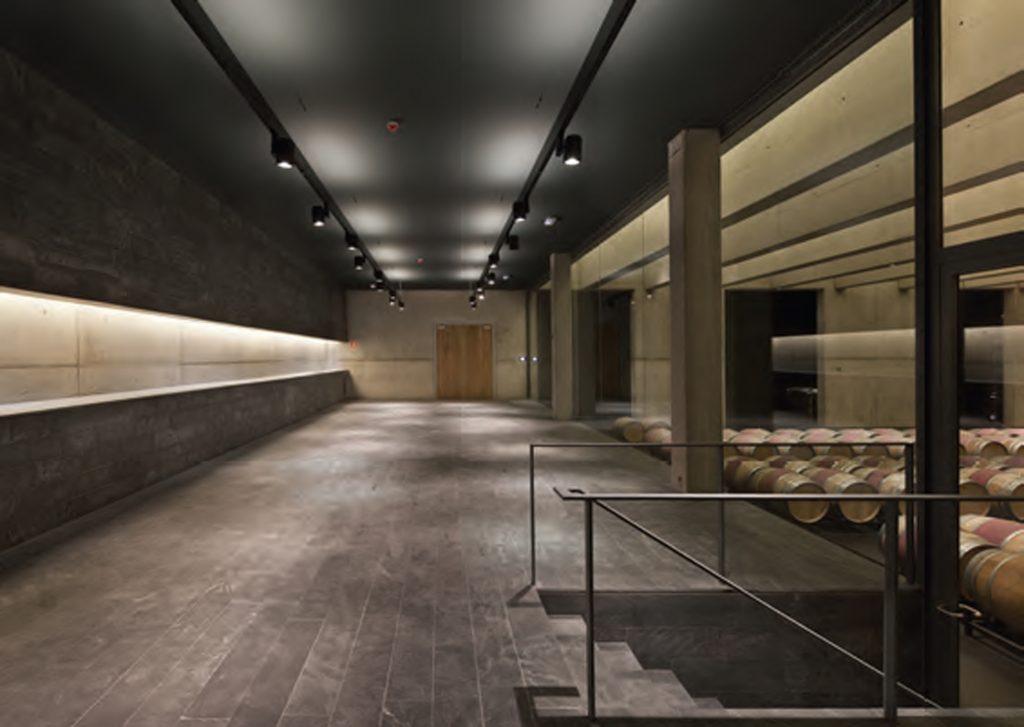
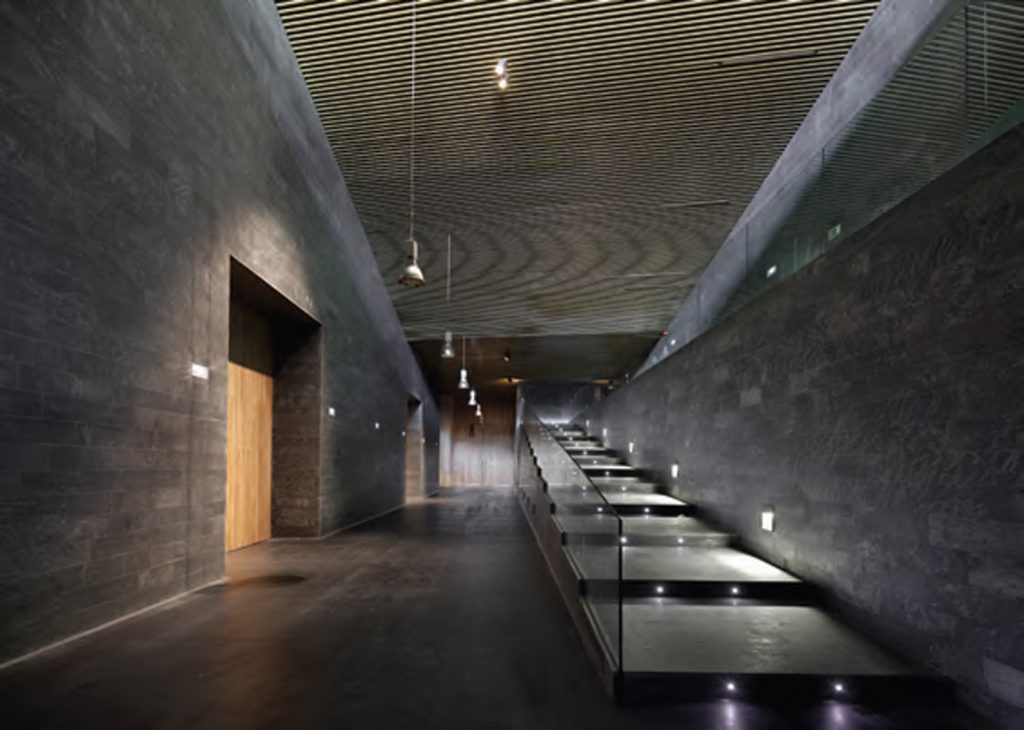
La Grajera Winery, located on a small hill overlooking the lake and vineyards in La Rioja region of Spain, appears as a modest structure hidden among the pine trees. Virai Arquitectos brought together the elements of wine production, research, sales, and institute in this complex by designing a building in harmony with nature. The space relations of the building aim to include visitors from beginning to end in the production process by allowing the visit and wine production functions to be combined simultaneously. In the project where the use of natural stone is very important, the semi-buried volume where the wine production section is located has become part of the land by being covered with locally sourced sandstone. In the building, where rural methods are used in stonework, thE choice of materials in the interior is in favor of black slate to create a special and secret atmosphere.
.
.
Perdix Winehouse and Hotel
Architectural Design: NVA Architecture
Building Date: 2019
Location: Urla, İzmir
Area: 1.480 sqm
Photographs: Burak Gürbüz, Burak Yurdakul
Natural Stone: Urla Stone
Place: Facade, floor
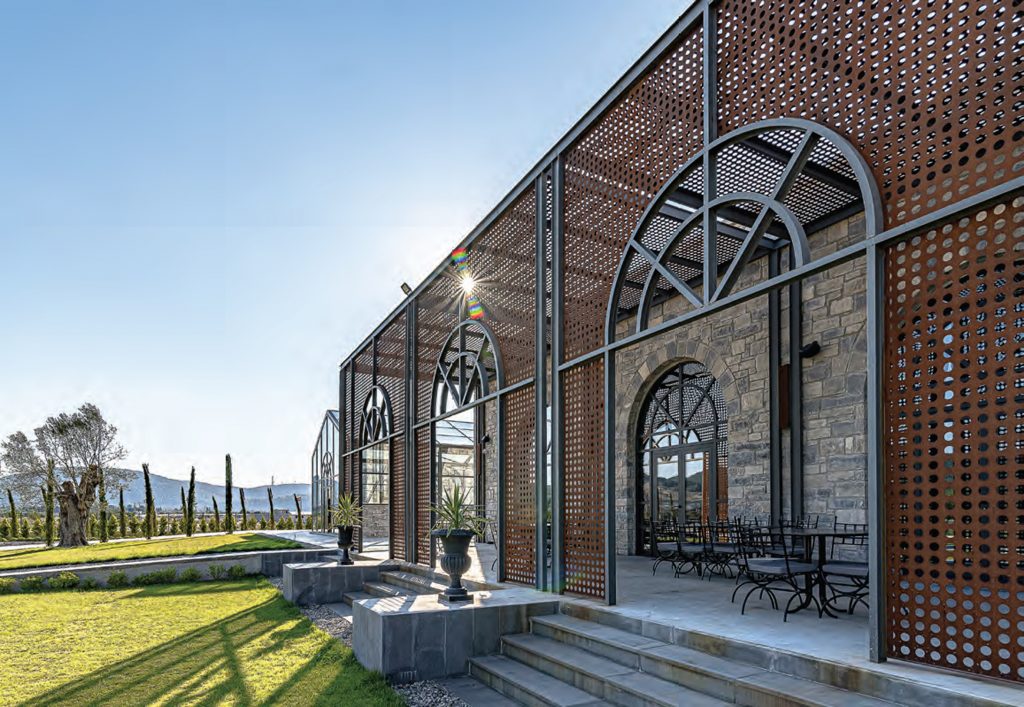
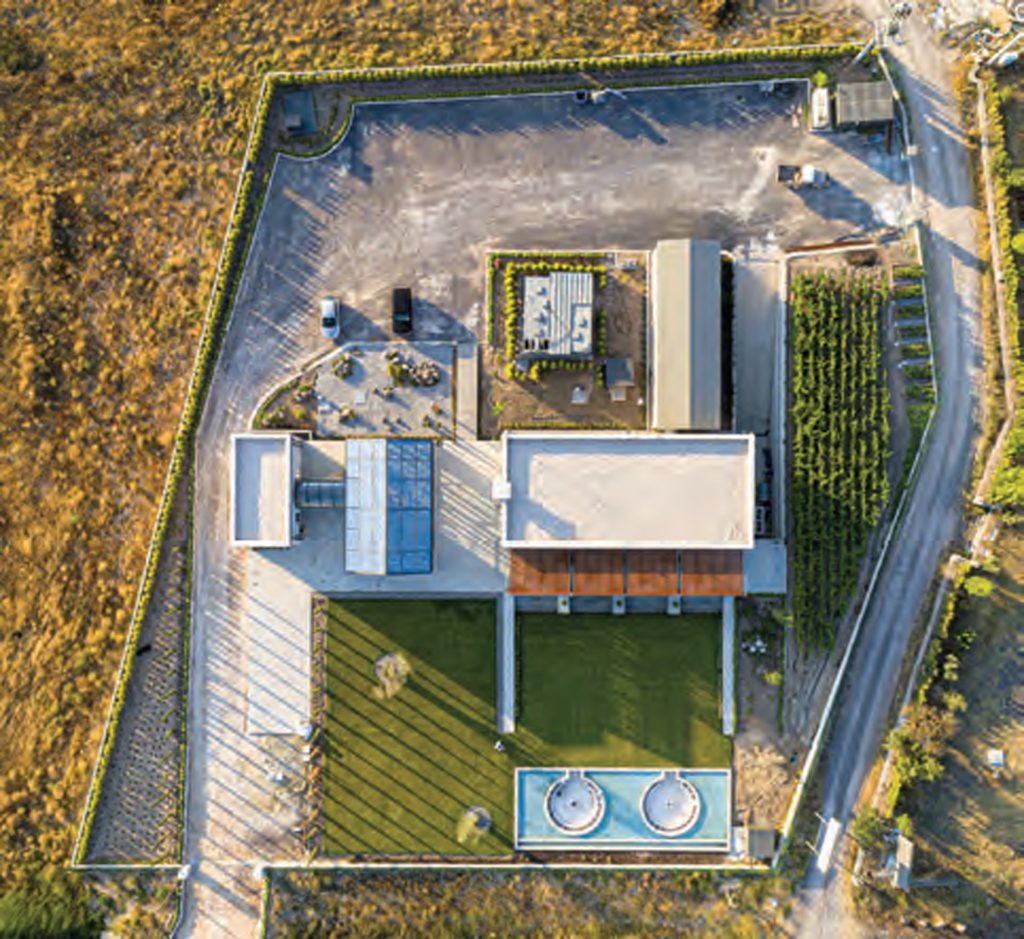
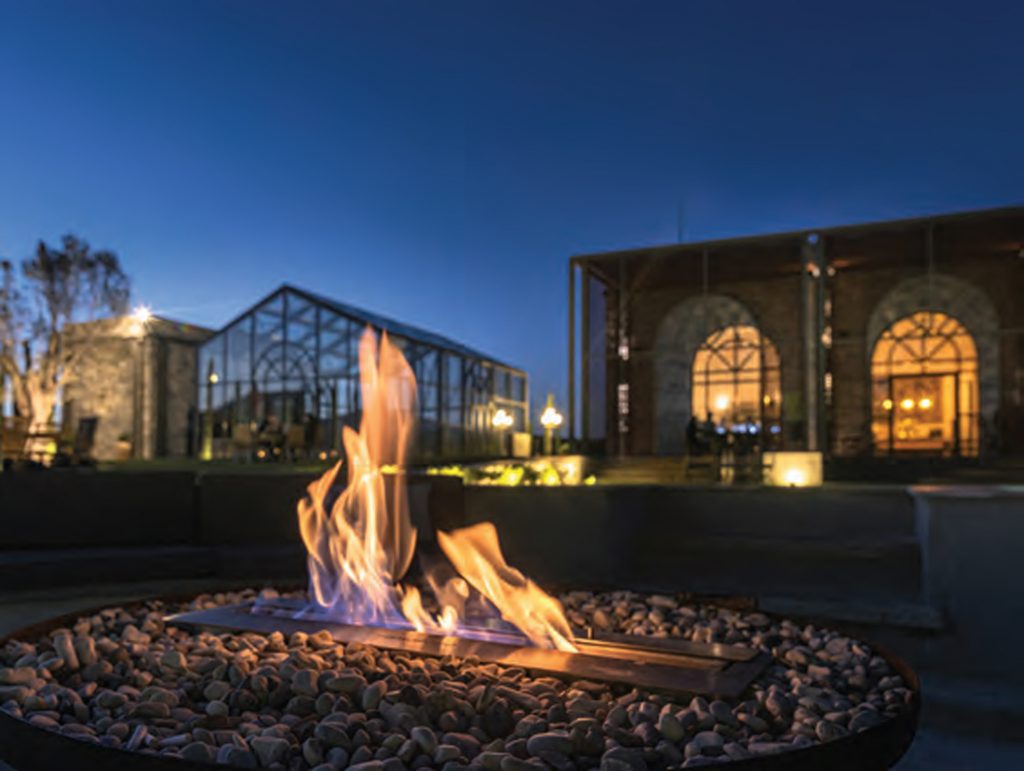
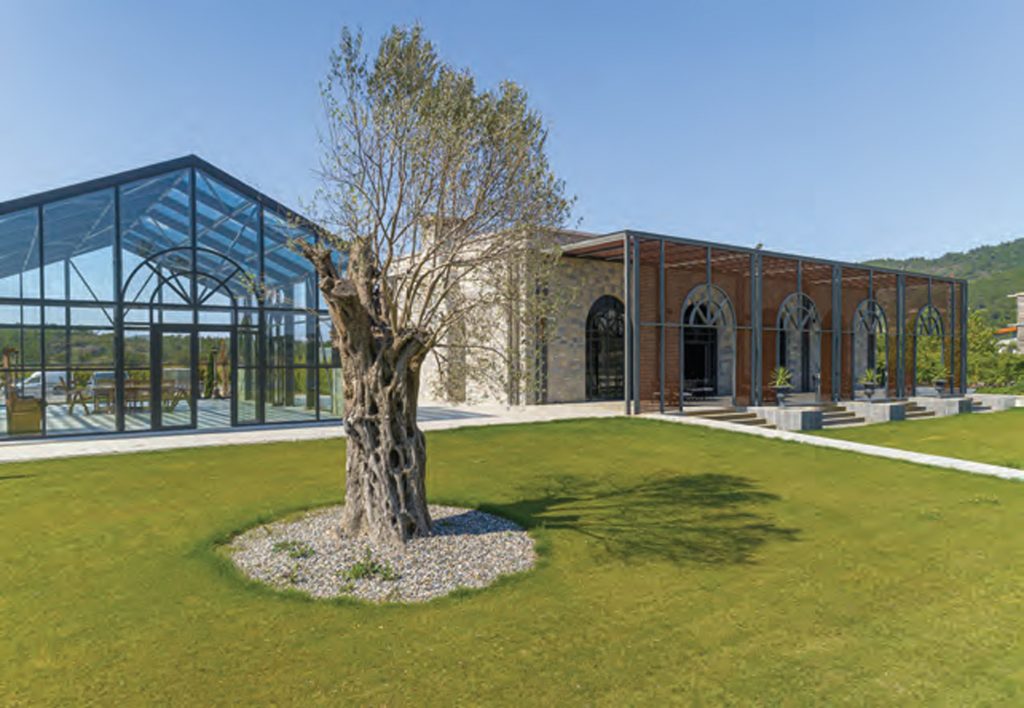
The Perdix Winehouse and Hotel project, designed by NVA Architecture in Urla, consists of the main mass which includes a wine production area, and kitchen spaces. Besides the main mass, there is a public wine-tasting area at the entrance level. The main goal of the design was to create a socializing area with minimal intervention by creating an uninterrupted void at the front of the building. In order to make a spatial definition within the dominant void, the entrance level, where the building is located, is emptied in certain areas, and the underground level is balanced with the water and the sitting areas, which are considered with the use of stone and fire, have been constructed. As a result, a design has emerged that aims to stay behind instead of revealing itself, disappears in the region where it is located, and tries to establish a relationship with the soil. Classic arch form, while deforming the corten and the effect of occupancy space, was used as the main element of the building.
.
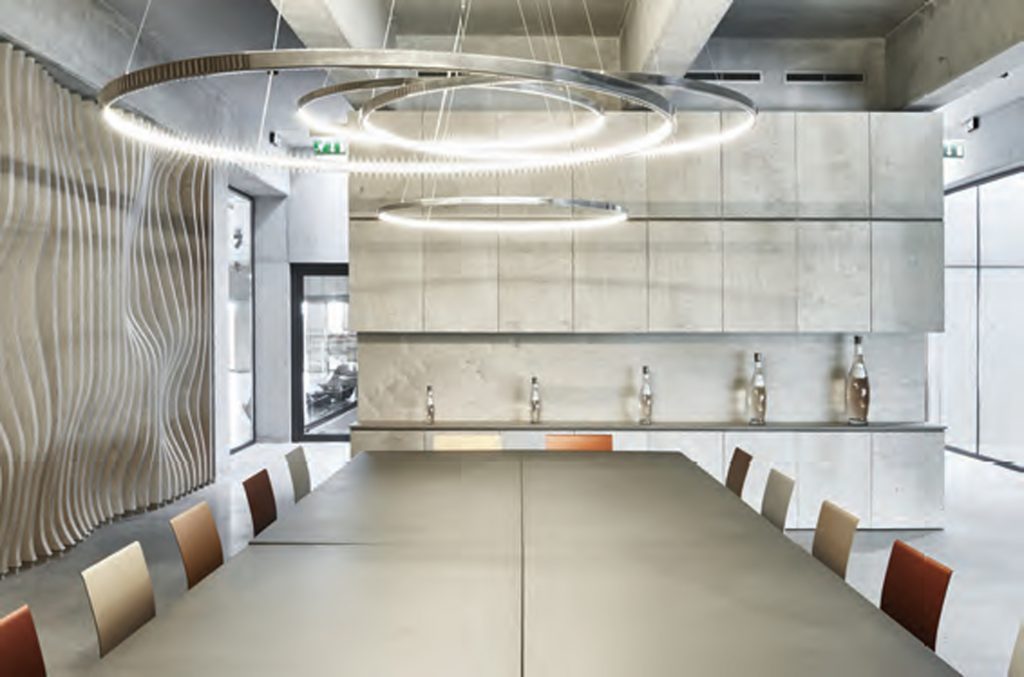
.
Domaines Ott Winery
Architectural Design: Carl Fredrik Svenstedt Architects
Building Date: 2017
Location: Taradeau, France
Area: 4.200 sqm
Photographs: Dan Glasser, Hervé Abbadie
Natural Stone: Limestone
Place: Facade
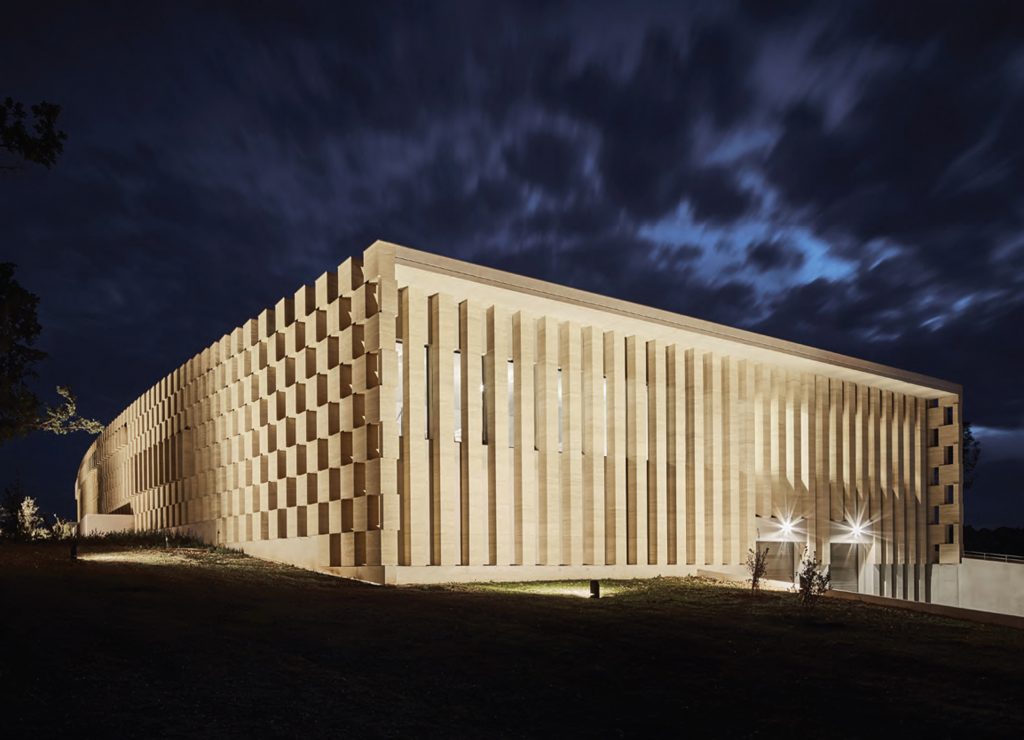
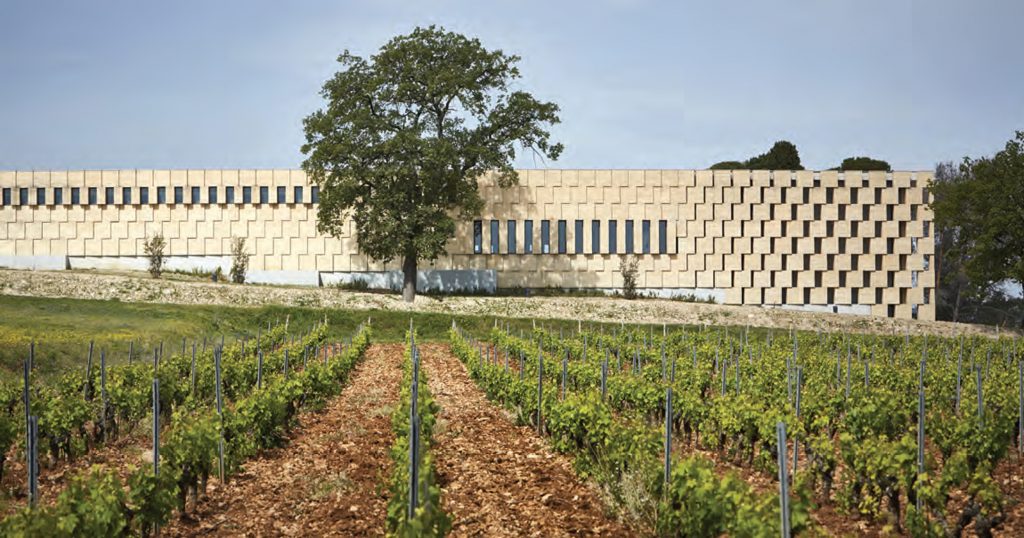
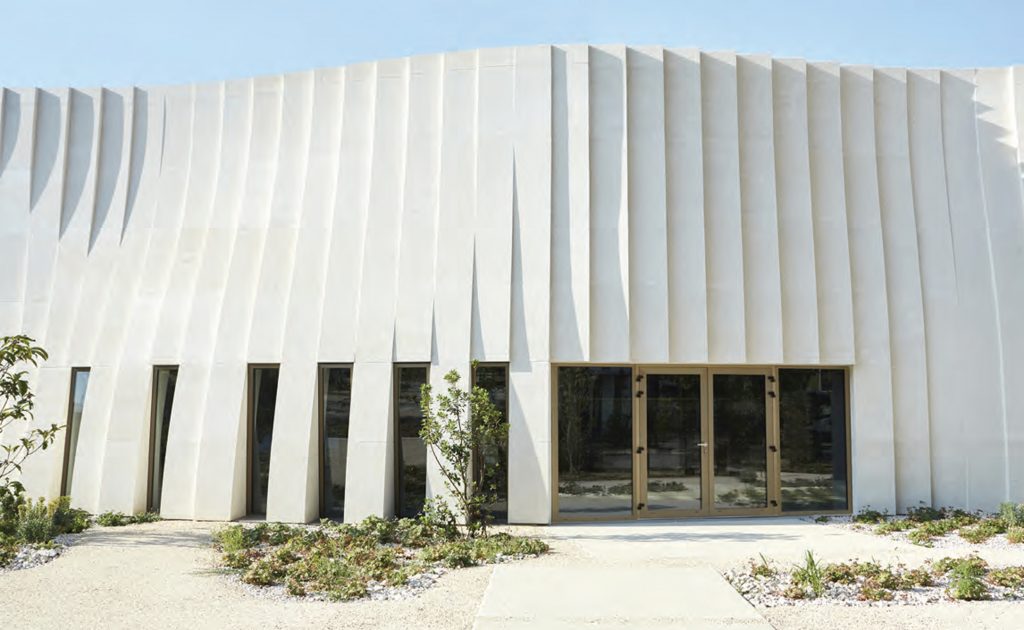
Domaines Ott Winery, located in the southeast of France, was built with natural stones extracted from stone quarries from the Roman period, drawing a character compatible with the region and becoming a timeless structure. The limestone blocks have been brought together in a balance of one meter high and fifty centimeters thick. The blocks extending up to 10 meters high have been joined and separated from place to place, allowing the sun to enter the interior indirectly. The winery and visitor center is a new landscape as it is a natural stone piece in the landscape of the region extending to the historical vineyards. Two main walls made of solid natural stone rise parallel to the road and the vineyards, while one of the curves of the walls forms the volume. The high exterior walls create a space that includes the visitors as well as the winemaking process.
.
.
Delas Frères Winery
Architectural Design: Carl Fredrik Svenstedt Architecte
Building Date: 2019
Location: Tain l’Hermitage, France
Area: 5.000 sqm
Photographs: Dan Glasser, Sergio Grazia, Carl Fredrik Svenstedt
Natural Stone: Estaillade local stone
Place: Facade
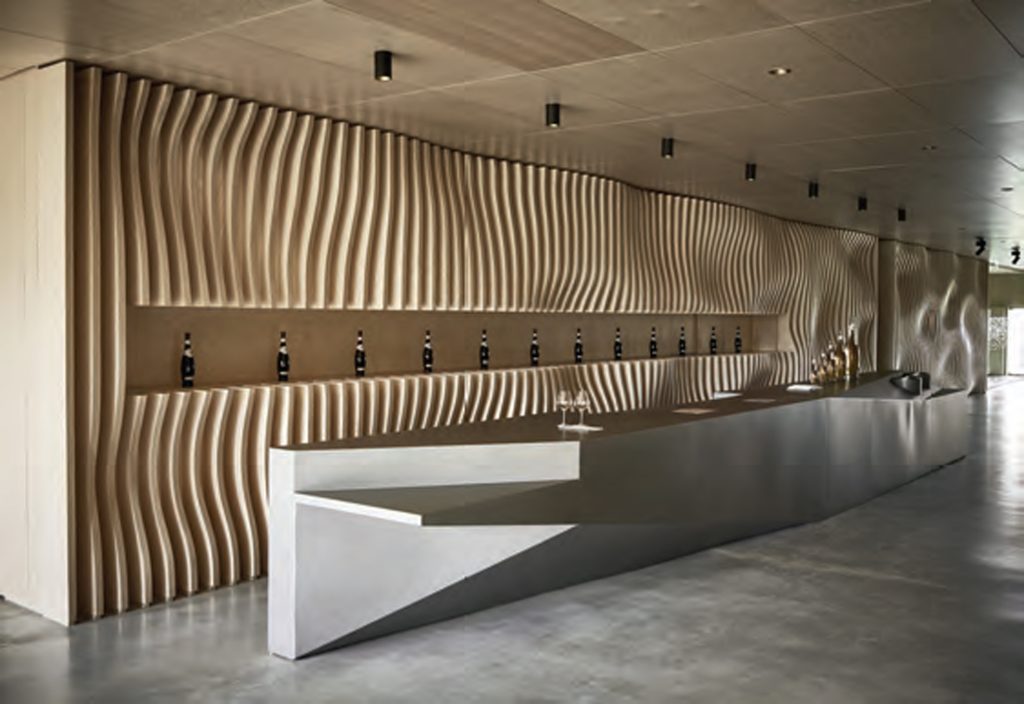
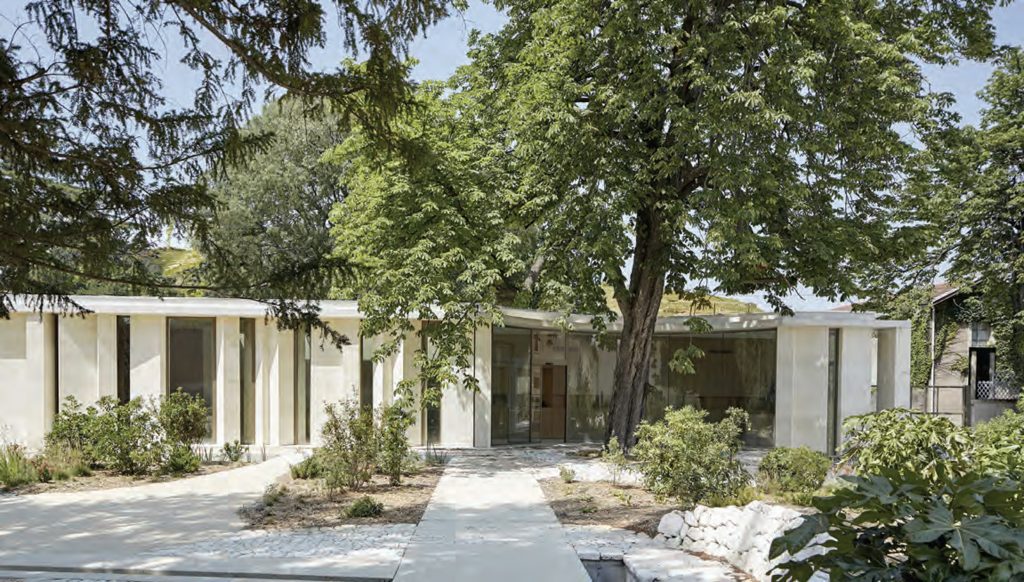
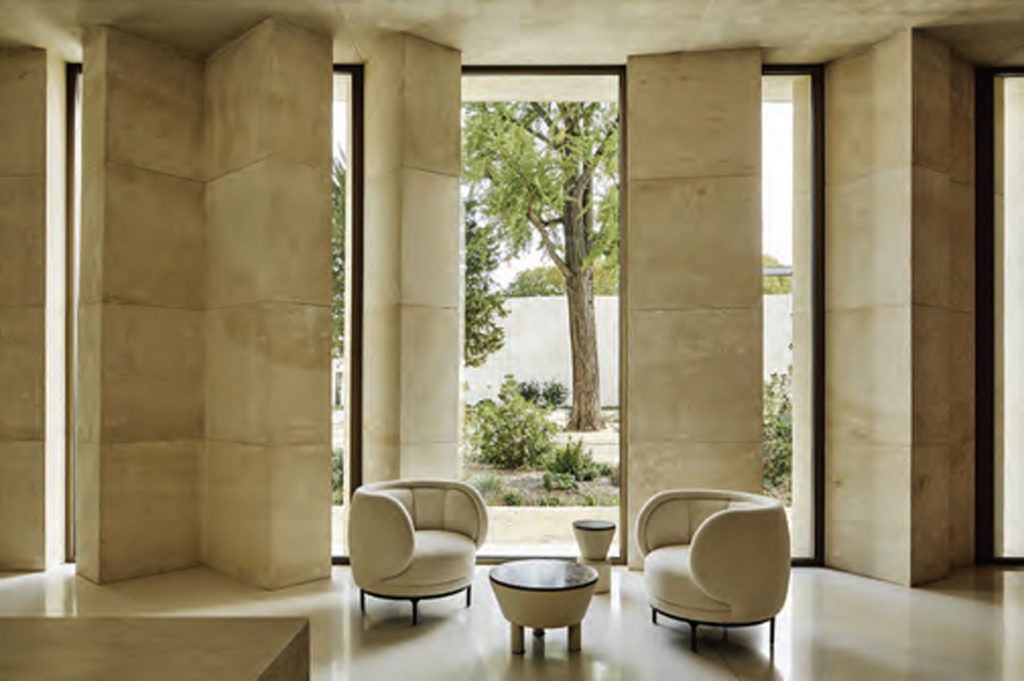
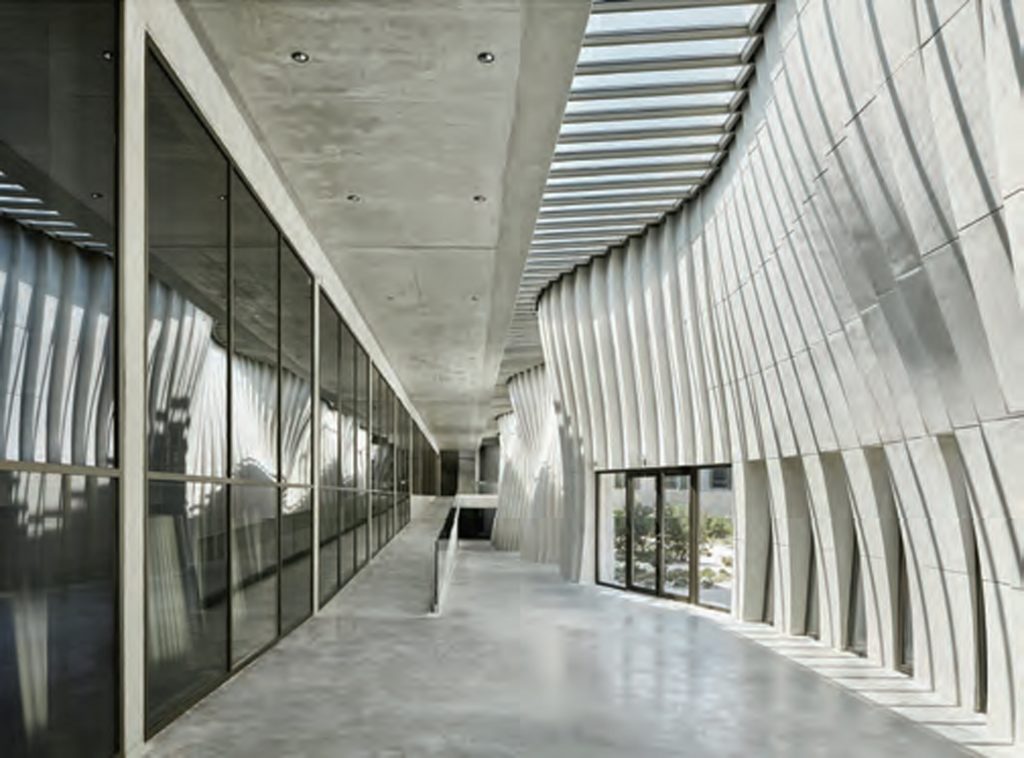
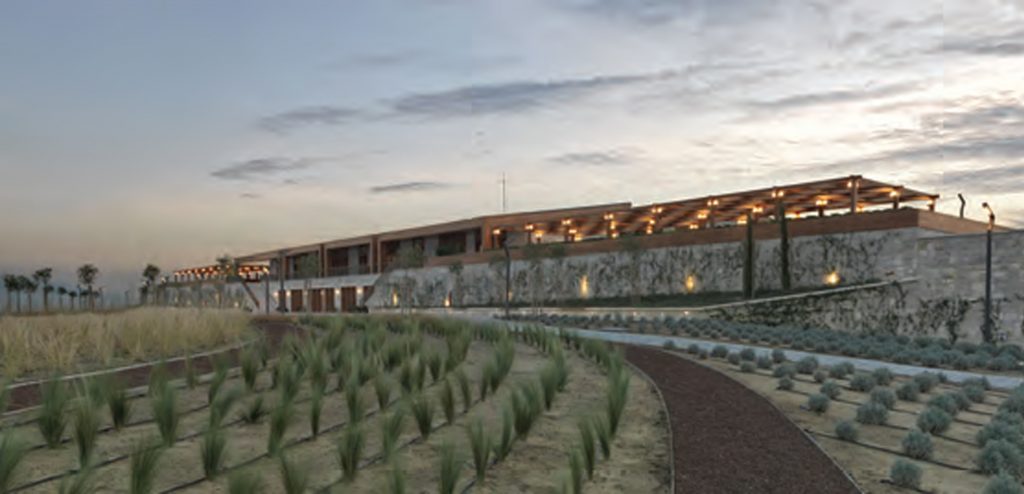
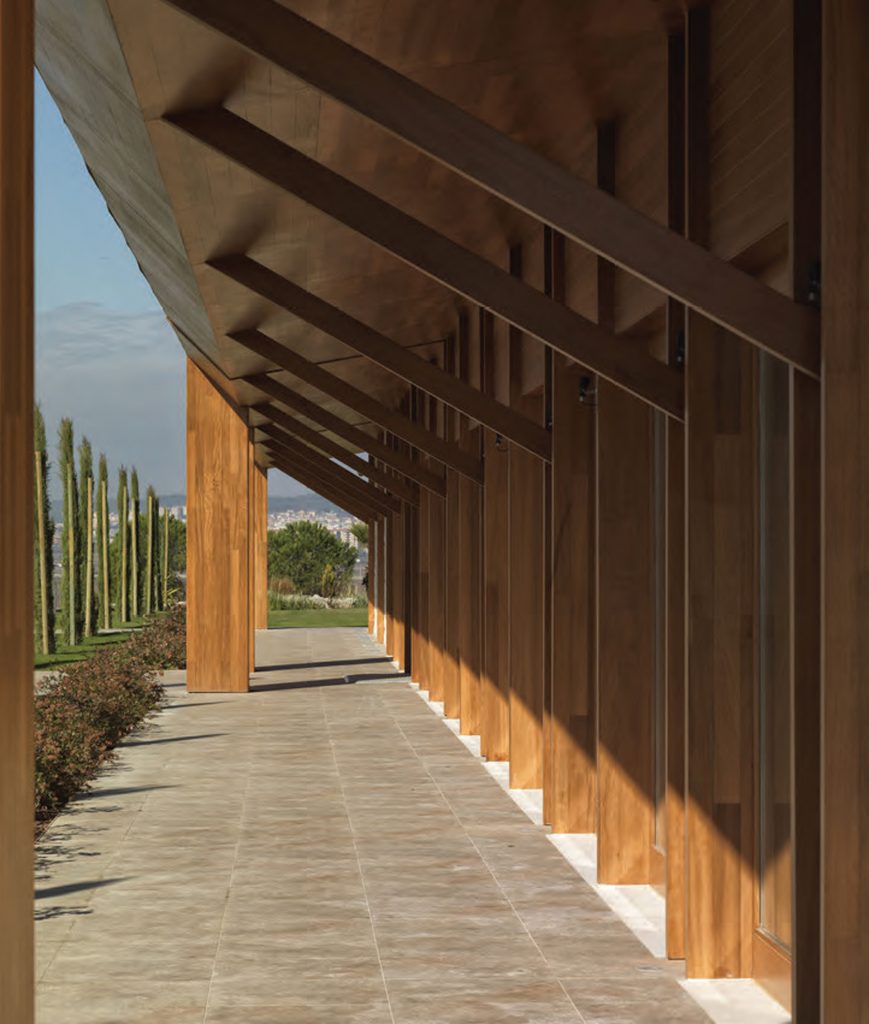
Delas Freres Winery located on the hill of Tain l’Hermitage, has been cultivated since Roman times and is reputed for some of the best wine, designed by Carl Fredrik Svenstedt Architecte. Clients are determined to renovate a historic by investing in their past, despite the challenges of wine harvesting in an urban context. The stone relates to the site, while the thermally inert, porous walls create ideal conditions for wine. Ramps within the winery allow visitors to discover the wine process within an efficient interior, and lead to views of the hills from a roof terrace, and down to the bottle cellar under the manor house. Sunlight enters the visitors’ gallery through a continuous skylight, the undulating wall serving as a light reflector for the tank and barrel halls, where direct light would be detrimental. The shop forms the opposing garden wall, a linear space behind shading, staggered stone pillars. An existing chestnut tree traces a bite out of the wall, under which one finds the shaded, glazed entrance of the shop. The existing mansion affirms itself as the central element of the garden and is renovated as a guest house, linked to the winery. It has a restaurant and tasting rooms, bedrooms overlooking the garden, and a cellar for the historic bottle collection.
.
.
LA Winery Production Facility and Cellar
Architectural Design: Kreatif Architects
Building Date: 2014
Location: Torbalı, İzmir
Area: 4.000 sqm
Photographs: Cemal Emden
Natural Stone: Urla stone
Place: Facade, floor
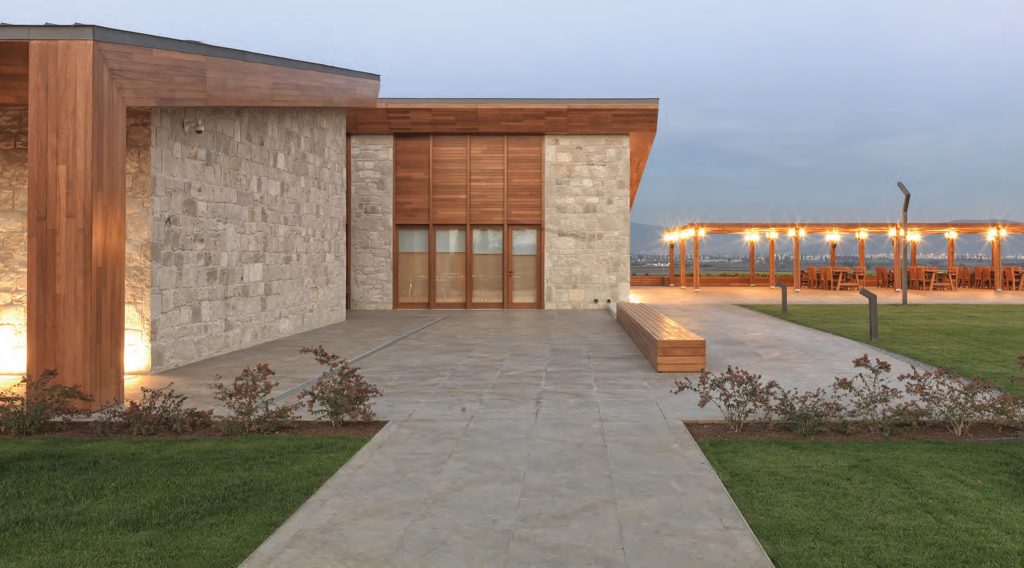
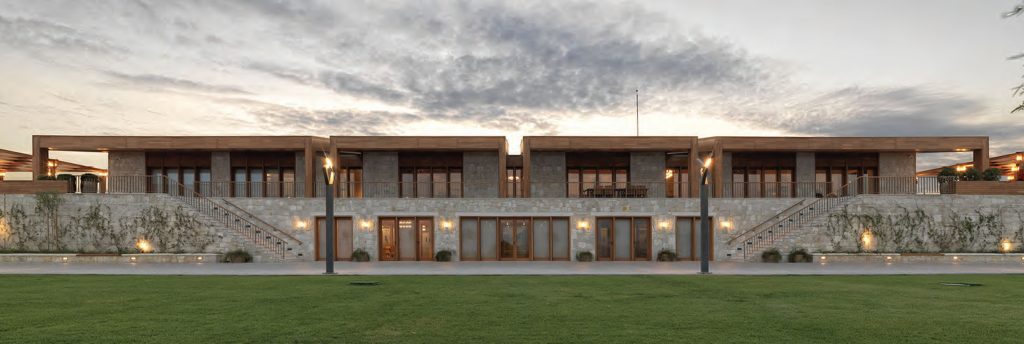
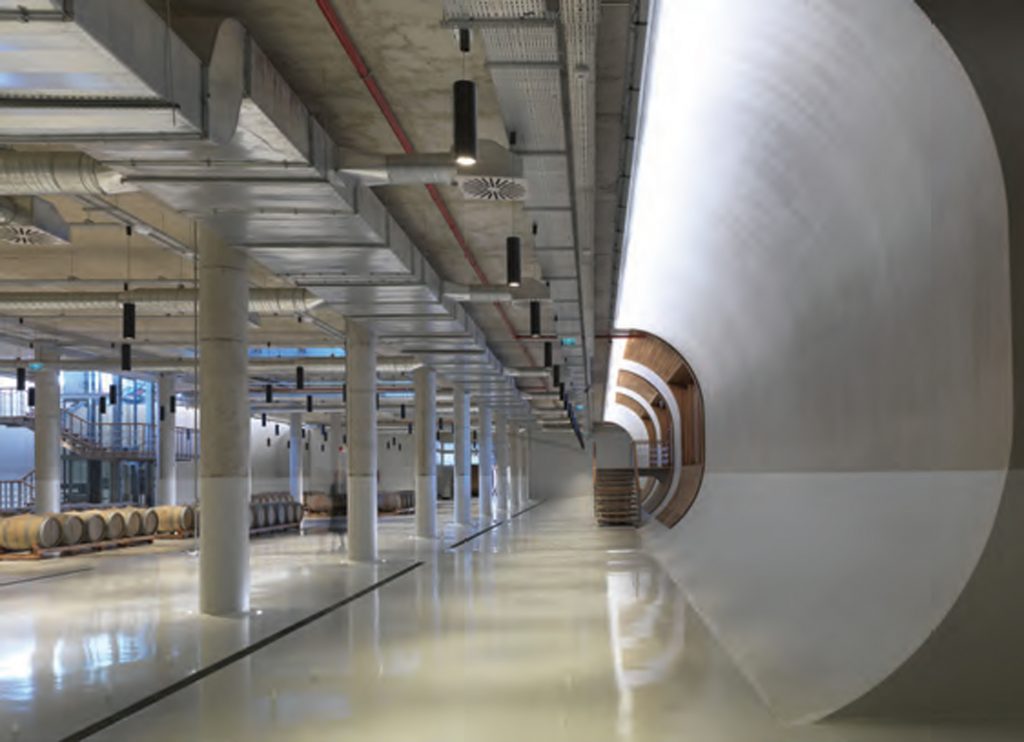
Located in Torbalı, southwest of İzmir, the ancient city of Metropolis was one of the famous wine centers of the Aegean in ancient times due to its favorable geographical features. LA Winery Production Facility and Cellar, which was realized with the design of Kreatif Architecture, are located in northwest of the vineyards. The two components of the project, the tasting area and cellar programs, require contrasting environmental conditions: the tasting area requires daylight, natural ventilation, and orientation to the view, while the cellar requires a controlled and dark environment. This separation is resolved with an underground and above-ground setup, and the floor between the two levels is constructed with glass, leaving the user in the tasting area in direct interaction with both the vineyards and the cellar. While the 3,000 sqm cellar located in the ground consists of curved exposed concrete surfaces shaped with steel molds, there is also a special wine-tasting area opening to the view from the lower level. The tasting area, located above the ground, consists of a steel carrier system with wide openings, wood, and natural stone. While the Urla work flooring technique was preferred on natural stone surfaces, the trees in the surrounding area were preserved in the landscaping works and the local vegetation was evaluated as an extension of the structure. The building is presented to the visitors in modest harmony with its surroundings.