

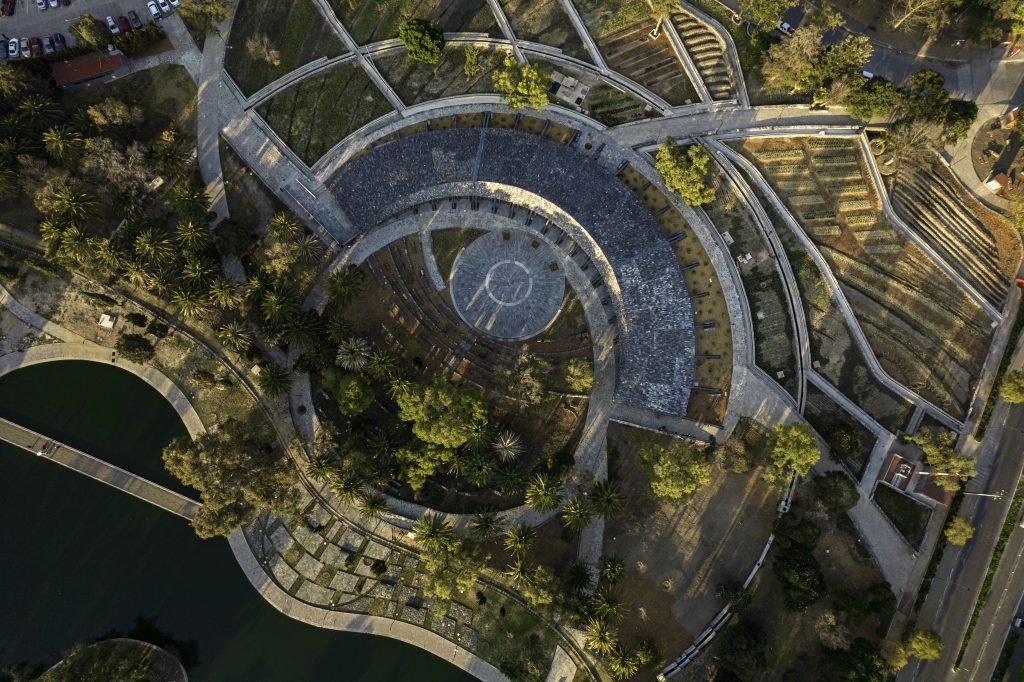
The “Centro de Cultura Ambiental” project is a new cultural, landscape, and environmental node within the second section of the Bosque de Chapultepec in Mexico City that designed Erre q Erre. It is part of the initiatives of the Master Plan “Chapultepec Nature and Culture,” coordinated by Gabriel Orozco. The proposal was selected as a result of a public and open contest called by the Government of Mexico City in coordination with the Federal Government.
.
.
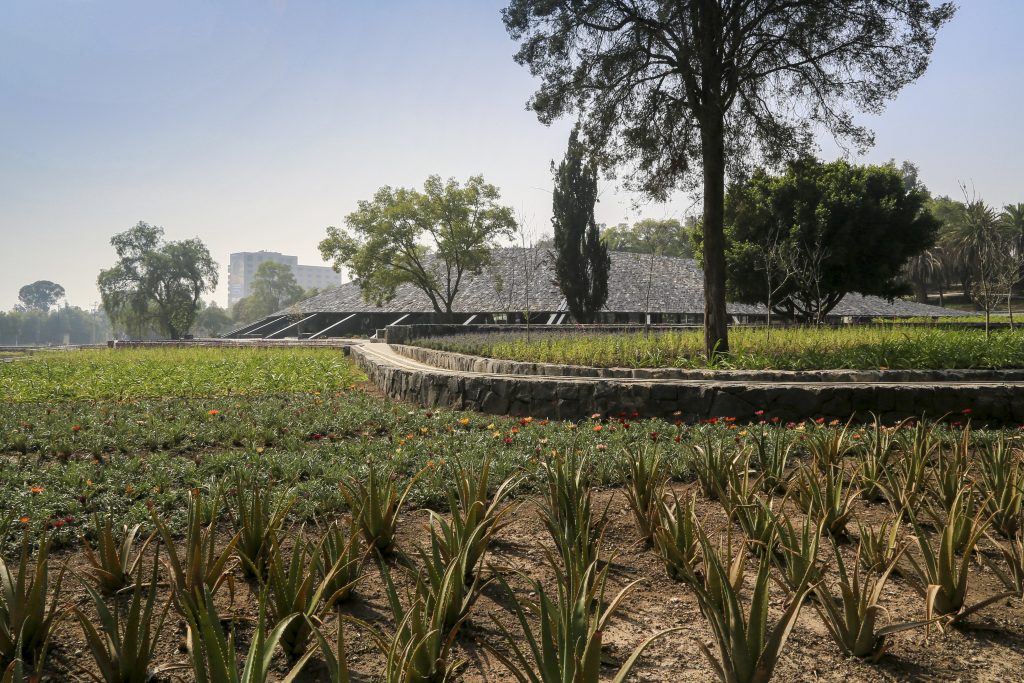
The Environmental Culture Center contemplates a Pavilion surrounded by a set of Gardens with a naturalistic design and an ethnobotanical look. These Gardens refer to the diverse ecosystems and natural landscapes of the Valley of Mexico Basin (Temperate Forests, Grasslands, Wetlands, and Pedregal vegetation) and are carefully integrated with the existing vegetation, topography, and equipment of Chapultepec, thus optimizing and increasing its great potential as an urban forest.
.
.
For the accessibility and enjoyment of these Gardens, a series of Biocultural Walks has been incorporated, significantly improving pedestrian connectivity in this section of the Forest. The Walks offer an immersive experience in nature and an educational rediscovery of the importance of natural elements within an urban forest and our relationship with them, thus transcending their merely connective and aesthetic functionality.
.


.
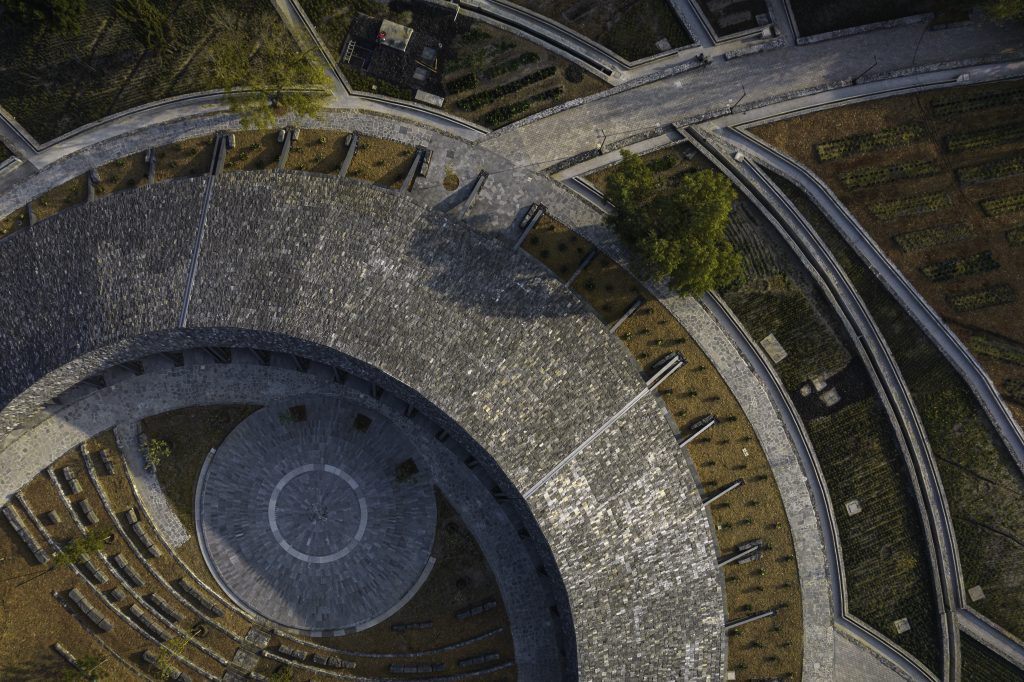
The Biocultural Walks adopt trajectories in the form of a concentric spiral that gives continuity to the curved lines that define the outline of Menor Lake. Their tours start from the existing cultural equipment at different points around the perimeter of the land and intuitively come together in the Center for Environmental Culture: a cultural node projected as an open public space that allows one to experience the close relationship between nature and the new cultural and environmental dynamics. It is made up of the duality and interaction of an open-air Cultural Space with a forum or circular plaza, and an Environmental Pavilion that houses exhibitions focused on promoting environmental culture.
.


.
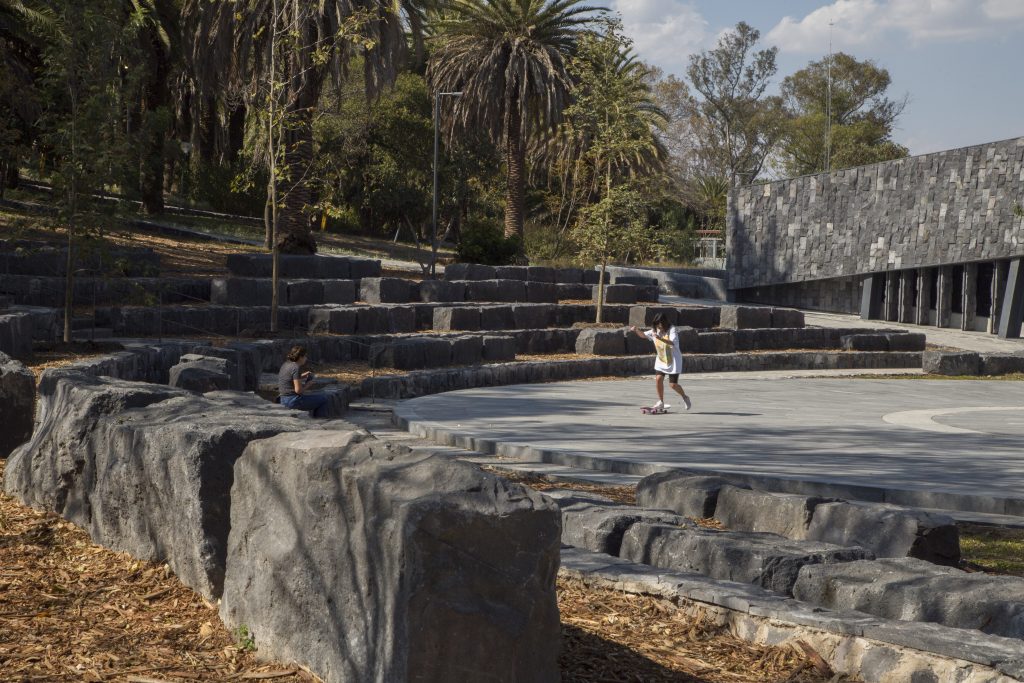
The spatial configuration of the project arises from strategically locating the Center for Environmental Culture. It is delicately incorporated into the geometry of the lake and a natural slope with existing vegetation, providing an optimal space to place a set of volcanic stone steps that serve as containment, rest, and contemplation for the new landscape or environmental setting.
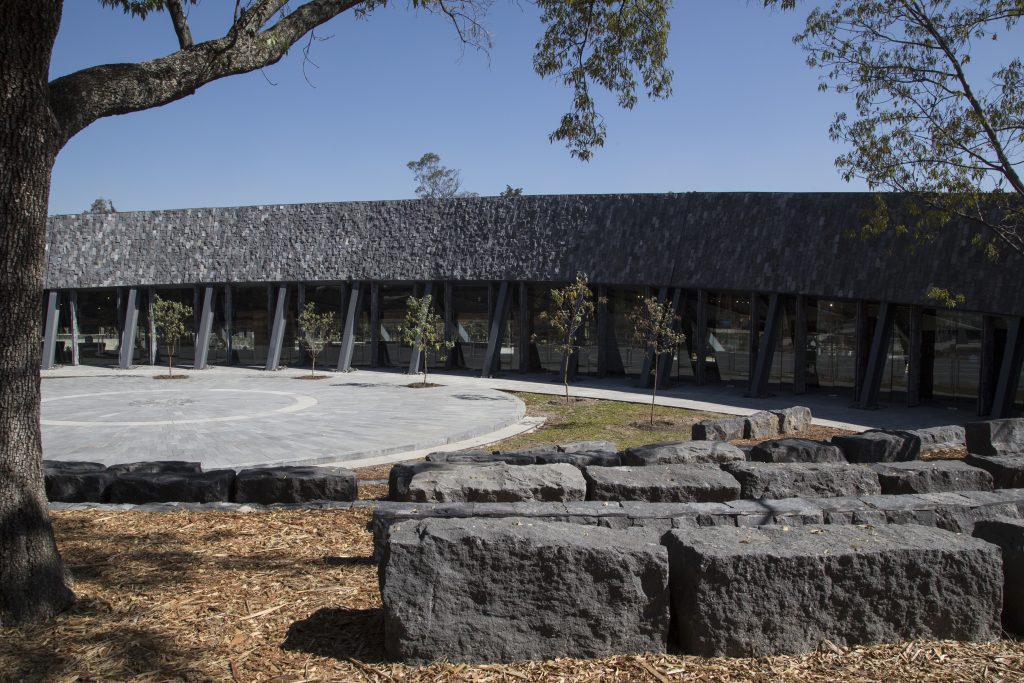
The Environmental Pavilion is conceived as one more element of the landscape. Its semi-conical geometry and its black stone cladding on the 2,000 m² roof refer to the volcanic landscapes of Pedregal and are subtly integrated into its natural and cultural environment. The result is a light, flexible, versatile, and very low-maintenance pavilion. Its formal simplicity is accompanied by the conscious choice of optimal construction systems and new technologies that minimize its carbon footprint and its impact on the environment.
The interior of the Pavilion offers complete continuity and spatial flexibility that can accommodate and explore different museography proposals, always allowing visual transparency towards its two exterior fronts: the Gardens and the Cultural Space.
.


.
These characteristics highlight its versatility and spatial dynamism to house those activities and exhibition programs that need some shelter and shade. The experience of feeling direct contact with the Gardens/Walks is also favored, providing the visitor with a unique landscape from inside the Pavilion, enhancing the importance of natural elements and the landscape in an educational and cultural environment.
This approach to the Pavilion allows visualizing the harmony, direct interrelation, and fusion of the natural and the human, the existing and the project, and the landscape and the architecture. Where previously there was a vehicular parking lot, there is now the Agroecological Zone with various plots of rotating crops, contained by stone walls. These offer a new landscape in harmony with the roof of the Pavilion while improving the environmental conditions of the space and promoting biodiversity. This area also seeks citizen participation through various educational, demonstration, and agricultural production programs.
.
CREDITS
Architectural Design: ERRE Q ERRE arquitectura y urbanismo + Taller ID
Lead Architect: Arq. Rafael Ponce Ortiz
Project Partner: Ing. Juan Ansberto Cruz
Project Date: 2023
Total Construction Area: 90,000 sqm
Location: México
Photography: Margarita Gorbea, Marcos Betanzos
.
NATURAL STONE
AGROECOLOGICAL ZONE WALLS
TECORRAL (DRY STONE WALL)
ROOF COATING
VOLCANIC STONE